The Queens of Welfare Island — Episode Three: King of the Clam House
 Detail of photographic postcard of Gladys Bentley, 1946-1949. Credit: Collection of the Smithsonian National Museum of African American History and Culture.
Episode Notes
During Prohibition, drag king Gladys Bentley held sway over Harlem’s speakeasies with transgressive, star-making performances that epitomized the era’s embrace of queer expression. In the early ’50s the blues legend publicly renounced her past in favor of traditional femininity. Why? Or did she?
Episode first published November 9, 2026.
———
Learn more about some of the topics and people discussed in the episode by exploring the links below. George Chauncey’s Gay New York: Gender, Urban Culture, and the Making of the Gay Male World, 1890-1940 (Basic Books, 1994) is an invaluable resource for the “Queens of Welfare Island” series as a whole. Information about Life Jacket Theatre Company’s musical The Gorgeous Nothings can be found here.
General resources about the Harlem Renaissance:
- A brief introduction to the era and its many LGBTQ luminaries from the National Museum of African American History.
- When Harlem Was in Vogue by David Levering Lewis, a classic 1981 nonfiction work about the era, available for borrowing here.
- “The Queer History of the Harlem Renaissance,” a short documentary (NowThis/YouTube).
- “A Spectacle in Color: The Lesbian and Gay Subculture of Jazz Age Harlem,” an influential 1990 essay by Eric Garber, available on p. 318 of the anthology Hidden from History: Reclaiming the Gay and Lesbian Past, accessible here.
- Cookie Woolner’s scholarship on Black lesbian life during the 1920s and ’30s in The Famous Lady Lovers: Black Women and Queer Desire Before Stonewall (University of North Carolina Press, 2023) and this article, which touches on the groundbreaking lesbian novel The Well of Loneliness and “buffet flats,” both mentioned in the episode.
- Slumming: Sexual and Racial Encounters in American Nightlife, 1885–1940 by Chad Heap (University of Chicago Press, 2009).
Drag balls:
- A brief introduction to the early drag ball scene from the National Museum of American History.
- Glitter and Concrete: A Cultural History of Drag in New York City by Elyssa Maxx Goodman (Hanover Square Press, 2023), a comprehensive chronological survey that devotes ample space to the drag balls of the Jazz Age and the Harlem Renaissance.
- Concise historical overviews of Harlem’s Hamilton Lodge Ball (Harlem World Magazine) and its venue, Rockland Palace (QSAPP, Columbia University).
- Contemporary coverage of 1920s and ’30s drag balls in the Black press: the New York Age and the Baltimore Afro-American.
Coverage of the Hamilton Lodge Ball in the March 5, 1938, issue of the Baltimore Afro-American.
Gladys Bentley:
- “Lay It on the Line: The Life and Music of Gladys Bentley,” a dissertation by Bianki Torres (UMass Amherst, 2024).
- Bentley’s New York Times obituary by Giovanni Russonello, published 59 years after her death as part of the paper’s “Overlooked” series.
- “Gladys Bentley: Gender-Bending Performer and Musician,” a short PBS American Masters video.
- Extensive collection of clippings, photos, ephemera, and links to recordings courtesy of Queer Music Heritage, including Bentley’s 1952 essay in Ebony magazine, “I Am a Woman Again,” as well as “The Third Sex,” the 1957 followup article by Alfred Duckett in the Chicago Defender.
- Media featured in the episode: “Red Beans and Rice” (Jazz Crazy/YouTube); “Worried Blues” (Steven Baur/YouTube); “Gladys Isn’t Gratis” (shellastic/YouTube); Wilbur Young’s 1938 profile of Bentley for “Sketches of Colorful Harlem Characters” (New York Public Library Digital Collections); May 15, 1958, episode of You Bet Your Life (Classic Game Show Portal/YouTube).
Bentley’s Harlem:
- “Disappearing Queer Spaces,” an overview of bygone Harlem Renaissance institutions compiled by QSAPP (Queer Students of Architecture, Planning, and Preservation) at Columbia University; includes entries on the Clam House and the Savoy Ballroom.
- Brief histories of the Ubangi Club and 133rd Street, aka “Swing Street” (Harlem World Magazine).
Mabel Hampton:
- MGH episode devoted to Hampton, with accompanying resources.
- Mabel Hampton Oral History Collection at the Lesbian Herstory Archives.

———
Episode Transcript
A heads-up for listeners: This episode contains references to sex.
———
TV Announcer George Fenneman: Here he is: Groucho Marx in You Bet Your Life!
———
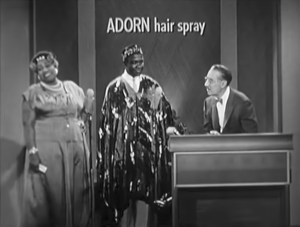
Eric Marcus Narration: On May 15, 1958, around 13 million American households tuned in to one of the most popular TV game shows, hosted by the mustachioed, cigar-chomping comedian, actor, and TV presenter Groucho Marx.
———
Groucho Marx: One thing about our show, you never see on, any unusual people on our show.
———
EM Narration: Recorded in black and white in front of a studio audience, Marx would invite teams of two to answer questions for a cash prize. But the quizzing mostly played second fiddle to Marx’s comic shenanigans with the guests—a mix of everyday people and well-known personalities.
———
GM: Who’s first tonight?
GF: Groucho, we have Gladys Bentley and—
GM: You have Gladys Bentley?
GF: We have Gladys Bentley.
GM: Since when am I your partner?
———
EM Narration: Marx invites the first team up to play, and the aforementioned Gladys Bentley, a regal-looking Black woman, walks into the frame. She’s in a silk dress, high heels, pearls, and headpiece—a crown, almost, adorned with flowers. Her hair is styled in an elegant bun.
———
GM: And you’re Gladys, uh, Bentley, is that right?
Gladys Bentley: Yes.
GM: Do, uh, do you have a job, Gladys?
GB: Yes, I’m an entertainer. I sing and play for a living in nightclubs all over the country.
GM: Gladys, how long have you been singing in nightclubs around the country?
GB: For about 40 years.
GM: What kind of songs do you sing?
GB: All kind of songs.
GM: You’re the Gladys Bentley.
GB: That’s right.
GM: Thought your name sounded vaguely familiar…

———
EM Narration: I’m Eric Marcus, and this is Making Gay History: The Queens of Welfare Island.
Twenty-five years before that episode of You Bet Your Life, Gladys Bentley was a household name in New York City. If you spent time in uptown Manhattan during the Harlem Renaissance, her name would have been on the lips of both Black and white New Yorkers. And if you saw her on the street or on stage, she’d almost certainly be in men’s clothes, maybe even with a girlfriend on her arm.
But by the late 1950s, she’d slipped into relative obscurity, showing up as a bit player on Groucho’s game show, presenting as fully feminine. What changed?
The Harlem Renaissance and Gladys Bentley’s place in it as a king of Harlem was a window in time when she and other Black and queer Americans could be public as themselves. But it didn’t last. Soon enough, that window was slammed shut, making way for the white picket fence world of postwar America.
Today, we’re going to pry that window back open, to go back in time to visit the Harlem Renaissance in full bloom, when uptown drag balls were all the rage, and when you might find Gladys Bentley playing piano all night in a speakeasy.
This is episode three: “King of the Clam House.”
———
Gladys Bentley, The Gorgeous Nothings (J. Harrison Ghee): Tell me, sugar, you got any moves?
Gene, GN (Allan K. Washington): M-moves?
Gladys Bentley, GN (JHG): Yeah, baby. Moves.
———
EM Narration: We met a version of Gladys Bentley in our last episode, as she appears in The Gorgeous Nothings.
———
Gladys Bentley, GN (JHG): Okay, kid, come back around midnight, tell ’em Miss Gladys Bentley sent for your Black ass from Baltimore.
———
EM Narration: Bentley, here read for us by J. Harrison Ghee, meets Gene, the fairy with the flaming red cape as he first arrives in New York. She opens the door for him to the uptown gay world.
———
Gladys Bentley, GN (JHG): Wear something swish, you hear?
Gene, GN (AW): Swish?
Gladys Bentley, GN (JHG): Yeah, baby, swiiiiish.
———
EM Narration: The real Gladys Bentley never spent any time incarcerated on Welfare Island, as far as we know. She plays a supporting role in The Gorgeous Nothings. But in New York City in the 1930s, Gladys Bentley wasn’t a supporting act. She was a star, a fixture of the bawdier, boozier, and gayer side of Harlem. A world of balls and butches and basement bars: the perfect place to pick up some of those fairyland threads from our last episode.
By the 1920s, almost 175,000 Black Americans had settled in Harlem just north of Central Park. Its three square miles had the largest concentration of Black people in the world. They produced a cultural movement that transformed the neighborhood and American culture forever: the sounds of jazz, the prose of poets, and the politics of civil rights were all in the air.
———
George Chauncey: The Harlem Renaissance of the ’20s and early ’30s was really a gay Harlem Renaissance as well, because so many of the writers and performers and so forth were queer…
———
EM Narration: George Chauncey, the historian and author of Gay New York.
———
GC: … either known just within their own circles, but many of them known much more widely.
———
EM Narration: Langston Hughes, Alain Locke, Jimmie Daniels, Ma Rainey, to name a few well-known examples. But it wasn’t just intellectuals and public figures participating in queer life in Harlem; it was also the public at large.
To get a sense of just how present and public queer life was for the average Harlemite, all you needed to do was go to a ball.

———
The Knickerbockers: [Singing “Masquerade”:]
Masquerade, masquerade
Lend a charm to you
But to me it is just a part…
———
EM Narration: Drag balls, sometimes called masquerades, were operating at an almost unbelievable scale in Harlem.
———
GC: By the mid-’20s, there was one ball in particular, called the Hamilton Lodge Ball, which became famous around the city, and apparently every Black person in Harlem was aware of it.
———
EM Narration: This ball—which was also known as the “faggots’ ball”—was held at the Rockland Palace, a Harlem venue that at other times might have hosted concerts or even political rallies. But it’s also where the first drag ball in American history was staged… in 1869.

———
GC: By the late ’20s, the Hamilton Lodge Ball in Harlem was an annual affair that drew hundreds and hundreds of what people at the time called female impersonators and their male escorts, and a smaller but visible number of male impersonators. Drag queens came from Baltimore and Boston and even New Orleans, ’cause it was the biggest affair of its kind on the East Coast.
Not only did you have hundreds and hundreds of queens at these balls, you had literally thousands of Black families who would gather together to go watch the ball, and usually sitting in the balcony. And there would be white people from downtown coming up as well, and some of the queens were white. It’s one of the few integrated social spaces in queer life or in the city as a whole, drag balls.
One of the things reporters often commented on is that the spectators who would gather outside on either side of the red carpet to watch the queens descend from their cab and walk into the ballroom, they weren’t sure who was actually a male and who was actually a female. Mostly they were in awe of them.
———
EM Narration: And even if you couldn’t make it to the ball, you could still read about it afterwards.
Article published in the March 14, 1932, issue of Broadway Brevities, a New York-based gossip magazine that called itself “America’s First Tabloid Weekly.” It offered extensive coverage of the gay scene.
———
GC: The Black press in Harlem was fascinated by these balls. They were shocked, or purported to be shocked and morally outraged, but the Black press followed the Black community, which embraced it completely.
———
EM Narration: One report from a Black newspaper in 1932 raved, “… one of the largest gatherings that has ever graced this hall came the all-conquering Hamilton Lodge … women screamed full-throated ovation as the bizarre and the seeming impossible paraded for their approval … so we say ‘All Hail, Hamilton.’”
Just a short subway ride south of the Rockland Palace, Gladys Bentley was presiding over another hopping Harlem melting pot.
———
Ted Rolfs: I think one of the great attractions in Harlem was to, um, go to Gladys Bentley’s, uh, little hideaway down in a basement where she played a, a piano.
———
EM Narration: That’s the gay activist Ted Rolfs in the 1984 documentary Before Stonewall.
———
TR: Gladys Bentley was a very overt lesbian.
———
Cookie Woolner: She’s really one of the few people in the 1920s and ’30s who we would, you know, refer to with the more contemporary term of being out of the closet.
———
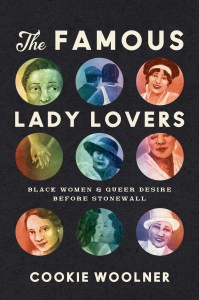
EM Narration: Cookie Woolner is the author of The Famous Lady Lovers: Black Women and Queer Desire Before Stonewall.
———
CW: And I am an associate professor of history at the University of Memphis, where I teach classes on race, gender, and sexuality in modern American culture.
———
EM Narration: Gladys Bentley was born on August 12, 1907, in Philadelphia, Pennsylvania.
———
CW: She claims that her mother had always wanted to have a boy, and she really hoped that she would be a boy. And so when she was born a girl, she was not only very disappointed, she claims she didn’t even touch her own daughter for the first six months of her life.
———
EM Narration: She remembered her early life unhappily, fighting with her younger siblings, with little interest in other children. She later wrote—
———
Excerpt from “I Am a Woman Again” by Gladys Bentley (Read by Kimberly Fox Knight):
I remember one person who did appeal to me in those love-starved, lonely, elementary school days. She was one of my teachers. … Sometimes she would let me comb her long, beautiful hair. In class I sat for hours watching her and wondering why I was so attracted to her. At night I dreamed of her. I didn’t understand the meaning of those dreams until later.
———
CW: Gladys starts wearing boys’ clothing around ages eight or nine, and she claims that when she was 16, her parents actually tried to take her to a doctor to cure her lesbianism, although she doesn’t use that word specifically. And that’s the age in which she runs away and she goes to Harlem. She very quickly is able to get a job playing piano in a speakeasy there.
———
GB: [Singing “Red Beans and Rice”:]
Red beans and rice
Greasy bacon in the pot
Red beans and rice
Greasy bacon in the pot
———
EM Narration: By the late 1920s, Bentley was cutting records—like this one, “Red Beans and Rice,” from 1929.
Her early recordings were for OKeh records, a label known for featuring Black artists.
———
GB: [Singing “Red Beans and Rice”:]
Walked to work this morning
’Cause I only had one dime…

———
EM: How would she typically dress? What was her style?
CW: She became known for wearing a white tuxedo with top hat on stage—very elegant. She was a very elegant woman, and she was a large woman, so some people might not have seen her like that. But, um, she cut quite a figure.
———
EM Narration: One of the most famous photographs of Bentley shows her standing sideways in a formal pose on stage in a white tails tuxedo, complemented by a white bow tie, white pants, white low-heeled tapered shoes, white top hat, and white gloves, with a black cane tucked under her arm. She looks directly into the camera. Her top hat is tipped below one eye, her lips rouged. There’s the hint of a smile.
———
CW: Some people kind of refer to her as a male impersonator, though it really seems that Bentley, who was someone who was just masculine identified, kind of, you know, used this trope of the male impersonator to just be herself on stage.
———
EM Narration: She wore men’s clothes, or a mix of them, off stage as well. In one photograph she’s standing outside in a fitted men’s jacket, wide-brimmed hat, necktie, and pocket square, but with a long skirt instead of pants. She’d be very easy to recognize, on or off stage.
Despite her outward appearance, Gladys’s persona on her records was not overtly queer. In a newspaper advertisement for her early records, you can see her without her signature top hat. In the ad she’s called “a new blues star” and her music is described as “extra heated blues.”

———
GB: [Singing “Worried Blues”:]
What makes you menfolk treat us women like you do?
What makes you menfolk treat us women like you do?
———
EM Narration: This song, “Worried Blues,” may have been her biggest hit from this period. It combined the blues as popularized by Black artists like Ma Rainey with a jazzier edge, and lyrics about the hardships of being a woman in a man’s world.
———
GB Voice-Over: [Reciting “Worried Blues” lyrics:]
What makes you menfolk treat us women like you do?
I don’t want no man that I got to give my money to
Give my man everything from a diamond ring on down
Next thing I’m gonna give him: six feet in the cold, cold ground
———
GB: [Singing “Worried Blues”:]
Next thing I’m gonna give him: six feet in the cold, cold ground
You can never tell…
———
EM Narration: But what Gladys laid down on records was dramatically different from what she played live. On stage, the blues took an explicit turn toward being, well, blue…
———
CW: She became well known for singing naughty versions of popular songs, such as a take on the popular Broadway tune “Sweet Georgia Brown” and the song “My Alice Blue Gown,” turning them into an ode to the joys of anal sex. And a sample of lyrics went, “As he said, ‘Dearie, please turn around’ / And he shoved that big thing up my brown.”
———
GB VO: [Reciting lyrics:]
He tore it, I bored it
Lord, how I adored it
My sweet little Alice blue gown
———
EM: Whoa. And that was in the 1930s?
CW: That, yes, that would’ve been late ’20s, early 1930s. But again, these are just kind of, you know, the party songs that would be performed in illicit spaces, right? These speakeasy spaces are not legal spaces, right?
EM: Ah.
———
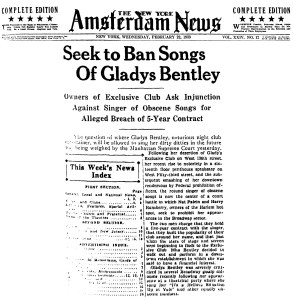
EM Narration: These lyrics were risky to voice, even in hideaway speakeasies. Wilbur Young, a writer who contributed a profile of Bentley in a 1938 collection called “Sketches of Colorful Harlem Characters” wrote—
———
Excerpt from Wilbur Young’s Bentley Profile (Read by Josh Gwynn):
Some of these lyrics would be so rank that the house lady would look on in despair while Gladys … would encourage the paying guests to join in on the chorus, which they did willingly. At this stage, it was just a matter of time before the house got raided.
———
CW: Gladys Bentley became famous for having amazing stage presence. She was an incredibly talented piano player. She could play very fast. She would walk in and out of the audience. She would flirt with the women in her audience. And it’s important to note that many of the venues where Bentley played were segregated spaces.
———
EM Narration: In late 1920s Harlem, Bentley was playing in illegal bars while bootlegged booze flowed. But from many speakeasies to some of the most famous clubs at the time, Black performers entertained from the stage, Black people waited tables and poured drinks, but the audience was strictly white.
———
CW: So she’s primarily performing to white audiences, and she’s primarily flirting with white women in the audience, which would’ve been considered pretty scandalous at this time. So people were really kind of coming out to take part in these taboo, transgressive performances and to enjoy them.
———
Red Nichols and His Orchestra: [Singing “Harlem (Harlem Is Heaven to Me)”:]
Harlem, Harlem, Harlem
With its quaint cabarets and its sunshiny days
Harlem is heaven to me…
“A Night-Club Map of Harlem” by E. Simms Campbell. Credit: © 1932 Dell Publishing Company, Inc.; retrieved from the Library of Congress.
———
EM Narration: One of the wonderful artifacts from this time is a 1932 hand-drawn map of the Harlem club scene by E. Simms Campbell, a Black cartoonist and illustrator. It’s pure Jazz Age, with loose figures populating the page as they come and go from various venues.
There are cars piled up as white folks are escorted into segregated clubs like Connie’s Inn and the Cotton Club. You can see Black couples dancing the Lindy Hop at the nonsegregated Savoy Ballroom. It even notes the “nice new police station” at the edge of the frame, around the corner from Club Hot-Cha, where it says, “Nothing happens before 2 a.m., ask for Clarence.”
The kinds of clubs Bentley played were centered around 133rd Street. It was known as “the Street,” “Swing Street,” and “Jungle Alley,” due to the race mixing you’d see outside.
And right at the center of the map is a star with the name “Gladys’ Clam House,” where the map notes, “Gladys Bentley wears a tuxedo and high hat and tickles the ivories.”
The venue was actually called Harry Hansberry’s Clam House but Gladys was so popular, and so notorious, her name became synonymous with the club, at least for a minute.
In 1933, she reportedly broke her five-year contract with the Clam House in search of bigger venues.
———
CW: After Prohibition ends, she still continues playing some of the larger Black theaters in Harlem, and she becomes known for one performance where she has a chorus line of fairies.
———
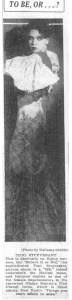
EM Narration: An article from 1934 printed a photo of one of her fairies, a female impersonator with the delightful name of Toni Stuyvesant. Toni is in a diamond-patterned gown with flared sleeves, accented by a smoky eye and dark lip.
At one point Bentley’s show had grown into a full revue at venues like the Ubangi Club, where audiences were described as “a mixed crowd … noisy and intimate and gay.”
———
GB: [Singing “Gladys Isn’t Gratis Anymore”:]
People think that I’m naive
But there’s something up my sleeve
———
EM Narration: She was performing songs like “Gladys Isn’t Gratis Anymore,” a cheeky, self-referential number full of sexual double entendres about getting paid.
———
GB: [Singing “Gladys Isn’t Gratis Anymore”:]
Gladys isn’t gratis anymore
Unidentified Male Vocalist:
Anymore
GB:
Those who seek a freebie
There’s the door
Male Vocalist:
The back door or the front door, dear?
GB:
Just decided no more giving away
What she could sell
Male Vocalist:
I can imagine
GB:
If anyone expects her to
Let them go to hell
———
EM Narration: This recording by Bentley shows the shifting of musical winds, from blues to swing jazz. It probably isn’t too far off from what you’d hear at her shows, although at her peak she’d often be accompanied by a full band or orchestra.
———
GB: [Singing “Gladys Isn’t Gratis Anymore”:]
Gladys isn’t gratis anymore
Male Vocalist:
Well, come on into my house, honey
And I’ll take care of it
Ain’t nobody home but me
———
EM Narration: As her star rose, so did critical pushback. This was the assessment from the New York Age in 1934, one of the most prominent African American newspapers of the time: “I, personally, could not enjoy their part of the show as I had a burning desire to rush out and get an ambulance backed up against the stage door to take them all to Bellevue for the alienists to work on.”
———
CW: An alienist is a term for, you know, a, a psychiatrist from the early 20th century.
EM: Oh, to be in the audience for that show.
CW: Yes, I can, I can only imagine.
———
EM Narration: Bentley clearly didn’t mind a bit of controversy. In one instance, printed in the newspaper in 1930, she invited a gossip columnist to her own wedding. He asked who the lucky man was and she replied…
GB VO: “Man”? Why boy you’re crazy.
EM Narration: … before naming another female singer.
Mabel Hampton, a friend of Bentley’s, recalled going to parties at Bentley’s home along with her lesbian friends. Usually run by women, these venues were sometimes called “buffet flats” because they provided a “buffet” of forbidden or restricted entertainment, with illegal booze and gambling—and in Bentley’s case, race mixing.
———
Mabel Hampton: White and Black all assembled there together and half the time they had no clothes on and they’d drink and do whatever they wanted to do.
———
EM Narration: The Harlem Renaissance poet, writer, painter, and dancer Richard Bruce Nugent—a true Renaissance man—was one of the few prominent Harlem artists who was publicly out. He remembered Bentley taking a special trip to the seashore in her heyday.
———
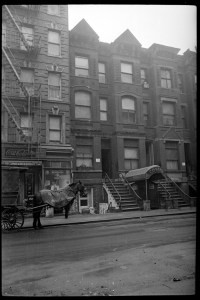
Richard Bruce Nugent: During her stint at the Clam House, she went off to Atlantic City and married her girlfriend.
———
EM Narration: This wedding, if it happened, wasn’t documented as far as we know. Still, the idea isn’t outrageous. Mabel Hampton recalled having attended a different lesbian wedding in Harlem in 1938.
———
MH: It was all women—wasn’t no men. Outside the minister, that’s all. And the girl had a veil—a wedding, uh, dress and her veil—and the other woman had on pants, white pants.
———
EM Narration: Bentley was a genuine star, and she was well paid for it. In 1933, Eric Von Wilkinson, a gossip columnist for the New York Age, noted, “Gladys Bentley, eminent Harlem song-bird and hip-waver, has deserted the sepia neighborhood … for the swankier and lighter part of life. La Bentley is now residing in her exclusive 77th Street and Park avenoo [sic] home.”
But it seems when she moved to the Upper East Side she still kept some of that queer Harlem Renaissance with her. Wilbur Young, who wrote that 1938 profile of Bentley in “Sketches of Colorful Harlem Characters,” described her trajectory as follows.
———
Excerpt from Wilbur Young’s Bentley Profile:
As Gladys grew in popularity, rumors had it that she was queer and even sported a girlfriend. To add to these whispers, she could be seen any day marching down Seventh Avenue attired in men’s clothing and she seemed to thrive on the fact that her odd habits was [sic] the subject of much tongue wagging.
———
EM Narration: Gladys Bentley had graduated from a basement bar curiosity to a New York City entertainment institution, but all that exposure had its downsides.
———
CW: She becomes so popular that she performed briefly in Times Square. That’s really where she’s seen as, as too much, and her performances are seen as, you know, taking things too far.
———
EM Narration: The white world that had trekked uptown to see Gladys Bentley in those segregated Harlem bars and clubs was pushing back soon after she started headlining downtown theaters.
———
CW: Since Prohibition has just ended, there’s kind of a new focus on, you know, reforming up nightlife spaces, so maybe she even kind of becomes a scapegoat, and she’s kind of someone who’s held up and having her shows, um, shut down and her performances shut down. So basically, she becomes censored, and there’s a few times that she’s not able to perform in Times Square.
EM: So she moved into a much larger public space just at the time when, uh, Mayor Fiorello La Guardia began his reform campaign, and in advance of the 1939 World’s Fair when they were gonna clean up the city, and that always seems to mean it involves gay people.
CW: Yes, as George Chauncey talks about at length in Gay New York, this is when we have the rise of the State Liquor Authority, and this is the beginning of these, yeah, these new laws on the books that lead to the Stonewall uprising, right? That are claiming—not too explicitly, but implicitly—that, you know, at any bar, if alcohol is served and gay people are there, that’s considered disorderly, inherently, right? So yeah, the post-Prohibition era is kind of the beginning of this era of, like, constant raids on gay bars.
———
EM Narration: Bentley retreated to the more familiar and tolerant haunts of Harlem for a time before heading out on tour. In 1938 Bentley announced she’d leave New York entirely, with a planned move to Hollywood. Greener pastures beckoned as Mayor La Guardia’s clampdown saw the kinds of clubs she played in raided and closed. A chill had descended on the city that never sleeps.
The New York City that had elevated her just one decade prior had now decided it’d had enough. She took her act elsewhere.
———
CW: So she actually takes it to the West Coast, and we do know of her performing in some of the early lesbian bars in the World War II era. But then, of course, it’s like, as soon as World War II ends, that’s when we begin, you know, descending into this repressive Cold War era. We have the McCarthy era. We have, you know, gay people being fired from their government jobs.
And so that’s kind of the, the larger background that we’re assuming kind of leads to her writing, um, this article that’s kind of a complete 180 on her, you know, her former identity.
———
EM Narration: After a quiet decade in the 1940s, Gladys Bentley came back, with a bang. In 1952 she wrote an article for Ebony magazine called “I Am a Woman Again.”
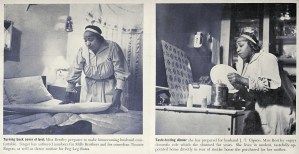
Complete with a photo spread, Bentley is a picture of traditional femininity. She’s in a long dress and braided hair, modestly pinned up. She picks pearls out of a jewelry box, does the dishes, and makes the bed. She’s dressed for homemaking—a far cry from her famous white tux, top hat, and tie.
In the article, she writes—
———
Excerpt from “I Am a Woman Again”:
For many years I lived in a personal hell. Like a great number of lost souls, I inhabited that half-shadow no-man’s land which exists between the boundaries of the two sexes.
———
EM Narration: The article, which also includes many of the biographical details historians have used to reconstruct her life, completely repudiates “Gladys, the king of the Clamhouse.”
———
Excerpt from “I Am a Woman Again”:
My name has twinkled in bright lights of storied streets of great cities. I have become known from coast to coast and … beamed at the warm words of the critics; while I earned large sums of money … still, in my secret heart, I was weeping and wounded because I was traveling the wrong road to real love and true happiness … until the miracle happened and I became a woman again.
The miracle came about when I discovered and accepted … the true devotion of a man who loved me unselfishly and whose love I could return.
———
EM Narration: Bentley describes falling for a sailor named Don, in Los Angeles. She discovers religion and turns her life over to God, and then to a doctor.
———
Excerpt from “I Am a Woman Again”:
I confessed to him then that I was thinking of getting married. “That’s just what I wanted to hear,” the doctor told me. “Now I can tell you what I’ve known for a long time. Your sex organs are infantile. They haven’t progressed past the stage of those of a fourteen-year-old child.”
He told me I should be treated, taking three shots weekly for six months. The injection of female hormones, which would overcome predominant male hormones, would affect me greatly, he declared.
The treatment was expensive but it was worth every penny it cost.
———
EM Narration: Bentley writes that her marriage to the sailor Don didn’t last, but she found a second husband, a notable newspaper columnist. She ends the article by declaring her intention to continue to perform and to finish her autobiography. An accompanying photo shows Bentley at her typewriter with the caption, “She hopes to help people who are trapped in a modern-day ‘well of loneliness.’”
So, what are we to make of that?
———
CW: I think the, the Ebony article really just brings up more questions than answers. We need to keep in mind was the height of, you know, the Cold War and the Lavender Scare.
———
EM Narration: It wasn’t unheard of for previously risqué performers to try to clean up their acts so they could continue to work in these newly regressive times.
———
CW: I mean, yeah, she, she might have just been going through a hard time, and they offered her a decent chunk of money to, you know, write the article. There’s so many reasons that it might have been written, right?
———
EM Narration: It’s hard to know how much of the story to take at face value. It seems she never actually married that newspaper columnist, who died unexpectedly a month before the article was published. Bentley is not even mentioned in his own paper’s obituary. But she did eventually marry an army veteran later that year; Jet magazine even covered their honeymoon.
Gladys’s promised autobiography was never published. Still, some five years after the “I Am a Woman Again” article appeared in Ebony, an editor who worked on the piece named Alfred Duckett briefly followed up on the story.
He wrote an article for the legendary Black newspaper the Chicago Defender titled “The Third Sex.” Duckett claimed that in her unpublished memoir, Bentley readily admitted that she had been living as a “man” in her private life, and that she had been the “husband to a number of women, both colored and white.”
He also notes that she had “returned to her old ways” after her marriage. He recounts a story of a friend visiting Gladys’s home who asked about the two picture frames sitting on the dresser. “Who were they?” the visitor asked.
GB VO: Oh … That’s my husband … and that’s my wife.
EM Narration: One thing we do know is that even after that Ebony piece was published, Bentley kept playing and performing. And then, in 1958, she appeared on You Bet Your Life with Groucho Marx—her only known appearance on film.
———
GM: Could you sing something for us right now?
GB: If you have a small piano or something, I could do “Them There Eyes.”
GM: Suppose we had a large piano, what could you do, huh?
GB: Well, then I could do maybe “Somebody Else’s Eyes.”
———
EM Narration: They roll out a piano, and Bentley sits down to play.
———
GB: [Singing “Them There Eyes”:]
I fell in love with you the first time I looked into
Them there eyes
You got a cute lil way of flirtin’
With them there eyes
———
EM Narration: Bentley is absolutely magnetic. Her hands dash across the keyboard so fast it’s hard to keep up. With a wide grin, she taps her foot in rhythm with the music. Her performance is effortless, cool, and she looks completely in control—and like she’s having a lot of fun.
———
GB: [Singing “Them There Eyes”:]
They’re gonna get you in a whole lot of trouble
Yes, baby, them there eyes
———
EM Narration: Even Groucho looks impressed. He and his cigar join in to dance, much to the audience’s delight.
Bentley ultimately won $1,000 in Groucho’s guessing game, which seems like small potatoes compared to what she gave that audience, the people watching at home, and even to us today.
In this one song, performed in the 1950s, she showed the world a little bit of Harlem in the 1930s, beamed out to millions and millions of Americans on one of the most popular shows on television. It feels incredibly lucky that we have this footage where we get to see Gladys perform her music, fully embodied, no matter her gender presentation.
———
EM: When you hear the music of Gladys Bentley, what does it make you feel?
CW: It just makes me feel so much joy. I would do anything to get to see her perform live. But at least we have, you know, this one clip of her performing on television in the ’50s, even though it just gives us kind of a little, a little tease, a little taste of what her performances were like in the Prohibition era.
EM: Makes us want so much more.
CW: Yes.
———
GB: [Singing “Them There Eyes”:]
… watch out, brown eyes
If you’re wise
Sparkle
Bubble
Get you in a whole lot of trouble
Yes, baby, them there eyes
Yes, baby, them there eyes
———
EM Narration: Gladys Bentley died just a couple of years after this performance. She was 52.
Next time on “The Queens of Welfare Island,” we’ve got a ticket to a turn-of-the-century gay bathhouse in a true crime story that features undercover cops, public scandals, multiple trials, and some shockingly explicit discussions of gay sex.
———
John Cariani (Abraham, GN): Abraham is married, has five children, and then got this ticket to go to a bathhouse, went in, and lost his mind.
———
Brian Ferree: Eric, are you turning red?
EM: Yes, I am. And I don’t mean to make light of this. I just, I, I, I, I’m actually shocked by the, the detail.
———
EM Narration: This episode was written, produced, mixed, and sound designed by Benjamin Frisch and executive produced by our founding editor, Sara Burningham. With production help from Will Coley, Max Miller, Bart Warshaw, Tarcisio Longobardi, and Justin Willingham. Our studio engineers were Michael Bognar, Cathleen Conte, Katherine Cook, and Charles de Montbello at CDM Sound Studios. Making Gay History’s theme music was composed by Fritz Myers.
Thank you to Kimberly Fox Knight and Josh Gwynn for providing voice-over. And thanks to our listening circle, including Josh Gwynn, Danielle Hewitt, and Jeffrey Masters.
Thank you to our photo editor, Michael Green, and fact-checker, Matt Koff. With editorial support from Making Gay History’s deputy director, Inge De Taeye. Thank you, also, to the New York Public Library Manuscripts and Archives Division for their ongoing assistance.
Special thanks to George Chauncey and Cookie Woolner for their expertise.
To learn more about the people and stories featured in our episodes, please visit makinggayhistory.org, where you’ll find links to additional information and archival photos, as well as full transcripts.
“The Queens of Welfare Island” is a production of Making Gay History. It was made possible with generous support from the Life Jacket Theatre Company, the Jonathan Logan Family Foundation, Ty Ashford and Nicholas Jitkoff, Broadway Cares/Equity Fights AIDS, Christopher Street Financial, the Marcus Family Foundation, Rick Hoffman, Bill Kux, Robert Dodd, Maureen Bennett, Maria Lefkarites, Emily and David Tobin, Richard and Mynette Marcus, the Calamus Foundation, and Christine, Bryan, and Alex White, in addition to the many hundreds of other donors who make it possible to bring you this work.
I’m Eric Marcus. Until next time.
###