Mabel Hampton
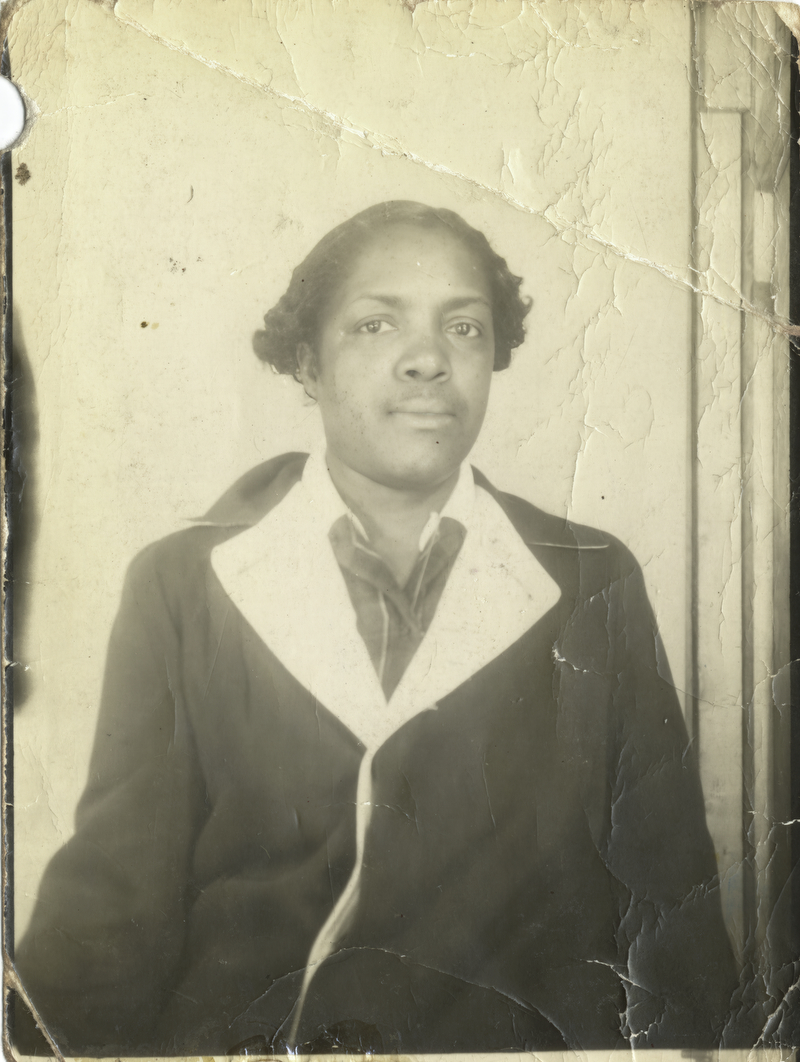
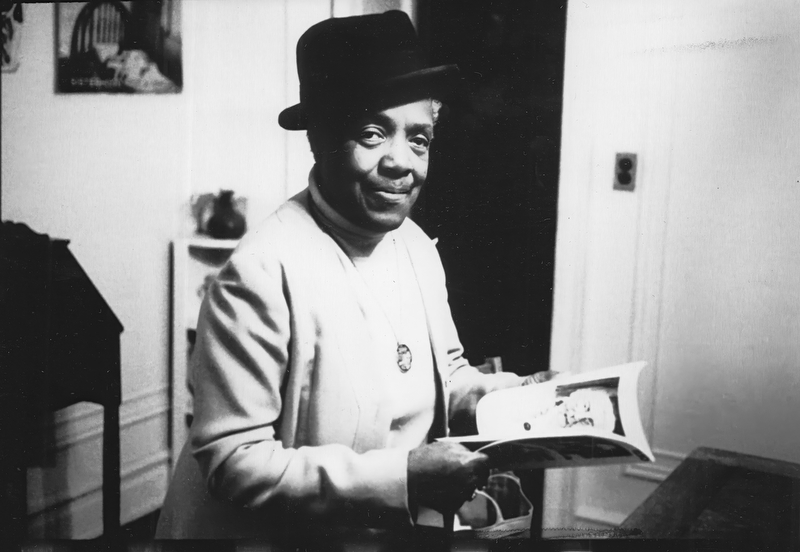
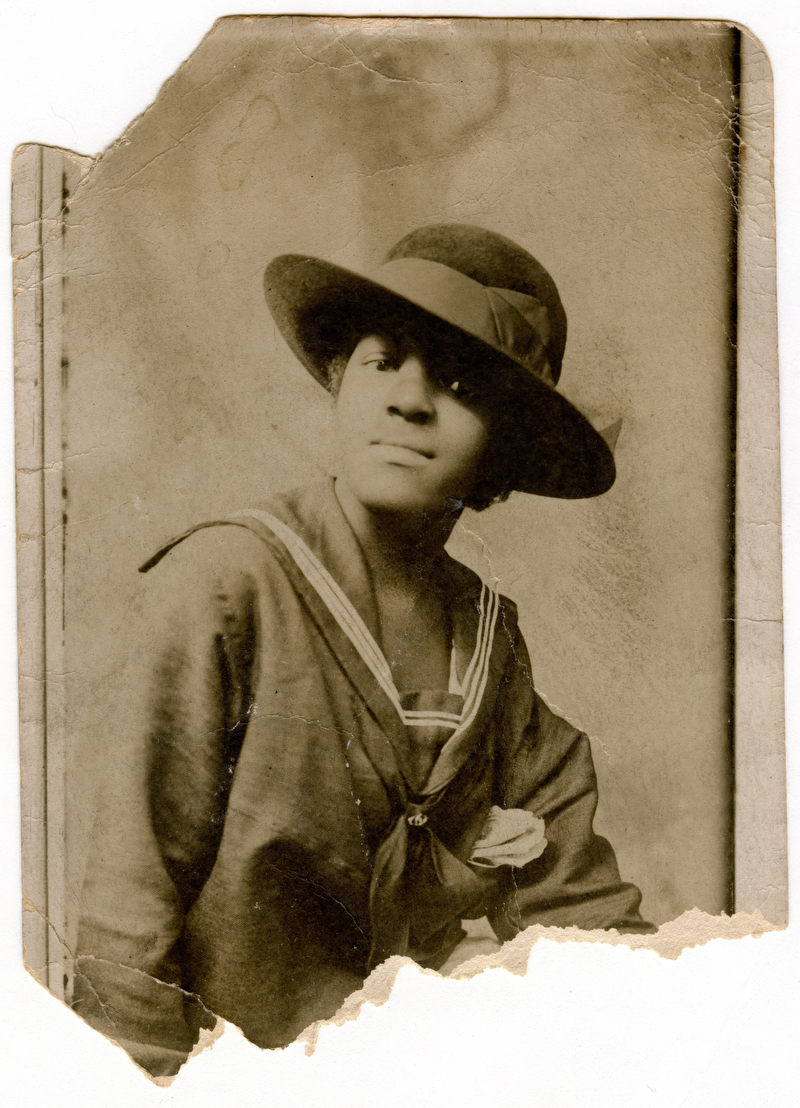
 Mabel Hampton, circa 1918. Credit: Courtesy of the Lesbian Herstory Archives.
Episode Notes
Mabel Hampton was a performer and domestic worker who lived as an out lesbian in New York City from 1920 until her death in 1989. Her recorded oral histories offer a rare firsthand account of Black lesbian life during the Harlem Renaissance.
Episode first published June 25, 2026.
———
Audio Sources
All interview audio in the episode is drawn from the Mabel Hampton Oral History Collection at the Lesbian Herstory Archives and used by permission of the Lesbian Herstory Archives and Joan Nestle, who conducted the interviews. We included excerpts from the following:
- Mabel Hampton, 1988 (Tape 1)
- Mabel at 85 (Tape 1)
- Mabel Hampton’s Story, July 1986 (Tape 4)
- Mabel Hampton Interview
- Mabel Hampton, November 28, 1986 (Tape 1)
———
Resources
Learn more about Mabel Hampton in Joan Nestle’s essay “I Lift My Eyes to the Hill: The Life of Mabel Hampton As Told by a White Woman,” which begins on page 82 of this PDF. This multi-part blog series expands on the essay and includes a wealth of photos and documents related to Hampton’s life.
After Hampton’s death, the Lesbian Herstory Archives (LHA) dedicated this newsletter issue to her. In addition to volunteering at the LHA, Hampton also donated her large lesbian pulp fiction paperback collection to the archive.
Listen to this recent interview with Joan Nestle (which touches on her friendship with Hampton) from the Our Dyke Histories podcast. This NYC LGBTQ Historic Sites Project webpage features Nestle’s Upper West Side apartment—the original home of the LHA—where Hampton lived toward the end of her life. The page has a brief biography of Nestle, background on the LHA’s founding, and some additional photos of Nestle and Hampton.
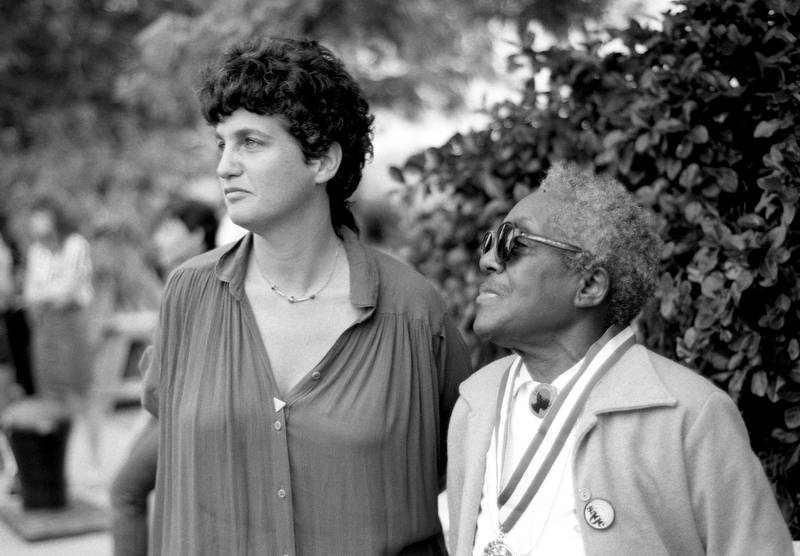
Explore the LHA’s Mabel Hampton Oral History Collection here. If you’d like to hear more about Hampton’s experiences during the Harlem Renaissance, you may be interested in this interview, in which she describes a risqué party at the home of socialite and arts patron A’Lelia Walker. (Walker was the daughter of Madam C. J. Walker, who’s credited as being the first female self-made millionaire in the U.S.)
In this interview from the collection, Hampton discusses her wrongful incarceration at Bedford Hills, a women’s prison in Westchester, New York. As noted in the episode, Hampton was sentenced to three years on a bogus prostitution charge by Jean Norris, New York City’s first female judge. As historian Hugh Ryan wrote in When Brooklyn Was Queer, “especially in prostitution-related arrests of Black women, Norris handed down 40 percent more convictions than other magistrates.” This 1919 New York Times article reported on Norris’s historic appointment to the bench; this one from 1931 discussed her removal for judicial misconduct.
Watch Hampton in conversation with Renee McCoy in this episode of Our Time, Vito Russo’s 1983 public access TV series. More video footage of Hampton appears in the first part of the 1994 documentary Not Just Passing Through, which is devoted to Hampton and the LHA. Hampton was also featured in the influential 1984 documentary Before Stonewall: The Making of a Gay and Lesbian Community. Watch the trailer here; the whole film is available here.
The History Channel post “6 Key Figures of the Harlem Renaissance’s Queer Scene” includes brief bios of both Gladys Bentley and Ethel Waters—two of the stars Hampton references in the episode. Learn more about Bentley in this short video from American Masters (PBS) and find links to her music and photos on the Queer Music Heritage website. For more on Waters, listen to this WAMU interview with her biographer Donald Bogle and her 1933 recording of “Stormy Weather.”
Both Bentley and Waters appear in The Famous Lady Lovers: Black Women and Queer Desire Before Stonewall by Cookie Woolner (University of North Carolina Press, 2023), a well-reviewed exploration of Black lesbian life during the 1920s and ’30s.
In addition to the queer Harlem Renaissance artists Hampton mentions in the episode, she also references Florence Mills, the hugely popular star of the all-Black musical Shuffle Along, which opened on Broadway in 1921. Learn more about Mills and Shuffle Along in this Museum of the City of New York post. When Mills died in 1927 at the age of 31, an estimated 150,000 mourners lined the streets of Harlem for her funeral procession; Mabel Hampton was one of them.


———
Episode Transcript
Joan Nestle: How many women have you been with, Mabel, you figure?
Mabel Hampton: Oh, I guess I played around with about a dozen or so. I got along all right. But I always stayed, stayed to myself mostly. But I, I, I like them, though, like them very much.
JN: Women?
MH: Yeah!
JN: Yeah.
MH: Yeah.
———
Eric Marcus Narration: I’m Eric Marcus, and this is Making Gay History.
The Lesbian Herstory Archives in Brooklyn, New York, contains a trove of recorded interviews with lesbian activist, and one-time singer and dancer, Mabel Hampton. They were conducted in the late 1970s and ’80s by Joan Nestle, one of the archive’s cofounders.
The conversations offer an invaluable glimpse into Black lesbian life in New York City in the early 20th century. And they’re also a record of Mabel and Joan’s decades-long friendship. The two met in the early 1950s, when Joan was about 12 and Mabel 50. Joan’s mother had hired Mabel, who at the time made a living cleaning people’s homes and looking after their children. The job was short-lived, but Joan developed an enduring friendship with Mabel, and with Mabel’s life partner, Lillian Foster.
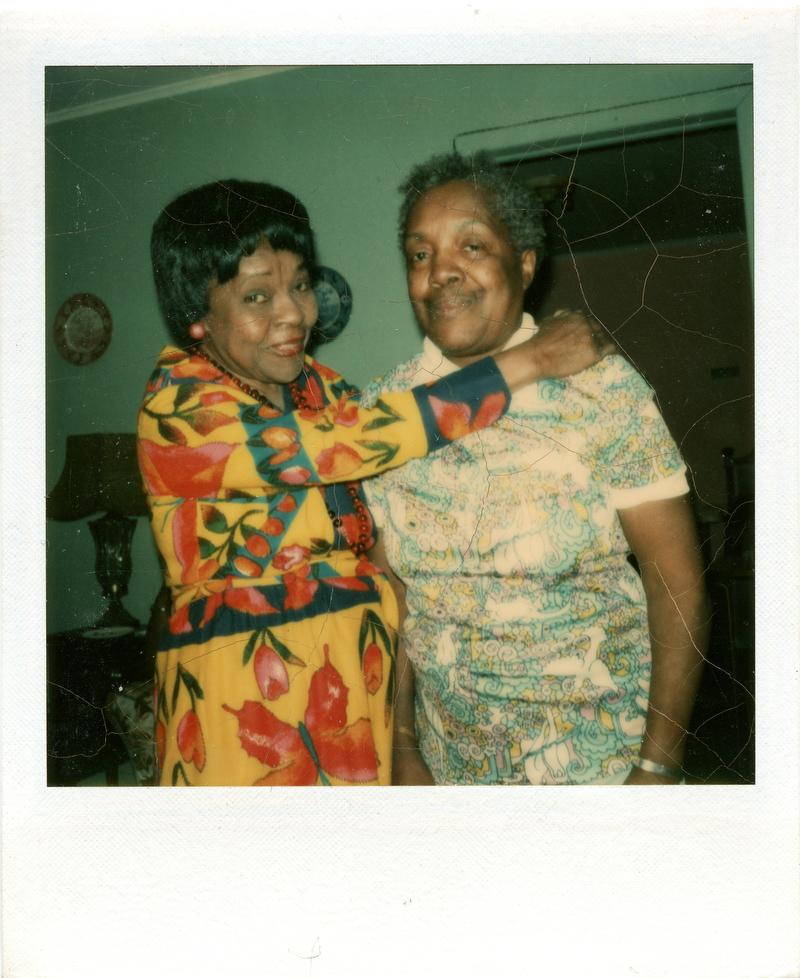
Mabel Hampton was born in 1902 in Winston-Salem, North Carolina. She lost her mother when she was just an infant and during the first seven years of her life she was raised on her grandmother’s small farm. When her grandmother died, Mabel was sent to live with an aunt in New York City. Her uncle physically and sexually abused her, and at just eight years old, Mabel ran away: she got on a train to New Jersey, where she was taken in by a Black family. She lived with them until she finished school at 17, and soon after she moved to Harlem.
It was 1920 by then. Harlem was emerging as the cultural heart of African American life, and Mabel was right there in the thick of it. But she also fell victim to a criminal justice system that targeted Black people with impunity. When Mabel was arrested by white police officers on a bogus prostitution charge, she ended up in front of Judge Jean Norris, the city’s first female judge. Norris had a reputation for being prejudiced against Black women and sentenced Mabel to three years in prison.
But the part of Mabel’s story I want to share with you from her conversations with Joan Nestle is about her life as an out lesbian in Harlem in the 1920s and ’30s. As historian Henry Louis Gates, Jr., once wrote, the Harlem Renaissance was “surely as gay as it was Black.” Harlem drew artists and intellectuals from across the LGBTQ spectrum, and a vibrant queer nightlife sprang up.
Mabel attended word-of-mouth parties and drag balls. She also worked as a dancer and singer at some of Harlem’s storied nightclubs and rubbed shoulders with the era’s brightest stars, including entertainers like drag king and blues legend Gladys Bentley and “the two Ethels,” as Mabel called them—the actor and singer Ethel Waters, who’s perhaps best known for popularizing the song “Stormy Weather,” and her girlfriend, the dancer Ethel Williams.
So here’s Mabel now, in an oral history medley of sorts that draws from a number of interviews that were recorded when Mabel was in her mid-80s. Her memory for names and places sometimes failed her, but not her recollection of the sense of community that she found.
———
JN: Now what year did you start living in New York City as a lesbian woman?
MH: Oh, that, that was around 19—I was about 17 years old. That was 1920. I lived in, uh, West 122nd Street, see.
JN: Did you pick that neighborhood for any special reason?
MH: No, no, no. A girlfriend of mine was living in that house. Oh, yes. They lived next door and they got me…
JN: Were they lesbians?
MH: Yep. They were lesbians. And they, they got me a roo—two, three rooms there, on the ground floor. There was a, a bedroom, a living room, and, and a big kitchen, you know.
JN: You remember how much you paid for rent?
MH: I couldn’t, I don’t think I paid no more than ten dollars a week.
JN: Mm-hmm.
MH: Ten dollars a week I think I paid for that apartment. And it was furnished. It was a furnished place.
JN: Mm-hmm.
MH: And, uh, you know…
JN: Did you have parties in your house?
MH: Have what?
JN: Parties. Did you have lesbian parties in your house?
MH: Not in my house. Next door, this girl, she had, uh, four rooms in the basement and she gave the parties all the time, for our close friends.
JN: Mm-hmm. How many women…
MH: Pig feet…
JN: … would be there?
MH: Sometimes there would be, oh, we had 12 or 14, maybe less and maybe more.
JN: And what would you have to eat?
MH: Oh, we had potato salad, pig feet, chitlins, and, and, and, uh, um, let’s see… Let me see, what else did we have? Shoot. Pig feet, chicken, and potato salad. And sometime it was corn. In the wintertime it was, it was, uh, black-eyed peas, and all that stuff we had.
JN: What were the women wearing at the party?
MH: Well, uh, most of them wore suits, see, they wore suits. They, very seldom any of ’em had the slacks or anything like that because they had to come through the street. Of course, if they were in a car, they wore the slacks, see? But then five or six of ’em would be in the car and come with their slacks on, see?
And, um, most of ’em had short hair. And, uh, most of ’em was good-looking women, too. Oh, there was…
JN: Were there a lot of couples or were there a lot of single women?
MH: Well, there was single and couples, see, because, uh, uh, the, the, the, the girls used to come and bring their, their, their—the bulldykers used to come and bring, bring their women with them, you know. And you wasn’t supposed to jive over there. You wasn’t supposed to look over there at all. So…
JN: And there was dancing?
MH: Oh, yeah. They danced up a breeze. They did the Charleston, they did a little bit of everything.
JN: Do you remember—was this all Black women or would there be white women there, too?
MH: No, there were, no, there, very rare. Unless we ran into somebody who had a white woman with them, they were all colored, see? And, um, but me, I venture out with any of them, I just had a ball. I, uh, I had a couple of girls, white girls from downtown in the Village, and tell them about it and they would come up, see. They were white girls and we got along fine.
And then I wanted to get a job, and I, I started looking for a job. And I worked in a factory and different places, you know.
JN: Well, tell me about it. What kind of factory, Mabel?
MH: Dress factory. I was sewing on a machine. And, uh, that’s the year that the, that they, um, they started walking out for the strike. So I didn’t like that too much. And so the girls said, “Can you dance a little?” I said, “Uh-huh.” So they carried me to the Lafayette. That’s before 19—19 and 23 was out. So I danced a couple of months.
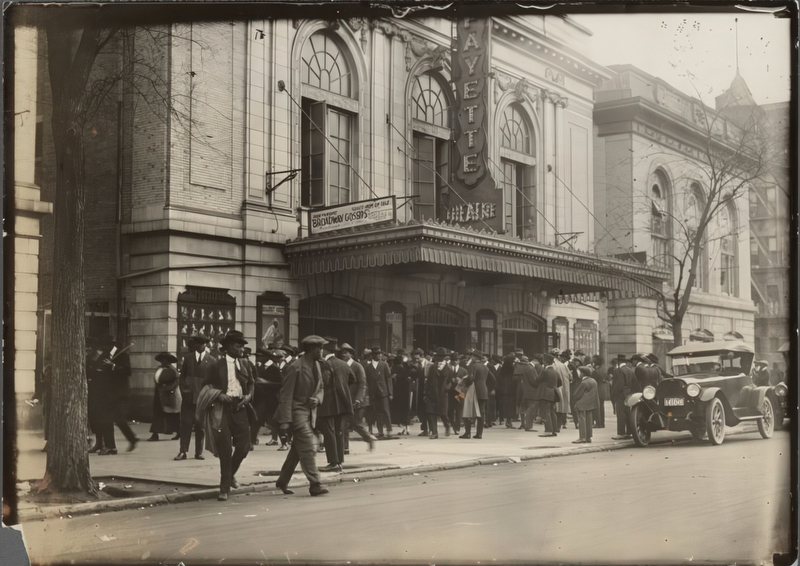
And there was, uh, there was, uh, Florence Mills and, and, uh, all those, all those women—from Florence Mills to Ada somebody and the two Ethels and this, that, and the other.
JN: Was Gladys Bentley there?
MH: Yeah.
JN: Can you talk a little bit about Gladys Bentley, what you remember about her?
MH: Well, I just remember that we all was friendly together, and she…
JN: What did she look like, Mabel?
MH: She was a brown-skinned woman and she dressed boyish all the time and she’d fight up a breeze.
JN: She was big, wasn’t she?
MH: No, she wasn’t. She got big in later years, see? She wasn’t big, she was, uh, kind of heavyset and kind of heavy voice. And time she got through beating the women, the men wouldn’t bother her, see? ’Cause she knocked the hell out of the women, oh, she crucified them, if they looked at somebody else and she wanted them, you see?
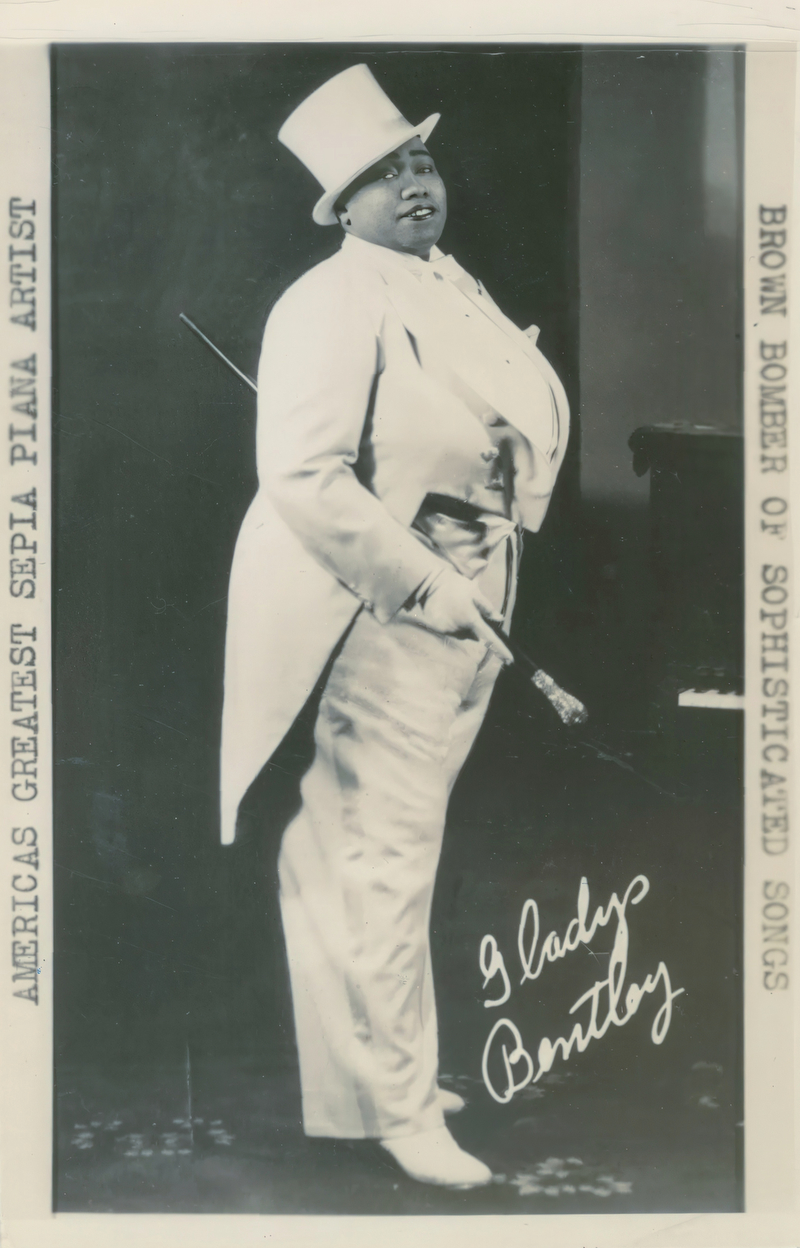
So then the, the Garden of Joy, she appeared there. I appeared there with her. See, the Garden of Joy, they got me in the chorus there, and I could dance pretty good and got along…
JN: Where was the Garden of Joy?
MH: I think that was in about 146th or 47th Street. Up on a hill, floating on a hill. And there, I stayed there a couple of months.
JN: How did you dress at this time?
MH: I always dressed in a suit.
JN: But you knew you were a woman.
MH: Oh, yes, I knew I was a woman. I dressed in a suit, with low-heeled shoes. And in those days, people, if you, if they seen you too much with low-heeled shoes on, they’d think you were queer.
JN: They were right.
MH: See, and they were right. But that didn’t stop me from wearing them. And I just, uh, because I know, some people would ask me, “You wear low-heeled shoes?” I told ’em, “Yes.” I says, “because my feet’s bad,” see.
JN: Mabe, do you remember how the women called themselves? Like, nowadays we call ourselves lesbians or…
MH: Well, they…
JN: What were some words that they used when you would—like, you said “bulldaggers”—what were some of the words?
MH: Yeah, “bulldykers” and, um, what, what else? “Lady lovers” and, um, “butch.” And, uh—
JN: What was the woman called who wasn’t the butch?
MH: Well, I tell you, the butch mostly was like the men, you know?
JN: Right. And what were the other ladies called?
MH: And the, and the other ladies… Well, “This is my, this is my friend, my wife,” and blah, blah, blah, see? And we, uh, we would, uh…
JN: Did they use the word “stud”?
MH: Sometimes, yeah. On the, the time—mostly we heard the “stud” is when, when we went to a big party, like on, uh, Riverside Dr—not Riverside Drive. What’s that other thing? We came through there the other day. Central Park West.
JN: Uh-huh.
MH: 110th Street. Now there’s a woman there that knew me…
JN: Uh-huh.
MH: … very well, and, uh, I used to go up to her house. At her house we had the marriage between two women.
JN: Oh, talk about—what year was that, Mabel?
MH: Oh, god. That must have been around 19—oh, the marriage was after I met Lillian—around 1938, something like that. And, uh, one night, uh, uh—what is the woman’s name? I’m trying to think now—if I can think of her, I can tell a lot of things. Anyhow, she, uh, called, uh, us next door—we was living next door—and she says, um, “Mabel,” she says, uh, um, “you know, Florence,” I forget what Florence’s last name, “she’s getting married.” So Lillian says, “No, she can’t.” She says, “Yeah, she’s going down, and, her and, uh, her, her, and her, uh, her and her friend and, uh, her and her mama is going down and, and get the, uh, marriage certificate and, uh, and, and the, and Reverend, Reverend Monroe will marry them.” So that’s how I knew he was gay. He was—
JN: What church was he with?
MH: He’s 114th Street and St. Nicholas Avenue. So—oh, he was a fine guy. So anyhow, uh, I said, “All right.” So we had, we were nat—we dressed fine, you know, and it was—oh, must have been about 30, 35 people there and big—
JN: In their house?
MH: In their house. It was an apartment. And, um, I had on a suit. I remember I had on a, I had on a white suit, see, and a dark tie. And, um, my hair was long and I had, had my—the girl fixed my hair, she rolled it all up. I put water in it, and waved and come down around my face like that. And, um, Lillian, she always looked like a fashion plate, see? So, um, we went to this wedding. The guests start to arriving and I see more people that I knew.
JN: Was it all women?
MH: All women. Yeah, it was all women—wasn’t no men. Outside the minister, that’s all. And of course, uh, one of the girls, the girl who was married and the other girl, her mother gave her away.
And the girl had a veil—a wedding, uh, dress and her veil and, um—yeah, I think she had white shoes on. And the, the, uh, brides—the bridesmaids, they had different dresses on with flowers. They had flowers on their arm and everything, music was playing.
And the other woman had on pants. She, she had on, had on, uh, white, white pants, see? She was dressed in white, too, and so was the bride. And, um, they had went down—they passed downtown at the, um, City Hall.
JN: How did they do that?
MH: I don’t know. That girl looked so much like a, um, a fella, you couldn’t tell her apart, just like some of them do today. And she didn’t, didn’t have to change her voice, she had a heavy voice anyhow. And everything, everything was okay. Brought the thing back when they got it, brought it back, give it to the minister.
JN: Do you remember anything that Reverend Monroe said at the ceremony? Did he say anything?
MH: Yeah. Yes. He, just like the regular, oh, the, the, “Do you take this woman to be your lawfully married… Uh, now do you take this man to be your lawfully weddin’, wedded husband…”
JN: He said the word “man,” he didn’t say two women. He didn’t say—
MH: No, I don’t think he did. I don’t think he did. It was so many people and I was so far back, so, um, and I, and I could hear her saying, “Yes.” And, um, then after that was, uh, the, the, uh, I heard Monroe say, “Now kiss the bride.”
And he knew they were women. He knew because he was, uh, gay hisself, you see, …
JN: How—
MH: … and that’s all he went in for, was to marry men and women.
JN: Could you talk a little bit about Lillian and who she was and what your relationship with her was like?
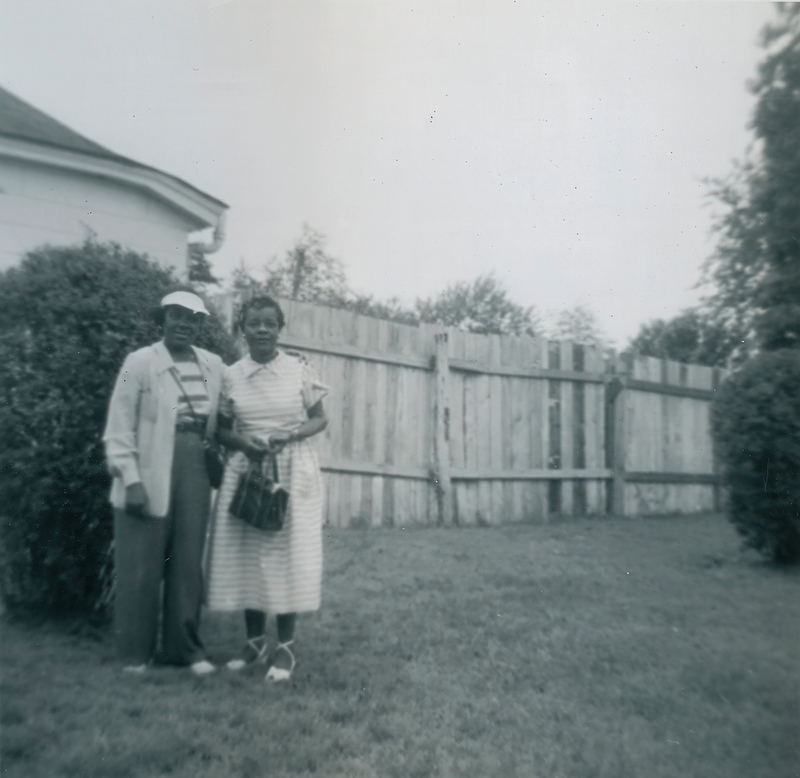
MH: Yes, I can. I met her in 1932, and we’ve been together 40 years before she passed away in 1979. And we had a lovely time together. We went places, we did a little bit of everything.
We met on Lexington Avenue and 34th Street, and I, uh, I liked her very much and I decide that, uh, I’d like friendship with her. She seemed to be nice. She was a very small person. And she asked me my name, I told her my name. I asked her her name. She says, “Lillian.” I said, “Yeah, don’t you have a, a, a, a last name?” She said, “Yes, Foster.” I said, “That’s nice.” Okay. We gets up on the, we gets up, up on the, uh—in those days, 1932, it was, um, what do you call it? Uh, the trolley car. You get up on the trolley car, and the trolley car was full of people and so she told one woman, “Move over, you, this speed’s—space’s for my girlfriend.”
JN: Whoo.
MH: And from then on, we were friends. And then went uptown, all the way uptown from Lexington and 34. And we had a lovely time. Well, couple of days later, I went to see her, and a couple of days later, about a month later, she moved in with me. And then we was together till, till 1979.
JN: Mabel, how do you think Lillian would have liked the gay liberation, all the things you’ve been doing?
MH: Oh, she would’ve loved it, because I liked it. And she wanted people to be just what they are, not what somebody want ’em to be. And I’m the same way.
———
EM Narration: Mabel and Lillian were together for 46 years. Most of that time, they lived and worked in the Bronx—Lillian as a clothes presser, Mabel as a domestic worker and hospital custodian. They referred to each other as husband and wife. Or big bear and little bear.
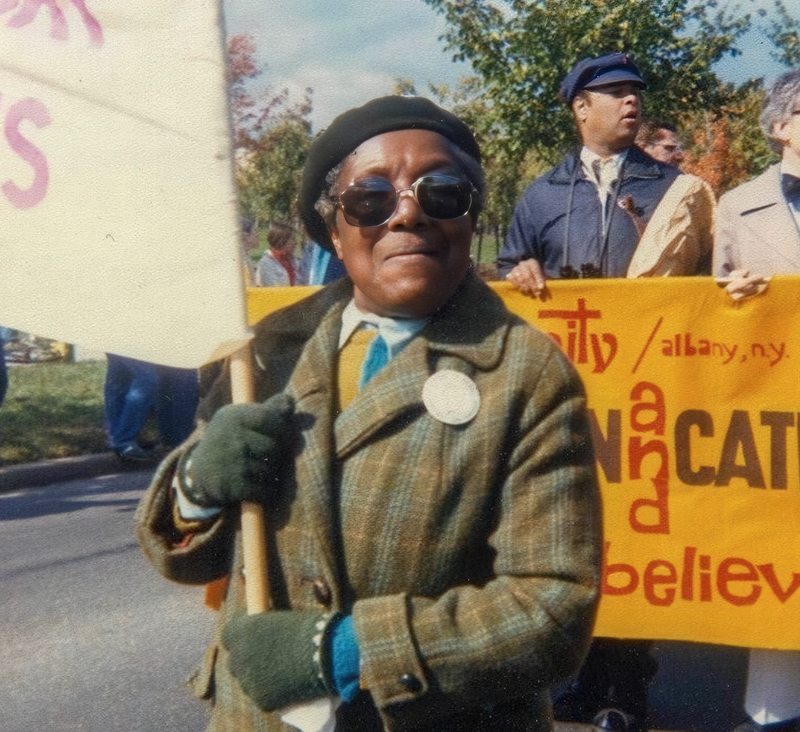
After Lillian’s death, Mabel found community through SAGE, a nonprofit organization that provides services to LGBTQ elders, and through the Lesbian Herstory Archives, where she was a frequent volunteer. Mabel was a fixture at the New York City Pride March, and in 1985 she was crowned a grand marshal. In a speech she delivered at an earlier march, Mabel expressed a wish for “all my people to be free in this country and all over the world, my gay people and my Black people.” No surprise perhaps that she named her dog Liberation.
Back then, the Lesbian Herstory Archives were still housed in Joan Nestle’s apartment on the Upper West Side of Manhattan. When Mabel’s health declined, that’s where she came to live, too — with Joan looking after her as she had once looked after Joan.
Mabel Hampton died on October 26, 1989. She was 87.
———
MH: [Singing “My Buddy” by Gus Kahn/Walter Donaldson (1922):]
Days are long since you went away
I dreamed about you all through the day
My buddy, my buddy
Nobody’s quite so trueI miss the smile, the touch of your hand
And I long to know that you understand
My buddy, my buddy
Your buddy misses you.———
EM Narration: Many thanks to everyone who makes Making Gay History possible, including producer Inge De Taeye, photo editor Michael Green, and our social media producers, Cristiana Peña and Nick Porter. Our studio engineer was Cathleen Conte at CDM Sound Studios. Fritz Myers composed our theme music.
Special thanks to our founding editor and producer, Sara Burningham, and our founding production partner, Jenna Weiss-Berman. Thank you, also, to the New York Public Library Manuscripts and Archives division for their ongoing assistance.
We are indebted to the Lesbian Herstory Archives and Joan Nestle for all they’ve done to preserve Mabel Hampton’s legacy and for their generosity in letting us use audio from their Mabel Hampton Oral History Collection.
Season fifteen of this podcast has been made possible with funding from the Jonathan Logan Family Foundation, Ty Ashford and Nicholas Jitkoff, Broadway Cares/Equity Fights AIDS, Mitchell Draizin, the Calamus Foundation, Christopher Street Financial, the Marcus Family Foundation, the Kipper Family Foundation, Rick Hoffman, Bill Kux, Rick Fishell, Esmond and Jerome Harmsworth, the Embrey Family Foundation, Mary Cadagin and Lee Wilson, Robert Gober and Donald Moffett, Greg Adgate, the Eicholz/Scott Family Trust, Maureen Bennett, Hal Brody and Don Smith, Robert Dodd, and Kathy Danser.
To learn more about the people and stories we feature, head to makinggayhistory.org where you’ll find links to additional information and archival photos, as well as episode transcripts.
I’m Eric Marcus. So long, until next time.
###