Jim Kepner
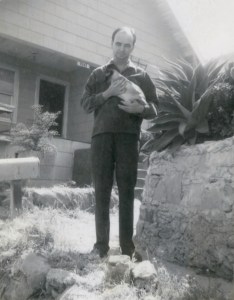
 Jim Kepner in an undated photo booth photo. Credit: ONE Archives at the USC Libraries.
Episode Notes
Raised in a religious home in 1920s and ’30s Texas, Jim Kepner pieced together a sense of his identity where he could—a homoerotic suggestion read between the lines here, a secretly acquired booklet there. His collection of gay-themed materials grew into the largest LGBTQ archive in the world.
Episode first published July 9, 2026.
———
Learn more about Jim Kepner in this obituary and this interview, both from the Tangent Group. Watch him in conversation with Randy Wicker at the 1994 Gay Pride Fair in New York City here. (Wicker himself is featured in this MGH episode.)
Kepner’s papers are housed at the ONE Archives at the USC Libraries; explore them here. To get a sense of the other collections in the archive, browse here.
Some of Kepner’s writings for ONE and other publications were collected in Rough News—Daring Views: 1950s’ Pioneer Gay Press Journalism (Haworth Press, 1998); you can read it here.

For a brief historical overview of ONE, Inc.; ONE magazine; the ONE Institute for Homophile Studies; and the ONE Archives, go here. Learn more in this MGH episode featuring Kepner and other key members of ONE, Inc., and in this episode about Reed Erickson, a trans man who in the 1960s became the organization’s principal funder.
This short PBS SoCal video looks at Kepner as a science fiction fan and collector. The accompanying article touches on the intersections between sci-fi fandom and early gay rights activism, which are explored in greater depth in “Homophile Fictions: Fan Writing, Science Fiction, and the Birth of Gay Communities in Postwar America” by Christopher West (Left History, 2004). In 1944 and ’45, Kepner published the sci-fi fanzine Toward Tomorrow, which you can peruse here.
In the episode, Kepner mentions the homoerotic undercurrent in Horatio Alger, Jr.’s young adult novels. To learn more about Alger and how his sexuality manifested in his rags-to-riches narratives, read “‘The Gentle Boy from the Dangerous Classes’: Pederasty, Domesticity, and Capitalism in Horatio Alger” by Michael Moon (Representations, 1987; accessible with a free JSTOR account here).
Kepner also references the lesbian subtext in the writings of Willa Cather; this Cleveland Review of Books article provides a brief overview of Cather’s work and her relationship with her life partner, Edith Lewis.
The “Little Blue Books” Kepner recalls ordering were What Is Homosexuality? and Homosexuality in the Lives of the Great. The latter, published in 1930, can be read in its entirety here. We haven’t been able to find any record of the former—unless the title Kepner had in mind was, in fact, Homo-Sexual Life (1925), which is available here.
The Gore Vidal novel Kepner dismisses as “a Freudian case study” is likely The City and the Pillar, a 1948 novel that got Vidal blacklisted by the mainstream critical establishment. You can read it here. On the nonfiction front, Kepner singles out Dr. Richard von Krafft-Ebing, a German psychiatrist who argued in his 1886 book, Psychopathia Sexualis, that homosexuality is an inherited nervous disorder.
The pen pal from Wisconsin who told Kepner about the Sons of Hamidy, a fictitious gay rights organization, was Wally Jordan. Learn more about him and his correspondence with Kepner in this illustrated PBS Wisconsin post.
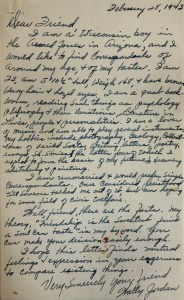
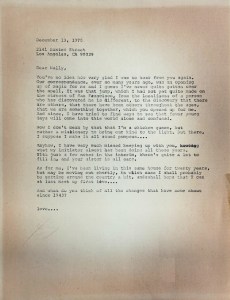
Kepner talks about attending an early meeting of the Mattachine Society, the first sustained gay rights organization in the United States. Learn more about the organization in the following MGH episodes and the accompanying episode notes: Harry Hay and Chuck Rowland, who founded Mattachine in 1950, and Hal Call, who wrested control of the organization from the founders in 1953.
During the Mattachine meeting, Kepner discussed a police raid at the Black Cat in San Francisco, which Allen Ginsberg once called the “greatest gay bar in America.” Read about its illustrious history in this LGBTQ Nation article.
———
Episode Transcript
Eric Marcus: Well, let’s start with you.
Jim Kepner: Mm-hmm.
EM: Um…
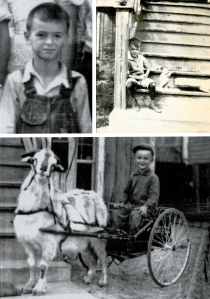
JK: I was found under an oleander bush in Galveston at the age of about seven months.
EM: Are you serious?
JK: Mm-hmm. And, uh…
EM: I thought that was a line for a second.
JK: … so that my, uh, legal birthdate is August 19. I was probably born about February 17 of 1923. Uh, the newspaper commented on “our little visitor,” wondering “what our little visitor from Mars thinks of our fair city.” And that’s how I became a science fiction fan.
EM: What city was this?
JK: Galveston, Texas.
EM: Galveston. Under, under an oleander tree?
JK: Mm-hmm. Bush.
EM: Bush. What a beginning.
JK: Uh, wrapped in Houston newspapers with the headlines torn off. And I was gurgling and, according to the paper, enjoyed the advances, uh, made by the policemen.
———
EM Narration: I’m Eric Marcus, and this is Making Gay History.
If you’re a longtime Making Gay History listener, the voice you just heard may sound familiar. That’s because we featured Jim Kepner in our season four episode about ONE magazine. ONE was the first nationally distributed gay publication in the U.S.—launched in 1953—and Jim was one of the magazine’s earliest and most frequent contributors.
While a lot of the focus back then was on ending police harassment and entrapment of gay men, Jim had bigger goals. In his columns he advocated for “gay self-respect and education and for building gay community consciousness and institutions.” And over the course of his lifetime—as a journalist, an activist, a historian, and an archivist—he helped make those goals a reality.
Jim was involved in dozens of early gay rights organizations, and he was passionate about our history long before just about anyone thought our history was worth preserving and studying. As he once wrote, “Only by understanding the past can we liberate ourselves from its worst effects.” And beyond that, he believed that LGBTQ history could offer a kind of moral nourishment—the inspiration, validation, and self-awareness we needed to imagine a future on our own terms.
Jim was barely out of high school when the self-described “pack rat extraordinaire” started collecting books that touched on LGBTQ topics. Newspaper clippings, ephemera, and artifacts soon followed—evidence of repression, of resistance, of gay life through the ages. By the time I interviewed him in 1989, Jim’s private collection had grown into a bonafide archive then known as the International Gay & Lesbian Archives.
So here’s the scene: I’ve arranged to meet Jim at his house in the Echo Park neighborhood of Los Angeles, the city where he’s lived since 1951. Jim’s given me a heads-up that his place is “a wreck of a house.” As I pull up in my rental car to Jim’s bungalow, I can see that he wasn’t exaggerating. I climb the steps of the rickety porch, which is filled with broken, unidentifiable… stuff. As someone who’s obsessively neat, I brace myself for what I’ll find inside.
Jim greets me warmly as I get to the top of the stairs. He’s about my height, mostly bald, with a gray beard and contrasting dark moustache and eyebrows. He invites me in. The place is packed to the rafters with rows of jam-packed shelves, and stacks of books and papers that Jim’s in the process of cataloguing for the archive.
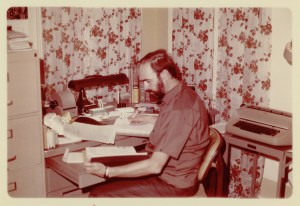
The dust bunnies I see include a generous quantity of cat hair. Somewhere in here, I’m guessing there’s a cat. While I unpack my equipment, Jim hands me a list with a whopping 35 subjects he’d like to cover, and over the next three hours he’ll proceed to shower me with a flood of facts and insights about the movement.
But not before we’ve discussed his childhood in Texas in the 1920s and ’30s. We pick up a few years after baby Jim was discovered under that oleander bush in Galveston, where he was adopted by a hard-drinking, hard-fighting, God-fearing working-class couple.
———
EM: Interview with Jim Kepner, Saturday, August 26, 1989. Location is the home of Jim Kepner in Los Angeles, California. Interviewer is Eric Marcus. Tape one, side one.
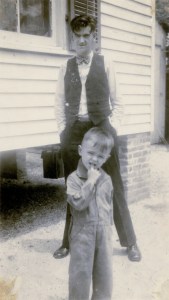
JK: I, uh, was aware from the time I was four years old that I had a special feeling for males. I went to the, uh, my father took me to the beach just before my fourth birthday. And out on the beach pavilion there was a band, uh, playing while fireworks were going out acr—on, off across the waves. And I was down in the middle of the crowd, kneehigh to the crowd. My father stepped away for the third or fourth time for a double boilermaker, leaving me holding a post.
EM: Double boilermaker?
JK: Uh, uh, two shots of, uh, whiskey in a, uh, can of beer. This was during Prohibition, of course, and, uh, liquor was not available anywhere…
EM: Uh-huh.
JK: … except everywhere. And a young man picked me up, and I was just excited by the silky hair on his, uh, wrists and wanting to rub that, and, uh, knowing that you weren’t supposed to do that…
EM: Even at four.
JK: At four I knew you weren’t supposed to do that. I knew you weren’t supposed to let strange men pick you up, but this was just so wonderful. And, uh, the song, the band was playing, uh, a song, “Dear old pal, how I miss you / I’m lonesome tonight / Dear old pal, just to kiss you / Would make things seem right / Dear old pal, how I wish you would come back again / I would hug you once more tenderly”—one of dozens of songs like that, uh, popular at the time. And I knew I’d never see him again. I knew that it was necessary to get him to put me down before my father, uh, got back or he’d get a tongue-lashing for being so nice, holding me up where I could see everything.
EM: But you were in heaven.
JK: I was in heaven. And I had visions from the time I was 10 of meeting a guy named John, of having his family have an accident, a fatal accident, and so my family would adopt him. And then as soon as we were brothers, my family could take off for the hills, too.
EM: And just leave.
JK: And we could be brothers for the rest of our lives. And so a few times during school, I would confess to someone else whom I thought felt the same way, that I, the way everybody was supposed to feel about girls, I felt about guys. And in the fifth grade it got all over school and I had to transfer to the only other alternative in my part of town, a German Lutheran school, Missouri Synod, with both teachers members of the Nazi party. And that was a, an interesting experience.
EM: What, what town was this now?
JK: Houston.
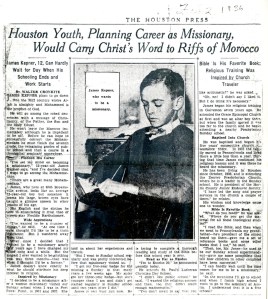
EM: So in your teens, you were well aware of what you were?
JK: Uh, but I didn’t know it was a category.
EM: Mm-hmm.
JK: Uh, when I discovered Horatio Alger, Jr.’s novels—my aunt began sending them to me when I was, uh, eight for birthday and Christmas—and immediately it was, I was aware that there was an enormous central current in each of these novels of friendship, or enmity, between males that just sprung out of the page—whether the, between boys or between the boy and the Daddy Warbucks character, who always saved him just as he was about to walk the plank.
EM: Mm-hmm.
JK: And I also noticed that in the last three paragraphs of each novel, the Daddy Warbucks turned out to have a stereotypically blonde, curly-haired, uh, blue-ribboned, uh, lacy-dressed, uh, daughter, whom the boy married. And there was no electricity in that whatsoever. And so by the time I was nine years old, I knew that was thrown in to please everybody else, because this writing just went a little further with male feeling than I had come across before.
EM: Hmm.
JK: And, uh, so I, I knew it was a coverup. Later when I read Willa Cather I recognized the same thing in her.
EM: Mm-hmm.
JK: On the other side.
EM: When did you first realize it was a category, or just a definable illness?
JK: Well, after I left the Church, I went out on a triple date one night that the, the other two guys kept joking, “We’re going to go all the way tonight.” Blind date. My girl was eyebrow-less, pleasant, uh, scareder than I was, and probably more naive than I was. I thought that if we kissed the wrong way, one or the other of us would get pregnant, whatever that was, but I knew it was something terrible.
EM: How old were you?
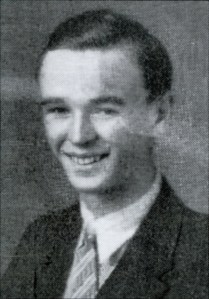
JK: I was a year out of high school. And, uh, we had not had any sex education classes. We got some, uh, rum and Coke. And she took a sip of it and apparently thought she had had it, and vomited, on me. So the girls left. And it wasn’t until a year later that I realized that all three of us guys relaxed. We had done our duty, we had made the attempt. And then they started talking about homosexuals.
EM: The boys did.
JK: Mm-hmm. “Well, what are homosexuals?” I asked. And I have a feeling this may be, uh, hindsight memory that my ears perked up, like I had heard that open sesame I had been waiting for when they first said the word, even if I supposedly didn’t know what it meant.
I knew Tommy and Bud were like I was. I knew a few others were, or thought a few others were. But, uh, so finally they said, “Well, that’s when sailors are out at sea and there aren’t any broads around and they can’t get their rocks off.” And I had to get two of those terms explained to me. “And, uh, so they piss and shit in one another’s faces to get their rocks off.” Well, I nearly vomited. But I knew instinctively that their definition was right, that they had defined me, even if that wasn’t what I had any desire to do.
EM: Mm-hmm.
JK: Emotionally, when they gave the definition at the table, it was as if the aurora borealis had suddenly appeared in the sky above, and here were all these beautiful colors and everything fit. And the answer I had been waiting for was there. And glory, glory, hallelujah. And, uh, by the next day I was investigating the possibility of joining the navy or the merchant marine, but didn’t.
Uh, so then a few days later, uh, the newspaper, our, our newspaper had a three-page ad for the Haldeman-Julius “Little Blue Books.” Those were enormously popular among free thinkers from the ’20s on through the ’50s. They were 5-cent books with a, uh, soft, uh, blue, cheap cover and so big, running 28 to 56 pages, with the, uh, short stories of, uh, H.G. Wells, the, uh, plays of Shaw, uh, books on how to build a birdhouse, uh, secrets of infants found buried under nunneries, all sorts of anti-religious tracts and, uh, socialist tracts, and all sorts of other literature that I was just ready for.
EM: What year was this?
JK: Early ’42.
EM: Mm-hmm.
JK: And among the 1,728 titles at that time was What Is Homosexuality? and Homosexuality in the Lives of the Great. So at a nickel apiece, I ordered at least 20 of them, including those two numbers, uh, hoping that they would not notice a focus there. And I sat on the post office box for the next two or three weeks till those arrived to make sure my parents wouldn’t get them. The What Is Homosexuality? was a standard Freudian exposition.
EM: Which was what?
JK: That, uh, it’s caused by the Oedipus complex, the fixation on the mother, who is domineering and, uh, over-seductive, and a distant or absent or hostile father…
EM: What did you think of that thinking?
JK: Well, uh, some parts of it fit, but, uh, they fit a lot of other people, too, and so it didn’t seem to me that it really explained that much, but I sort of bought the theory on a, uh, non-emotional level.

And the Homosexuality in the Lives of the Great, while perhaps following the same theory a little bit, told me that whatever my problem or condition or whatever was, that it was shared with Michelangelo and Leonardo and, uh, all the old Greeks, and George Washington and Abraham—no, they didn’t mention Lincoln…
EM: They mentioned George Washington?
JK: Washington. And Whitman and Wilde, and, uh, Florence Nightingale, and many, many others. And that was wonderful.
EM: Mm-hmm. Why was that wonderful?
JK: Uh, well…
EM: What did it say to you?
JK: If you have the image of it being something degrading, that’s an incredible standard of degradation. Wonderful to be degraded like that.
EM: Right.
JK: Uh, if it’s sickness, that’s a strange kind of sickness.
EM: Mm-hmm.
JK: And a few months after this, in August of ’42, we moved to San Francisco and very quickly I discovered the bookstores in San Francisco. I had never found a bookstore until the last few months at Galveston.
EM: A gay bookstore.
JK: A bookstore…
EM: A bookstore of any kind.
JK: … of any kind.
EM: And what did you find in the bookstores then?
JK: Uh, a lot of science fiction, which I was just going wild with, but also a lot of gay books. And, uh, while many critics now say Gore Vidal wrote the first one, I had 30 or 40 of them on my shelves by the time his appeared, and several of them better than his. His remained, like many of the others, a Freudian case study of a poor unfortunate who, if only his mother hadn’t really wanted a daughter, uh, and if society hadn’t treated him badly, could have been a successful tennis player or pianist, whichever.
EM: Right.
JK: And that was the formula for many of them. And they ended up in suicide or accidental death. Most of it was terribly depressing.
EM: Mm-hmm.
JK: And most of the nonfiction was the sort of, uh, Krafft-Ebing’s waxworks museum of sexual monstrosities, with homosexuals, along with various other sexual monstrosities, lined up in, uh, pickled jars on a shelf.
So when I… Now, when I came out, uh, one little thing I think that’s a histor—a historic footnote… I got into a pen pal, uh, thing accidentally—someone put my name in Weird Tales Magazine. And I received several letters from heartsick young girls in the Midlands and from one guy in Rhinelander, Wisconsin, who sent me his picture. Very cute. And we began the hinting process, which usually occupied two or three letters.
EM: When was, this was…?
JK: Early ’43. And you start by, well, you’re interested in philosophy and poetry and biographies, but not very interested in sports, except maybe walking and running, or walking and swimming.
EM: Uh-huh.
JK: You could mention tennis, but it wasn’t one of mine. Or ping-pong or miniature golf. So then you name a few recent biographies or poets that you’ve read, but you don’t start with people like Wilde or Whitman, but you can include Bacon, uh, or some of the ones who were less specifically identified. And then you bring it up.
And he mentioned—he asked if I had ever heard of the Sons of Hamidy. “No.” And then he, after two or three letters, described this as a national homosexual rights secret organization started in the 1880s, but fell apart due to bitch fights—which is naturally what, uh, gay groups do according to the inbuilt homophobia of the day. And was reorganized in ’34, and again fell apart during bitch fights, and is now being reorganized with some senators and generals in leading roles, and other important people like that.
EM: This is what he wrote you.
JK: And my, through three or four letters… “How the hell do I join?” And he kept being vague.
EM: Do you think this was a creation of his?
JK: Mm-hmm.
EM: Yeah.
JK: It was his fantasy, so far as I can tell. But I began receiving visits and letters from some of Wally’s other correspondents and learned that I was national secretary.
EM: Of the Sons of Hamidy.
JK: Well, that was a jolt because—poor little me—I was a nobody, uh, uh, with all of these senators and generals. Where the hell did they go? And how did I get to be secretary when he hadn’t even told me how to join yet?
EM: So it was a young man’s fantasy of what could be.
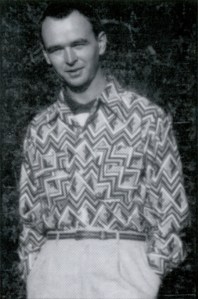
JK: So I decided that, uh, it was… And when I first heard about the Mattachine, they had allowed to circulate rumors that some very influential people were behind it. And that phrase “senators and generals” was one of the first I heard, so I was not quick to join the Mattachine. Now it was very secretive as to where the meetings were. Uh, this is jumping 10 years…
EM: Mm-hmm. I’d like to… That’s fine, to jump 10 years.
JK: And while people say that the early Mattachine was patterned on the Communist Party, I was in the Communist Party and that was not true. Everybody knew who the officers of the Communist Party were.
EM: Right.
JK: You could see them.
EM: But you couldn’t see who the officers were of Mattachine.
JK: No.
EM: It was on the Masonic order, I’m told.
JK: Mm-hmm. Yeah.
EM: So you, how did you, so you heard about Mattachine just through the grapevine?
JK: I heard about Mattachine through the grapevine all over town. Everybody was buzzing about it.
EM: Uh-huh.
JK: But I didn’t—I would occasionally hear where a meeting was taking place, but I didn’t drive at the time. And the meetings would be in some other hilly area in another part of town. And I had to be at work at Vernon, eight or nine miles southeast of town…
EM: At Vernon…
JK: … at midnight. Vernon, a suburb of L.A. I was, uh, working for American Can, making milk cartons at the time. So without—depending on public transportation, there was simply no way to get up into Santa Monica Canyon or out to, in the Los Feliz Hills, or so on.
EM: What did you hear the group was? What was the rumor?
JK: That it was a gay group and that it was very, very exciting.
EM: Nothing beyond that.
JK: They were discussing things and that there were some social, beginning to be some social activities, uh, and that, uh, we’re on the march. In the meantime—and this was, uh, I moved here, in here, in ’51—and some friends gave a house warming, which turned into an every Thursday night and every Sat—Friday night party, and the Friday night party sometimes lasted till Monday morning. The place was crowded with a mixture of science fiction fans, gays, people I had met at Pershing Square, ex-radicals, and other assorted individuals.
And eight or ten times, I would take a few into the other room and discuss quietly starting a gay magazine or organization. And several times, uh, I would get three or four people who were interested. But you’d call them the next day and, “No, but that was party talk.”
EM: What was the group to be? What group had you envisioned?
JK: Uh, anything.
EM: Just to get together.
JK: Well, I, unlike most people—and this was part of the Marxist background and part of the science fiction background—I did not believe that sta—society was static. Most gays did. And if you mention organizing, they’d say, “Society uh, hates us and always will. You can’t change things.” Well, I knew that society was changing in many ways and needed to change in lots of other ways. I instinctively took a political approach to social problems: Let’s do something.
Well, that was alien to most people, particularly most gays. And this was an enormously conservative, conformist period coming into the McCarthy, uh, era, and even before.
EM: Back to Mattachine now. Where was your first Mattachine meeting?
JK: In a big house in the Los Feliz Hills.
EM: And, uh, what was it, what did you find at the meeting?
JK: Well, you knocked at the door and it was almost a Joe-sent-you, sent-me sort of thing. There were about 180 people in the room, sitting everywhere, sitting even on the back of couches, uh, on the, all over the floor, standing. There was a circular stairway going up to a landing, and, uh, both of those were filled with people.
EM: Young people, old people? Men, women?
JK: Eighty percent men, uh, 80 percent 30s—or 85 percent 30s or younger. No underage, that was verboten.
EM: Mm-hmm. Were you shocked [crosstalk] by that number of people?
JK: Quite shocked.
EM: Uh-huh.
JK: Uh, it was a lively discussion. The format was such that you couldn’t tell who was running the meeting. There were unofficial co-chairs, but they were instructed not to act as if they were really running things, just to keep the discussion going. There was an announced topic…
EM: Which was—do you recall? Your memory is incredible.
JK: What do we do about these, uh, effeminate queens and these, uh, stalking butches who are giving us a bad name?
EM: Were there any effeminate queens or stalking butches at the meeting?
JK: Yes, they were the ones who were most worried about the problem.
EM: Were they aware of the irony of—
JK: No, they were not. That may not be 100 percent true, but it was my feeling. Uh, I got a little angry and disc—I, I listened to this for a while. It took me a while to speak up, I was pretty shy, and sort of blurted out, “Look, when, when I was trying to come out, a friend had told me about The Black Cat in San Francisco,” a woman that I confessed to at Southern Pacific headquarters, where I was working in the basement in the, uh, freight accounts. “And, uh, I went up to The Black Cat in the late spring of ’43.”

EM: Mm-hmm.
JK: I was going to join my brothers and sisters for the first time. I was on a cloud of idealism, so high that I was walking on Montgomery four inches above the sidewalk. I got almost to the door—I think I touched the door—and all of a sudden a whole bunch of San Francisco policemen burst through the door, coming in. I had by this time read several accounts of bar raids, so I knew what was happening.
I wanted to do something—uh, chivalric, uh, visions of mounting my white charger and going to save my brothers and sisters—but instead I hid in the doorway across the street, feeling like shit, feeling cowardly, feeling guilty. And the first view I got of my brothers and sisters was about 12 or 15 drag queens and 12 or 15 butch numbers.
EM: Butch dykes.
JK: The kind that would—no.
EM: Oh, men.
JK: No. Men. The kind that would now be called clones.
EM: Mm-hmm.
JK: All hauled out. And all of the clones were looking guilty as if they were being led to the fate which they so richly deserved. And all of the queens were struggling and, uh, sassing the cops. And it took me about a year and a half to understand why I felt good when I heard one of the screa—queens scream at the policeman who was shoving her, “Don’t shove, you bastard, or I’ll bite your fucking balls off.” That queen paid for that.
EM: They beat her.
JK: Uh-huh, and beat two or three of the others. And I was still hiding in the doorway, wanting to do something, wanting to shout something that, uh… I wouldn’t have known what to shout.
EM: Right.
JK: So I, I just said, “Look, uh, the queens were the only ones that ever fought. The queens were the only ones that made the bars that the rest of us could sneak into. And we could be gay for one night. But we pinned up our bobby pins when we went through that door, going out, and they didn’t.” And we were very careful not to go out at the same time they did.
So I, I got very angry at this attack on the queens. I said, “They’re, they’re, they’re our front line. Uh, and if you think that they’re the ones who cause the prejudice, people are much more disturbed when they find out the neighbor or friend that they didn’t know was that way, who wasn’t obvious as gay, that causes, I think, a lot more prejudice than some obvious queen that people can—well, people can relate to them in the same way they relate to Stepin Fetchit.
EM: Mm-hmm.
JK: It’s, there are wrong things with the relationship, but at least they’re not threatened by, uh, that.
EM: Mm-hmm. Right. It’s out there. It’s obvious. It’s not hidden.
JK: Mm-hmm, yeah. I had read a lot. And in most of the books, the term “homosexual” was the primary usage term. And so I was using primarily the word “homosexual.” And like a popular broken record, every time I used that word around a queen: “Don’t call me by that fucking medical term. I’m nobody’s doctor’s exhibit. I am gay and I’m proud of it.” Well, that sounds kinda like post-Stonewall…
EM: Yeah.
JK: … but that was the attitude of most of the open queens—the ones who weren’t in hiding, ever.

———
EM Narration: A few months after Jim attended his first Mattachine meeting, the founders of the group were ousted by more conservative challengers. Jim disapproved of the new leadership’s approach, which he considered apologetic and accomodationist. He directed his energies toward the more radical ONE—the magazine, and the organization of the same name—and went on to cofound the ONE Institute of Homophile Studies, the organization’s educational arm.
In 1994, Jim’s International Gay and Lesbian Archives merged with the collection of the ONE Institute to become the ONE Archives. Now housed at the University of Southern California Libraries, the ONE Archives remains the largest repository of LGBTQ materials in the world.
Jim Kepner died on November 15, 1997. He was 74.

———
Many thanks to everyone who makes Making Gay History possible, including producer Inge De Taeye, photo editor Michael Green, and our social media producers, Cristiana Peña and Nick Porter. Our studio engineer was Katherine Cook at CDM Sound Studios. Fritz Myers composed our theme music.
Special thanks to our founding editor and producer, Sara Burningham, and our founding production partner, Jenna Weiss-Berman. Thank you, also, to the New York Public Library Manuscripts and Archives division for their ongoing assistance.
Season fifteen of this podcast has been made possible with funding from the Jonathan Logan Family Foundation, Ty Ashford and Nicholas Jitkoff, Broadway Cares/Equity Fights AIDS, Mitchell Draizin, the Calamus Foundation, Christopher Street Financial, the Marcus Family Foundation, the Kipper Family Foundation, Rick Hoffman, Bill Kux, Rick Fishell, Esmond and Jerome Harmsworth, the Embrey Family Foundation, Mary Cadagin and Lee Wilson, Robert Gober and Donald Moffett, Greg Adgate, the Eicholz/Scott Family Trust, Maureen Bennett, Hal Brody and Don Smith, Robert Dodd, and Kathy Danser.
To learn more about the people and stories we feature, head to makinggayhistory.org where you’ll find links to additional information and archival photos, as well as episode transcripts.
I’m Eric Marcus. So long, until next time.
———
EM: I’ve never seen a cat do this, holding its leg with its paw.
JK: Mm-hmm.
EM: I’ve never seen a cat do that.
JK: He’s queer.
EM: He is a queer cat.
JK: Do you want me to put him in the other room?
EM: No, I love cats.
JK: Okay.
EM: I’m only mildly allergic. C’mon. Does he mind being picked up? Let’s see. There, is that better? That’s much better. Oh, now you’re happy. [Sneeze.]
###