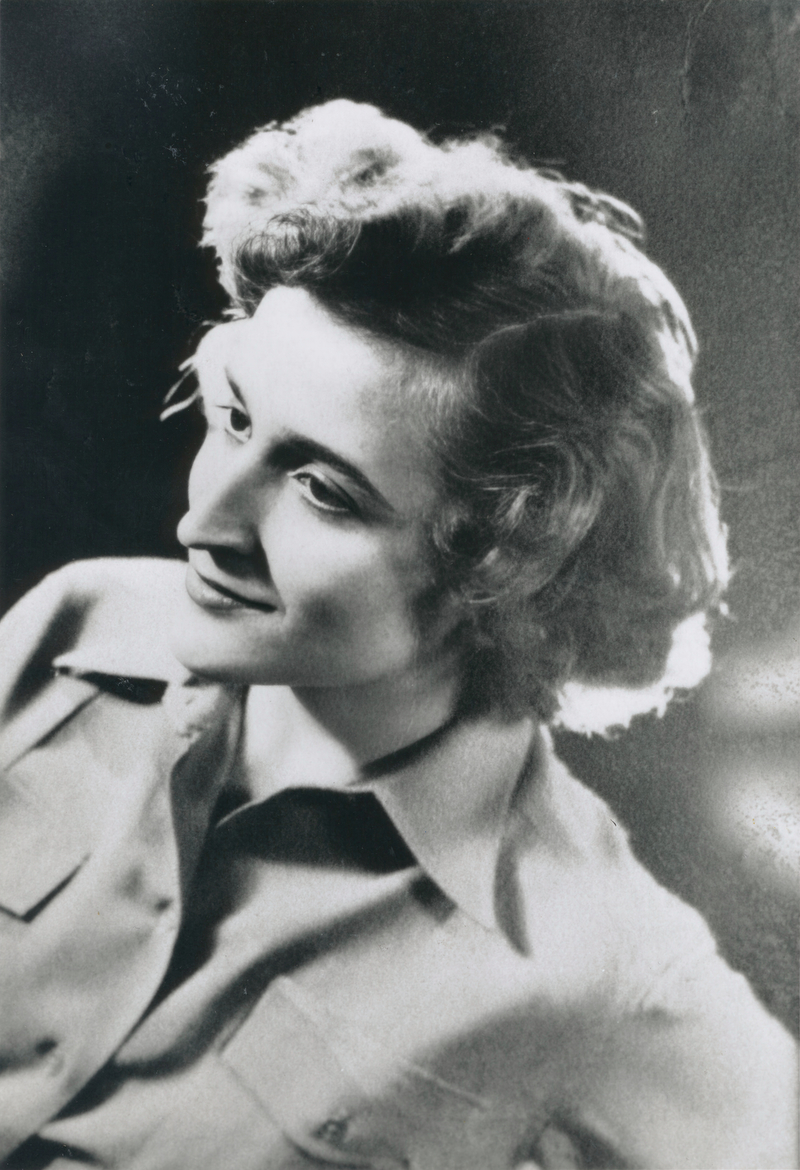
Pat Bond
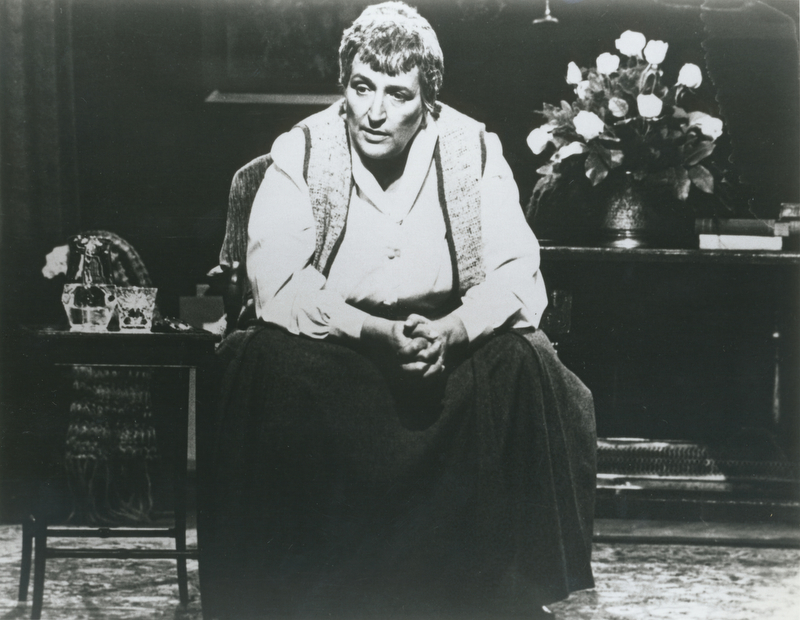
 Pat Bond in an undated photo. Credit: World War II Project Papers/GLBT Historical Society.
Episode Notes
Pat Bond joined the Women’s Army Corps in 1945, driven by patriotism and a desire to be among lesbians. The war required bodies, so the U.S. military turned a blind eye to service members’ sexual orientation. But as Pat witnessed firsthand, once WWII was won, the anti-gay witch hunts began.
Episode first published July 2, 2026.
———
Audio Source
Oral history interview between Pat Bond and Allan Bérubé, September 30, 1990, World War II Project Papers (collection no. 1995-16), courtesy of the Gay, Lesbian, Bisexual, Transgender Historical Society.
———
Resources
Read a brief bio of Pat Bond and explore her papers on the GLBT Historical Society website.
Watch Pat Bond’s breakthrough appearance in the 1977 documentary Word Is Out: Stories of Some of Our Lives here. The film was created by the Mariposa Film Group, a collective of six queer filmmakers (Peter Adair, Nancy Adair, Andrew Brown, Rob Epstein, Lucy Massie Phenix, and Veronica Selver); learn more about them here. The entire film is available for streaming on the Criterion Channel.

After her star-making turn in Word Is Out, Bond wrote and starred in four one-woman shows: Gerty Gerty Gerty Stein Is Back Back Back, Conversations with Pat Bond, Murder in the WAC, and Lorena Hickok and Eleanor Roosevelt: A Love Story. Watch a recorded PBS broadcast of Gerty Gerty Gerty Stein Is Back Back Back here and listen to Bond discuss the play in conversation with Studs Terkel here. An abridged audio recording of Murder in the WAC is available here courtesy of WINGS (Women’s International News Gathering Service).
In this Medium article, Bond’s friend Terry Baum chronicles Bond’s final hours. After Bond’s death, her friends established the Pat Bond Memorial Old Dyke Award to honor notable Bay Area lesbians over 60.
Historian Allan Bérubé first interviewed Pat Bond about her experiences in the Women’s Army Corps in 1981. You can read a transcript of the interview here. Bond’s story was included in Bérubé’s influential 1990 book Coming Out Under Fire: The History of Gay Men and Women in World War II, which you can read in its entirety here. (The book was reissued in 2010 by the University of Carolina Press.)
The second interview between Bond and Bérubé, which is featured in the episode, was conducted in 1990 for a documentary based on Bérubé’s book, also titled Coming Out Under Fire. You can watch the trailer and rent the film here. Due to Bond’s poor health at the time, her interview footage was not included in the final film.
Bérubé’s research and oral history interviews for the book and documentary are part of the World War II Project Papers, 1892-1996, at the GLBT Historical Society; explore the collection here. The society also provides a curated collection of sources specifically about lesbians in the military here.
For a brief overview of lesbians in the WAC during WWII, and the investigations and discharges to which they were subject, read this Mariners’ Museum article by Laurie King, which includes many photographs of servicewomen from the 1940s. For a deeper dive, read M. Michaela Hampf’s “‘Dykes’ or ‘Whores’: Sexuality and the Women’s Army Corps in the United States During World War II” (Women’s Studies International Forum, 2004) here or Creating G.I. Jane: Sexuality and Power in the Women’s Army Corps During World War II by Leisa D. Meyer (Columbia University Press, 1997), available for purchase here.
This article from the National WWII Museum provides general background on the establishment of the Women’s Army Corps during World War II. A 1981 documentary about women in the military that Bond admired was Soldier Girls, directed by Nick Broomfield and Joan Churchill. Watch the trailer here; the film is available for streaming here.
For other firsthand accounts about the treatment of gay people in the military, listen to MGH’s episodes featuring Vernon E. “Copy” Berg III, Leonard Matlovich, and Perry Watkins, and explore the accompanying episode notes.

———
Episode Transcript
Eric Marcus Narration: I’m Eric Marcus, and this is Making Gay History.
In 1978 the landmark documentary Word Is Out was released. Its premise was simple but, for its time, revolutionary: gay men and lesbians talking openly about their lives. I watched it as a newly out college sophomore, and it blew my mind. The film was a milestone in the history of LGBTQ visibility—and for Pat Bond, who was one of the people featured in the film, it was a career breakthrough.
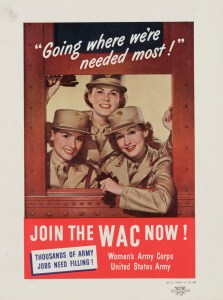
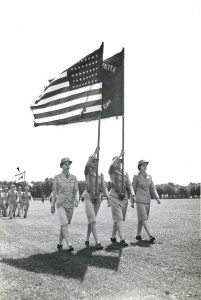
Pat was a stalwart of San Francisco’s lesbian community and an actor with local theater companies. During and after World War II, she’d served in the Women’s Army Corps, or the WAC—a branch of the U.S. Army that was created in 1942 to allow women to perform essential noncombat duties. In Word Is Out, Pat painted a memorably funny portrait of the WAC as a place teeming with lesbians, and she became an instant hit with viewers and reviewers alike. But her account also provided a sobering example of the U.S. military’s cynical and cruel treatment of gay service members—men and women whose sexual orientation was tolerated or overlooked in wartime to meet manpower demands but were later purged from the ranks, their lives upended, often ruined.
Pat Bond was born Patricia Childers in 1925, an only child in a lower middle-class household. When she was in her early teens, her family moved from her hometown of Chicago to Davenport, Iowa. Pat was in high school when the U.S. entered World War II; she vividly recalled being summoned to her school’s auditorium to hear President Roosevelt’s “Day of Infamy” speech following the attack on Pearl Harbor.
In 1945, after Pat had spent two years at a local Catholic women’s college, she was old enough to join the WAC—one of the more than 150,000 women to enlist during the war. Pat served stateside as a medical tech until late 1946, when she was sent to Tokyo, where U.S. General Douglas MacArthur directed the rebuilding and democratization of postwar Japan.
In September 1990, Pat sat down for a recorded interview with my friend and colleague Allan Bérubé. Allan was a community historian who wrote extensively about the experiences of gay men and lesbians in the U.S. military during World War II, including for his influential book, Coming Out Under Fire. He spoke with Pat for a planned documentary based on the book. At the time of the interview, Pat was seriously ill with emphysema. But as you’ll hear, she was still a force of nature, with her sense of humor, big heart, and husky chuckle, very much intact.
———
Allan Bérubé: You voluntarily enlisted in the WAC. Was that unusual among the women that you knew?
Pat Bond: No, it was the only way you could get in. And the men would see you in the railway station, ’cause by then you were sort of in uniform, and they would say, “You asked for it, sister,” you know.
AB: You were among the first real generation of women to be able to volunteer.
PB: Just before us was another generation.
AB: You were kind of a pioneer, though, right, doing that? How did you feel about that, being one of the first?
PB: Wonderful. I was gonna be with all these lesbians and away from my parents. And we weren’t rich enough to send me off to college, you know. I could have gone, god knows, then, but, uh, I wanted to be with dykes, of course.
AB: What happened on the day that you enlisted?
PB: Well, I went down to the, uh, hotel there, the Black Hawk Hotel, which was the fanciest hotel in Davenport, and they had the recruiting sergeant, right? There she is, all right. Well, I knew a lot about dykes, although I had not been with many dykes, or, if any. And, uh, I looked at her, and she had her hair all done up the way they did then, you know.
But there was a dyke if I ever saw one. So I took to calling her honey, which was fine, she liked it. She called me honey. As soon as I was sworn in, it was like, “Call me ma’am, sister.” And I thought, well, what happened to “honey,” you know?
AB: Did she ask you about if you were a lesbian?
PB: Well, no. They asked us later about that when we went to the Army psychiatrist thing, and the Army psychiatrist said, “Do you prefer the company of men or women?” And you said, “Men, of course. What is a woman?” You know? Because you knew damn well they were looking for queers, and you didn’t wanna get bounced for that. And of course, what we didn’t know was that the Army psychiatrist couldn’t care less if you were gay or not.
And, uh, so then they said, uh—first of all I had to lose 20 pounds to get in. Fool that I was, if I had known… But I got in, and we were shuffled off on the train to Chattanooga. And, uh, we were stationed in our barracks, you know. And as we came in with our suitcases and stuff, I heard a voice from one of the barracks say, “Good god, Elizabeth, here comes another one.” And I had no idea I looked gay. I still don’t think I do. But apparently… And I liked that, oh, a lot, because my mother had stuck me in this little frock that I was forced to wear. A little bolero jacket, a little skirt, you know. While some of the dykes were in drag, in men’s clothes, you know. And there I was, and I wanted desperately to be a dyke. I did not wish to be a femme. So it was hell. Everybody thought I was a femme.
AB: You’d mentioned that the day that Roosevelt, uh, died was a big day…
PB: Oh, the day that Roosevelt died was a very bad, sad day for all of us. We were on the train going to basic training, Fort Oglethorpe, Georgia. And he had been president all my life, you see. Well, since I was about four, I suppose. And the officers were all wearing black armbands. And as we got closer to Fort Oglethorpe, you could hear these 48-gun salutes going off. And we didn’t know what had happened, and then they told us, and we were all crying, and, you know, the president was dead. So that was a hard one.
Then they got us there, and here we all are, right? And we’re schlepping down with our suitcases that… “Okay, form”—um, what do you call a line in the Army?—“a formation.” We looked at each other. They don’t bother to tell you, you know, what this is. They said, “Line up.” So we line up. “No. Shoulder to shoulder, foot to foot. Now, squads, left.” Squads, left?
And it was the first sergeant, whose name was Junior—mm-mmm, Junior. She looked like if she advanced on you, she was gonna strangle you. And might have, might have. But very handsome dyke. Oh, god, her—our uniform had creases. They were handmade uniforms with a silver whistle, and she had the whole number. Every femme in the camp was hot for her bones, you know? And we—of course, the dykes were all jealous as hell of her.
AB: So did you meet any other dykes in the WAC?
PB: Oh, yeah. I walked into Fort Oglethorpe, and 90 per—we went right to the mess hall, and there’s about 500 tables. And seated at the tables were all these women in fatigues, with boots, with their feet up on the table, saying, “Hey, Henry, pass the salt.” It’s like, this is the real thing. Now we’re not kidding around anymore. These are real dykey boos. And we were all of course 20, 22—kids—but we would’ve thought we were right in the swim of things, you know?
And then I was sent to medical training. So of course they sent us… The policy was to send you as close to home as you could get, so they sent us to Schick General Hospital in Davenport, Iowa, ’cause it was about 50 miles from where I lived.
And they had this army hospital’s corridor slant, you know, for wheelchairs and all that shit. And there was a wonderful faggot, and he had jungle rot, which we had never seen before. These were South A—these were Asian diseases. And every time he got up out of a wheelchair, he’d start to sweat, and then it would break out. So he stayed in the wheelchair all the time. And I’d get on the back of his wheelchair, we’d get at the top of those slanting corridors, and I would scream, “Banzai!” and we’d all go wheezing down, he and I.
And they had a Halloween party. Do you know that that bastard was so brave he went in full drag to the Halloween party? And they all thought it was wonderful.
AB: Who did he go as?
PB: Mae West, of course. Who else did you go as? With the big hat with the feathers and, you know. And I was his companion. I was done up as a, a maid—a butch maid, ’cause I wasn’t gonna sit still for the little hat and apron, no.
AB: Who, who were the patients in that hospital?
PB: Uh, the patients at Schick General were all, uh, men who had been in the South Pacific, and some of them had been in prisoner of war camps for five years. And they never expected to come through it, so they were just overjoyed. And they were 6 foot 4 men weighing 105 pounds, you know?
And do you think that we could keep those bastards home at night? Mm-mm. They’d take off. They had medals down to here, they had, you know—wouldn’t wear them. They’d all go out and get blind drunk. You couldn’t stop them. I mean, men who had been locked up for five years, come on. And that’s the first time I saw a naked man. Nekkid, my dear. There he was. ‘Cause you had to give bed baths, you know? And alcohol rubdowns and all that stuff.
And we’d work 10, 12 hours a day and have to come home and hang our uniforms out the window ’cause they stank so. ’Cause the patients stank, you know, they couldn’t help it. And you had to say to yourself when you first started, these are the men that are really sick. Now, you just forget about any feelings you might have, you know. So we would hold them, kiss them, tell them how much we loved them—good god, that’s all you could do then. They didn’t have penicillin, you know, or any of that stuff, which was what finally cured all those jungle diseases.
And then they put me on the venereal disease ward. Well, me, out of a Catholic girls’ school I’d gone to—for my first two years, I’m in here with all these guys with VD. So you had to give them round-the-clock shots. And, uh, so it was… We really felt patriotic, and we felt we were doing one hell of a job, and we were. I mean, 10, 12 hours a day, come on.
AB: What were you sent over to, to Tokyo for?
PB: General MacArthur brought us over there to let Japanese women see what Amer—free American women looked like. But when we got off that boat, 500 of us and 90 percent queers, and obviously queers, you can imagine his response. It was like, “What?”
We went over on the good ship Comfort in November. It took three weeks to get there. We were violently seasick, all of us. And the beds were bunks, three layers, so the top bunk would vomit and all two would get it below. Then we got to Tokyo on this—oh, awful—covered with vomit, stiff.
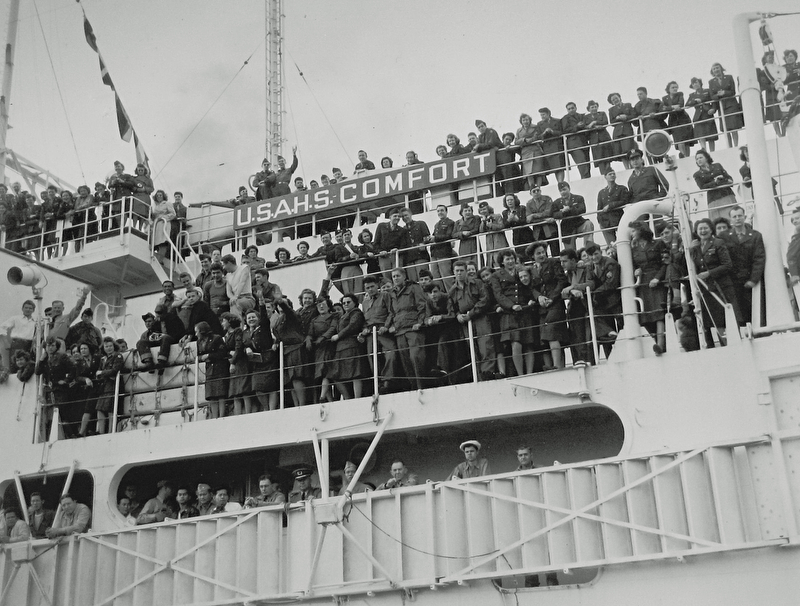
So we get there, and they are playing the WAC song as we got off the boat, a band. We didn’t know that the WAC song was the “Colonel Bogey March,” we had no idea. But they’re playing, [sings] “Da-dum, ba-da-da-dee-da-dum, ba-dum, ba-da-da-da-da-da…” And we were, like, amazed, you know.
AB: Do you remember the, the words to the WAC song?
PB:
[Singing:] Duty is calling you and me
We have a date with destiny
Ready, the WAC is ready
Their pulse is steady
The world to set free.
Wa-wa-wa-wa-wa-wa—
Service, we’re in it heart and soul
Victory is our only goal
We love our country’s honor
And we’ll defend it
Against any foe.
That was it. Huh. Uh, but we didn’t have any jobs to do ’cause the medical staff was all filled. So I used to sit in the Dai-ichi Building, where MacArthur was headquartered, and play cards and drink beer with the GI I worked with all day.
AB: How did the witch hunt start?
PB: Well, first of all, the war was over, so they decided that they could then get rid of all the queers. So they started on us, and they took secret pic—pictures of us, and they had, uh, they tape-recorded our telephone conversations, and they read our letters.
And then they would call us up for what was called a summary courts-martial, which meant they didn’t have to have a full courts-martial where you had a defense. So we had nobody. We were just on our own. And they would ask you these weird questions, you know, like, uh, “You were seen dancing with Private So-and-So on such-and-such a date.” Well, we did dance together, ’cause it was perfectly permissible. We had an all-women’s band wearing men’s uniforms with bow ties and stripes down the side, and nobody ever said a word about it.
And they took three or four bed checks a night to see who was in whose bed finally. And they found quite a few people in other people’s beds. But these were lesbians that were doing this, you see—lesbian officers. And then they had guards all around us, six-foot male guards. Wouldn’t let us out of the barracks.
And I went to an officer who we liked. In fact, it turned out she was going with a dyke, but nobody knew it. And I went to her and I said, “Captain Mack, they’re gonna kill us all. I know they are.” And I can still see my tears dropping on her, her, uh, Pallas Athena that she wore on her collar.
And I said, “They’re after us and they’re gonna kill us all. I know they are. Look what they’re doing.” And she said, “No, they aren’t, honey. They’re not gonna kill you.” I said, “But they’re gonna tell my parents,” which we were also terrified of, that your parents would find out. And, uh, then she was transferred out. We never saw her again.
So goodbye, our only comfort, you know. And she was a major, and she was the only one, the only officer that gave a shit about us at all. In fact, they all could hardly wait to rush and turn us in. And we could have stood up and said, “Yes, but you’re gay. You’re living with a, with a woman.” But we were too afraid, I guess, to do that.
And then they set us against each other. And, uh, that worked pretty well, you, believe me, ’cause the word would go down, you know, “But Junior Fox is a spy.” And it turned out later, I got to know her, and she was no more a spy than I was. But once she got that reputation, she was in the soup, to say the least.
In fact, it was Junior Fox who went out and had a baby, she got so scared. ’Cause we had a song that went, uh, “If you’re nervous in the service, tired of powdered eggs and Spam, have a baby, have a baby.” So Junior did just that, ’cause it’s the one way you could get out honorably, and she went out and had a baby.
AB: Tell the story of what happened with Helen.
PB: So Helen was a friend of mine, and we used to talk once in a while. We weren’t close friends,we were pretty close. And they called her in and said, “Unless you give us the name of 10 of your friends, we’ll tell your parents and we’ll dishonorably discharge you.”
And in those days, of course, dishonorable discharge meant that they burned your uniform. They took away your passport. It was like a felony. You weren’t allowed to vote for so many years. And of course, god forbid if you tried to get a job, if anyone found out you had a dishonorable. Fortunately, with women, they never thought to ask.
But, um, so Helen didn’t know what to do, she couldn’t figure it out, and she killed herself. And she was 21 years old. ’Cause she couldn’t figure out any other way to, to handle it, at all.
AB: How did you handle that? I mean, how did you feel when she…
PB: We all… None of us went to work. We couldn’t bear to. We sat and drank beer and wept. And one of the, one of the big bull dykes got the CO that was largely responsible for what happened, beat the shit out of her, which was pleasant—oh, that was so nice. And they would tell us to go to work, and we’d say, “Fuck you,” ’cause by then you didn’t care what they did to you, you know?
And, uh, talking about Helen—and then they made the grave error, worse than anything, of having a military funeral for her, with taps being blown. You know, and just… And I’m sure her parents never found out, which still hurts me, how their daughter really died. Maybe they wouldn’t wanna know, but she killed herself. They, the Army killed her, in actuality.
AB: At that point, how did you feel about your patriotism and wanting to be in the military?
PB: It all diminished rapidly. First of all, it diminished when we got to Japan, and we found we liked the Japanese so much, and they liked us. I loved the sound and the smell of Japan. I began to hate everything this country stood for. Uh, just hated everybody. I didn’t even wanna speak to an American man, or, you know, I hung out with Japanese—my, well, my lover, my roommate, worked for the Japanese movie company there. She knew, uh—what was his name? The great Japanese director, uh, Kurosawa.
And, uh, so I hung out with them mostly and learned to eat seaweed and, you know, had a great time with them, and learned Japanese marching songs—god help us all. Here we are, American WACs in uniform singing Japanese marching songs.
AB: Can you talk about the change from when you were enlisting and then what, how you…
PB: Yeah, when I enlisted and I wanted so badly to be part of the war, and I cared so. And when we were at Schick General and working so hard and caring because our guys were really suffering. And then that. And it was like, my god, what have we done? You’d think we’d murdered 20 people, you know? We hadn’t done anything, really. We hadn’t really genuinely fucked. We didn’t know how. So it was all gone, all my love for country.
Although I felt that being queer was my fault somehow, and that I could have changed that. ’Cause I really thought that queers were monsters somehow, that we were… And I think all of us felt that way.
Most of the women that went through that, or the two or three I met later, told me they didn’t have an orgasm till they were 40. Because of all that harassment, and the confusion around your budding sexuality, you know? So it was, I suppose, the worst time of my life, and I never really got over it. But I think one of the things I was proudest of was caring about my friends. In the midst of all this shit, I was just as worried about my friends as I was about myself.
———
EM Narration: Pat was luckier than the other service women who got caught up in the Tokyo purge. A couple of years earlier, she’d married a gay man, Paul Bond. The subterfuge helped her pass as straight—and shielded her female partner from suspicion. Pat asked to leave and was sent home with an honorable discharge. Nearly all 500 women in her company were charged with homosexuality, though relatively few received the dishonorable discharge they’d all been threatened with; many were given a medical discharge instead. The lesbian officers who’d collaborated in the witch hunt were transferred or allowed to resign. The company was disbanded.
After her memorable appearance in Word Is Out, Pat wrote and starred in several successful one-woman shows, which she toured across the country. One of them, called Murder in the WAC, dealt with her wartime experiences. But Pat found her greatest acclaim with Gerty Gerty Gerty Stein Is Back Back Back, in which she played lesbian icon Gertrude Stein. In 1980, the show was broadcast to a national audience on PBS. As one reviewer noted, “If Gertrude Stein were alive today, she’d be playing Pat Bond.”
Pat Bond died just three months after her interview with Allan Bérubé—on December 24, 1990. She was 65.
———
Many thanks to everyone who makes Making Gay History possible, including producer Inge De Taeye, photo editor Michael Green, and our social media producers, Cristiana Peña and Nick Porter. Our studio engineer was Cathleen Conte at CDM Sound Studios. Fritz Myers composed our theme music.
Special thanks to our founding editor and producer, Sara Burningham, and our founding production partner, Jenna Weiss-Berman. Thank you, also, to the New York Public Library Manuscripts and Archives division for their ongoing assistance.
The audio included in this episode is drawn from the 1990 oral history interview between Pat Bond and Allan Bérubé. It’s part of the GLBT Historical Society’s World War II Project Papers and was provided courtesy of the GLBT Historical Society. Special thanks to the society’s managing reference archivist, Devin McGeehan Muchmore.
Season fifteen of this podcast has been made possible with funding from the Jonathan Logan Family Foundation, Ty Ashford and Nicholas Jitkoff, Broadway Cares/Equity Fights AIDS, Mitchell Draizin, the Calamus Foundation, Christopher Street Financial, the Marcus Family Foundation, the Kipper Family Foundation, Rick Hoffman, Bill Kux, Rick Fishell, Esmond and Jerome Harmsworth, the Embrey Family Foundation, Mary Cadagin and Lee Wilson, Robert Gober and Donald Moffett, Greg Adgate, the Eicholz/Scott Family Trust, Maureen Bennett, Hal Brody and Don Smith, Robert Dodd, and Kathy Danser.
To learn more about the people and stories we feature, head to makinggayhistory.org where you’ll find links to additional information and archival photos, as well as episode transcripts.
I’m Eric Marcus. So long, until next time.
###