Nancy May
 Nancy May, 1961. Credit: Courtesy of Nancy May.
Episode Notes
Nancy May’s allyship was as personal as it was political. After all, she was married to a gay man. In 1965, her involvement in San Francisco’s homophile movement placed her at the center of a headline-making face-off between the police and the city’s LGBTQ community.
Episode first published July 16, 2026.
———
Nancy May’s oral history is included in the first edition of Eric Marcus’s Making Gay History book, titled Making History.
In 1964, May became a founding member—and the inaugural political chair—of the pioneering gay rights organization SIR (Society for Individual Rights). Learn more about SIR in this essay by Bill Brent on FoundSF.
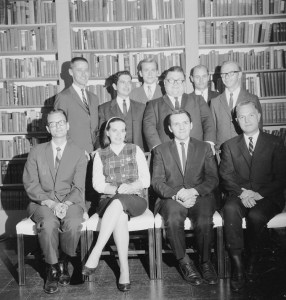
In “The Invention of Gay Community in San Francisco, 1960–1970” (The Historical Journal, 2025), Mori Reithmayr examines SIR within the broader context of San Francisco’s homophile movement. Reithmayr identifies May as “one of SIR’s most vocal mid-1960s coalitionists.” As May once wrote in Vector, SIR’s publication, “Whenever the rest of society persecutes any individual or member of a minority group, this is also my problem.”
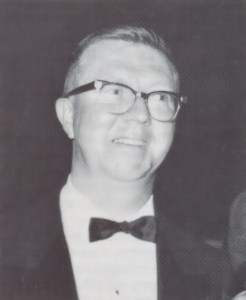
Other founding members of SIR included Nancy May’s husband, Bill May, and Bill Plath, a longtime gay bar manager who also makes an appearance in the episode. Learn about Plath’s life and activism in this entry from Elisa Rolle’s Queer Places.
The Council on Religion and the Homosexual (CRH) and the CRH ball and its aftermath are the subject of this online exhibit from the LGBT Religious Archives Network and Jallen Rix’s 2012 documentary Lewd & Lascivious, which is available in its entirety here. The film includes interviews with Nancy May, Herb Donaldson, and CRH ministers Chuck Lewis and Ted McIlvenna.
In this MGH episode you can hear about the CRH ball from the perspective of Herb Donaldson and Evander Smith, the two gay lawyers who were also arrested that night. Del Martin and Phyllis Lyon, the cofounders of the Daughters of Bilitis who were also present that night, are featured in this MGH episode.

———
Episode Transcript
Eric Marcus: You have a, a unique perspective on all of this, because you’ve been married to a gay man for 31 years.
Nancy May: Mm-hmm.
EM: How has that added to your perspective on, on all of this?
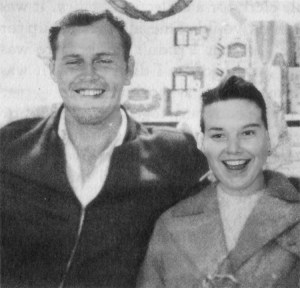
NM: He’s probably given me a lot of insight into how gay people feel about things. Um, I knew he was gay before I even met him. I’d heard about him, heard about his parties and stuff. The first time I saw him, I thought he was the most beautiful human being I’d ever seen in my life.
I had gone to this—it was a three-day party—and he was there and he was dancing with somebody else, and I said to the person I was with, “Who in the world is that?” And they said, “Well, that’s Bill May.” And I said, “That’s Bill May?” And I think, um, the attraction at that point was so strong, and I knew he was gay, but it was just like, it was like, almost like seeing somebody you’d, you’d known all your life.
———
Eric Marcus Narration: I’m Eric Marcus, and this is Making Gay History.
Like a lot of our most committed allies, Nancy May had a deeply ingrained sense of right and wrong. And her sensitive nature and empathy made her experience the struggles of her gay friends as her own. But for Nancy, our fight for justice and acceptance hit closer to home than it did for most straight allies. That’s because Nancy was married to a gay man.
Nancy May was born in 1936 and grew up in rural Washington State in the care of protective grandparents. When she was 18, she moved to San Diego, California, and got a job, and a social life. One of Nancy’s best friends was a gregarious bisexual woman who took her to the city’s gay bars and introduced her to a mostly gay circle of friends. That circle grew to include Bill May, who became Nancy’s husband in 1957.
Nancy dedicated herself to the homophile movement of the 1960s with a quiet determination. Her involvement was often met with suspicion or head-scratching from the people she worked so hard to help. But that didn’t stop her from sticking her neck out.
So here’s the scene. I’ve arranged to interview Nancy at the May family home in Concord, California, a suburban city northeast of San Francisco. It’s a modest ranch-style house currently also occupied by Nancy and Bill’s two grown sons. Nancy’s in her early 50s. She’s dressed in slacks and a sleeveless shirt, her dark hair pulled back in a ponytail. We take a seat at a picnic table in her lovingly maintained yard, which is bursting with roses. Cheers from a nearby athletic field occasionally punctuate our conversation.
Nancy starts by telling me about the incident that turned her from a casual ally into a passionate activist. The year was 1961; the place, the San Diego office where Nancy had worked for the past few years.
———
EM: Interview with Nancy May, Sunday, September 24, 1989. Location is the home of Nancy May in Concord, California. Interviewer is Eric Marcus. Tape one, side one.
NM: I worked for a collection agency. It was a nothing job, a file clerk, and sometimes my friends would come and pick me up for lunch. And I knew they were gay, but I didn’t think that there was anything remarkable about that. And, uh, because I didn’t think that it was unusual or, or peculiar, I talked to my friends at work about it and such, and I guess it got back to the boss. He called the entire company together.
EM: There were a lot of people?
NM: Yeah, about 30, 35 people. Without really telling anybody why he was doing it, you see? And I was sitting there—there were people behind me, people in front of me, to the side, everywhere—and he just started talking about how there were certain people who lived their lives in such an unnatural manner and such. And I didn’t realize that, that it was a bad thing for people to be gay. But he described them as animals, as, as low lifes, as… Everything dirty on the face of the earth was, was embodied in these people. And I was looking around kind of wondering, uh, why did he call us together to talk about this, and what has that got do with what we do fo—in this business? And all these thoughts are going, trying to figure out what it was.
EM: Did you think it was you?
NM: Not at first because he was talking in real general area, and then he got down to the specific, that one of the employees for the company associated with these people. Then I realized he was talking about me. So I just—I didn’t know what else to do—so I just got up and went to the coat closet and got my coat and left everybody sitting or standing where they were. And I went out the door.
EM: And he had said at that moment you were fired.
NM: No, he didn’t. No, I didn’t wait for him to fire me. I didn’t wait for anything else. I just wanted to get out of there because as soon as I realized that he was talking about me, I didn’t want to stay to hear any more. It was just, it was too, it was too humiliating and too painful.
It was like I’d been caught doing some unmentionable act—like I had been behind a curtain, and the curtain was thrown aside and everybody was, was observing me doing something I didn’t want anybody to know I ever did.
EM: Right.
NM: And this was coming from a man that I had liked. So for him to judge me like that and judge my friends like that…
EM: Must have been shocking to you.
NM: It was horrible.
EM: He had not only attacked you, he had attacked people you loved.
NM: Mm-hmm. It was only after this termination of employment took place that it became, in my mind, something that had to be fought against. I left there in utter humiliation, and determined that this would never happen again—to me or, if I could prevent it, to anybody else.
———
EM Narration: A few months later, Nancy and Bill relocated to San Francisco with their firstborn in tow. They became involved in gay rights organizing, most notably as founding members of the Society for Individual Rights—or SIR, for short. SIR was formed in 1964 with the wide-ranging mission to make life better for gay people—by securing civil liberties, offering legal advice and peer support, and fostering a sense of gay community through social events and activities. Nancy was the only woman on SIR’s inaugural board, and as the organization’s first political chair, she led the earliest efforts to get San Francisco politicians to recognize the city’s gay vote.


Shortly after its founding, SIR also partnered with several other local homophile groups to help raise funds for a new organization called the Council on Religion and the Homosexual, or CRH. To do that, they would co-host a costume ball on New Year’s Day 1965 at San Francisco’s California Hall. It turned into the most dramatic night of Nancy’s activist career.
A note about the cast of characters Nancy’s about to introduce. You’ll hear her mention Evander and Herb. That’s Evander Smith and Herbert Donaldson, two gay attorneys who’d gotten assurances from the police in advance of the dance that law enforcement would stay out of the way. Nancy also references Phyllis and Del. That’s Phyllis Lyon and Del Martin, the co-founders of the pioneering lesbian organization the Daughters of Bilitis. Also making an appearance is Bill Plath, who was a fellow founding member of SIR.
———
EM: How did you get involved in the, uh, the CRH dance?
NM: Well…
EM: You were, you were working all this time, I assume?
NM: Yeah.
EM: What kind of work were you doing?
NM: I was a teamster.
EM: You were a teamster.
NM: I was working—I, I got into the insurance game, and by the time the CRH dance took place, I was working for Teamster Security Fund, which…
EM: Okay.
NM: Well, my husband was a florist and I was a teamster and our children were confused. That’s the family talk. Anyway, um, the dance… The Council on Religion and the Homosexual was formed by a group of really liberal, liberal ministers. Well, um, Cecil Williams was one of them. Ted McIlvenna, uh, Bob Cromey, and the, uh—oh, what’s the night minister’s name?
EM: Uh, uh, uh, [Chuck] Lewis, Lewis…
NM: Yeah. So, anyway, these guys thought that there was a whole constituency that they were not ministering to. They also thought that, from a civil rights perspective, these people were not being treated very well.
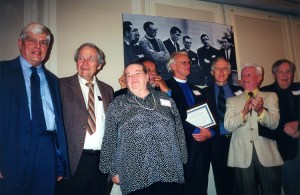
The ministers met with the gay community and they said, “We wanna start this organization where it will create an atmosphere for gay people to come back to the church.” Now, these are just about five ministers, it was just a few people. And they said, “But we need to have some money to get our organization started, ’cause we have to have clerical help, and stuff, and stuff. And so everybody says, “Well, we could have a dance.”
EM: And they consulted with SIR, I would assume.
NM: Yeah. And Daughters of Bilitis. And they sort of got everybody sort of gathered together and they said, “Would you help us put on the dance?” And, and—well, the ministers in their naivety went to the police and told them where and when the dance was gonna be. So the gay people knew better, and they tried to tell the ministers, “You can’t do it that way ’cause the police will come, too. They’ll think it’s an invitation.” And they did.
And so we started putting the dance together, and they wanted volunteers to take tickets. Well, Phyllis and Del volunteered for the first shift, and this other guy and I were supposed to take over the second shift.
EM: When you got to the California Hall, were the police there already?
NM: Mm-hmm?
EM: What was the scene like?
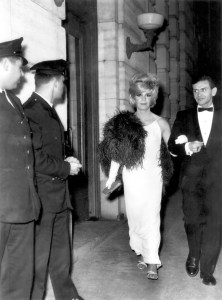
NM: Well, they were there with strobe lights, taking pictures as people got out of their cars, and a lot of these people were in costumes—uh, men were wearing women’s clothes. They were told to, to ignore the fact that they were being photographed, and they pretty much did. They, they got out of limousines in front of California Hall and walked up the stairs with their heads held high. People were told to act in a dignified manner, as though they were going about business that they had a perfect right to go about.
EM: I would think for many people who were there, it was a, it was a major statement to just get out of—
NM: To go.
EM: Yeah.
NM: To go. Just to go. We were surprised anybody showed up, we really were. When we, when we reached ticket sales of 500 people, we figured probably a hundred of them would show up.
EM: How many people came?
NM: Probably about 2—250.
EM: And that was even with the police cordon?
NM: Mm-hmm. And they crossed that, that, uh, war zone knowing that there was a possibility that their, their bosses would get pictures of them going in there, knowing that.
EM: Mm-hmm.
NM: And my husband was taking pictures of the police taking pictures. And so about an hour or so after we got there, he had used up two rolls of film, so he brought me the film. He said, “Here, I know that nothing’s gonna happen to you, so take this film.” So I said, “Okay.”
And, uh, I guess about nine or ten o’clock, I went over to Phyllis and Del. I said, “If you guys want to go in and see the show, I’ll take over the, the table here.” They were just doing some pantomime acts and that kind of thing.
EM: Had there been any problem with the police up to that point?
NM: Yeah. Well, they had come and they had gone. We thought they were gone ’cause they had been, they had been trying maybe about eight times. They had come in, inspected the premises for fire, uh, violations and left. And the last time they came in to inspect the premises, we told ’em they couldn’t come back anymore, that the premises were thoroughly inspected and if they came back again, we thought they should bring the fire chief with them or something just to show what they were doing.
EM: It must’ve been very tense.
NM: Yeah.
EM: Yeah.
NM: Yeah, we were, well, we were having as good a time as we could under the circumstances.
EM: Right. Were you dressed in costume?
NM: No, it was just—I had on a sort of a brocade outfit, but it was not a costume.
And I went over to Phyllis and Del and told them if they wanna go inside. And I didn’t know where the guy was that was supposed to come with me, so I asked them if they would check, see if they could find him and send him out.
And they had arrested Evander and, and Herb at that point, hauled them off by their elbows. And I guess my feeling was that since those guys were already gone and they were our, our main protection, but as well as that, they were the main troublemakers, that the police would probably leave us alone from then on. So I didn’t feel I was in any great danger.
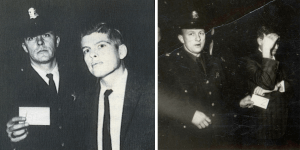
And about, I guess about 20 minutes after Herb and Evander had left, the police came back. I was on the table by myself, and I had just picked up a whole bunch of, of clutter that was around—half-filled drinking cups—and I was carrying them over to the trash can.
And this man stopped right in front of me. And I started to go around him and I looked and he said, “We’re coming in to inspect the premises.” And I said, “No, you’re not. We’ve about had it with you people.” And he says, “Look, lady, we’re coming in.” He flashed a badge at me. And I said, “That doesn’t make any difference. You don’t have a warrant. You don’t belong here. And now get out.”
EM: Where did you get your courage from?
NM: I don’t know. This guy was about six four, weighed about 215 pounds. And he turned around and left. I went, whoa. I thought, geez, that was easy.
He came back with three uniformed policemen and said, “Put that woman under arrest.” And by that time, the ministers had come back, and I said, “Can I get my coat?” And they said, “No, get out there. Take her out there.” And Cecil Williams comes up, comes up and he says, “Let the poor girl get her coat. For god’s sake, man, it’s January 1, it’s cold out there.” And he just grabbed me by the elbow and started marching me away from the door in the opposite direction towards the coat room.
EM: Cecil did.
NM: Cecil. And I said, “Would you tell Bill I’m being arrested?” Well, I meant Bill May, and they went and told Bill Plath. So somebody ran off and got Bill Plath. So I gave him the film that my husband had given me for safekeeping ’cause I thought, shit, that’s all I have to have when they take me to jail, was a bunch of film. And, um, so I slipped the, the film to Bill Plath and got my coat and got out there.
In the meantime, between the time Herb and Evander left and when I got arrested, they had called this guy named Elliot Layton, and he was an attorney that they knew. He was not gay and he was not associated in any way with this thing up until that point, but he came down there to keep an eye on things. And, uh, so when he saw me being hauled back down the hall, he came running up behind me and started yelling at the police, “You can’t take that woman, you can’t take that woman, and you can’t come in here anymore,” and you can’t do this, and you can’t do that. Off he went to the paddy wagon.
So at least I had some companionship, that was really nice. Bill Plath got on the phone and started making some phone calls. And by the time we got to the jail, to Northern Station, they had already arranged our bail. So we were put in a holding tank for maybe about 10 minutes and then—but they took fingerprints and the whole thing.
And I had been told repeatedly, “Please don’t tell ’em where you work, ’cause this can be real destructive.” But I was afraid if I didn’t tell ’em I worked someplace that they would think that I had some other business and, you know, wasn’t as legit as, as working where I did. So I told him where I worked and the next morning, in the headlines, it was, “Teamster Secretary Arrested.”
EM: In the headline?
NM: Yeah. So I figured, surely I’m gonna be fired. But when I got back to work, the, there was no comments, you know, I was really surprised. I walked in, sat down at my desk, started to work. At coffee break, one of the women called me. She said, “I just want to ask you one thing.” She says, “Why do you think those ministers would wanna associate with a bunch of queers?”
I said, “Betty, you’re a religious woman, aren’t you?” She said, “Well, of course.” And I said, “Well, why would they wanna associate with you? What could they possibly do for you? You’re convinced that you’re right all the time anyway. They’re ministering to people that they think need to be ministered to who have troubled lives and want to be saved. Now, I don’t see any reason why they would even wanna say hello to you because you’re obviously already saved, and you’re so damned self-righteous I could hardly believe that you could live with yourself.”
I, I just let it fill up. She didn’t speak to me again, but a few people did. A few people understood where it was coming from. But my main thing was, I was gonna be fired for sure. So I waited till the end of the week, I wasn’t. Waited till the end of the month, I wasn’t. So about three weeks had gone by and I stayed late one night purposefully by myself ’cause I knew that the, the personnel manager worked late.
So when he started to leave, I called him over to my desk and I said, “Don, are they gonna fire me?” And he said, “No.” He said, “It was touch-and-go there for a while. We had a meeting about you. But I told them that what you do from nine to five is our business, what you do from five to nine is your business. But I wanted to, if I could ask you one favor…” I said, “What?” He goes, “Please try to keep the teamsters’ name out of the paper. We get in enough trouble on our own.” I thought I’d die. I still love that man, still think he’s the greatest.
EM: So you had, there were people who, uh, quietly were your allies.
NM: Yeah.
EM: Mm-hmm.
NM: Some of the strangest people, people that I did not expect. Um, one of the managers became one of my best friends. I didn’t know at the time that she was gay and we never discussed it—I don’t know officially to this day that she is. But we became very close friends because I think she sensed that there was a person that if I ever did find out about her, I wouldn’t be passing judgment on her.
EM: Mm-hmm.
NM: And she didn’t have any friends in that office, I was the only person that she even talked to.
EM: Mm-hmm.
NM: The upshot of the dance… It sort of brought the gay, gay movement a big step ahead because a lot of people decided, well, what the hell? We’ve got nothing to hide now. We might as well be there ’cause the cops and everybody else knows who we are. So a lot of people really started examining how being in the closet was affecting their lives. People were more willing to, to be open with their friends and neighbors and stuff, so it, it acted as a kind of a catalyst.
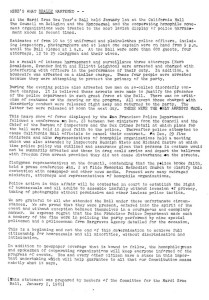
Then the trial was in March. This was the arrest trial to find if we were guilty of, of—what we were arrested for was obstructing a police officer in the performance of his duties. It’s a misdemeanor, it’s, it’s a nothing thing, but we had a packed courtroom every day
EM: Who, who came?
NM: Mostly gay people.
EM: Uh-huh.
NM: Because it was a real important trial—whether or not the judiciary was gonna say it was okay for the police to behave in that manner. So it was really important for us. And so their case was that we would not allow them on the premises. The guy that, that I stopped—or that originally stopped me and told me that he was gonna come in there, the big guy—testified that I beat on his chest with my hands to prevent him from going in.
And of course I didn’t ’cause I had all those cups in my hands at the time. So the judge asked me to walk around to the, you know, the area between the, the table and the, and the judge’s bench, asked me to walk around there and stand up in front of this guy as though I were gonna beat on his… And of course he’s towering almost two feet above me. And the courtroom broke into peals of laughter. Well, that was the end of that.
EM: But what did that show? He was—
NM: That I was—at the time, I weighed maybe 110, 115 pounds. I was five foot two. He was six foot four.
EM: You were obstructing him, right?
NM: Yeah. Like even if I wanted to, he could have stepped over me and—get outta here. And before the defense even started their case, the judge ruled that we had not obstructed them from entering the premises because they were over the threshold at the time the arrest took place. So it was, like, thrown out on a technicality.
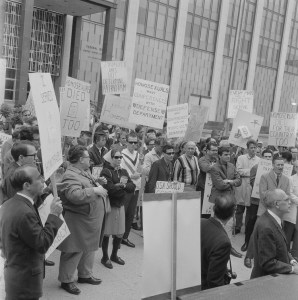
So because it was thrown out on a technicality, we really didn’t feel that we had proven anything. But what we had done, actually, was we won the psychological battle, you know? Because I think at that point a lot of gay people realized that that sort of thing was happening and that it just couldn’t go on. And SIR blossomed after that. We had gone from about 300 members to about a thousand members, just in that short a period of time. We had international standing in the, in the gay movement at that point because of the January 1 happenings.
I think it was probably that event that created the atmosphere for people to say, “There are people in this movement who are willing to stand up for what they believe in,” you see? “And so, why not me?”
———
EM Narration: Toward the end of our interview, Nancy admitted to feeling a little peeved that the CRH ball was so completely eclipsed by the Stonewall uprising. For one thing, that now legendary flashpoint confrontation with the police didn’t occur until more than four years after the dance. But as the costumed partygoers had entered California Hall in defiance of the menacing police presence, Nancy had certainly felt that history was being made that night.
Nancy stepped away from SIR in 1966, after she and Bill had their second child. She continued to work in the insurance business and became involved in children’s mental health advocacy.
Bill May died in 1998. As best as we’ve been able to determine, Nancy May died on April 11, 2020, just shy of her 84th birthday.
———
Many thanks to everyone who makes Making Gay History possible, including producer Inge De Taeye, photo editor Michael Green, and our social media producers, Cristiana Peña and Nick Porter, with production assistance from Lucy Grindon. Our studio engineer was Cathleen Conte at CDM Sound Studios. Fritz Myers composed our theme music.
Special thanks to our founding editor and producer, Sara Burningham, and our founding production partner, Jenna Weiss-Berman. Thank you, also, to the New York Public Library Manuscripts and Archives division for their ongoing assistance.
Season fifteen of this podcast has been made possible with funding from the Jonathan Logan Family Foundation, Ty Ashford and Nicholas Jitkoff, Broadway Cares/Equity Fights AIDS, Mitchell Draizin, the Calamus Foundation, Christopher Street Financial, the Marcus Family Foundation, the Kipper Family Foundation, Rick Hoffman, Bill Kux, Rick Fishell, Esmond and Jerome Harmsworth, the Embrey Family Foundation, Mary Cadagin and Lee Wilson, Robert Gober and Donald Moffett, Greg Adgate, the Eicholz/Scott Family Trust, Maureen Bennett, Hal Brody and Don Smith, Robert Dodd, and Kathy Danser.
To learn more about the people and stories we feature, head to makinggayhistory.org where you’ll find links to additional information and archival photos, as well as episode transcripts. On that same website, you can also find our season two episode featuring Evander Smith and Herb Donaldson and hear about the CRH ball from their perspective.
I’m Eric Marcus. So long, until next time.
###