Barney Frank
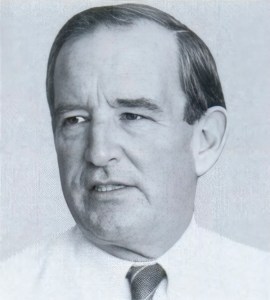
 Congressman Barney Frank, 2005. Credit: United States Congress/Wikimedia Commons.
Episode Notes
“Are you gay?” a reporter asked U.S. Representative Barney Frank in 1987. “Yes, so what?” With that, Frank became the first member of Congress to voluntarily come out as gay. But the casualness of his reply hid decades of agonizing and a very real fear of torpedoing his political career.
Episode first published July 23, 2026.
———
For a concise overview of Barney Frank’s life and political career, read his New York Times obituary. Dive deeper with the superb graphic novel Smahtguy: The Life and Times of Barney Frank (Macmillan, 2022) by cartoonist Eric Orner, who was a longtime staff counsel and press secretary of Frank’s. For a more traditional biography, read Stuart Weisberg’s Barney Frank: The Story of America’s Only Left-Handed, Gay, Jewish Congressman (University of Massachusetts Press, 2009).
If you prefer to learn about Frank in his own words, have a look at his autobiography, Frank: A Life in Politics from the Great Society to Same-Sex Marriage (Farrar, Straus and Giroux, 2015). Only want the funny bits? Try Peter Bollen’s compilation Frank Talk: The Wit and Wisdom of Barney Frank (iUniverse, 2006).
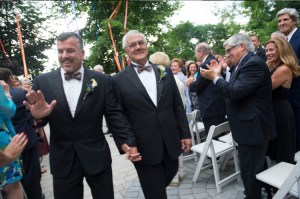
The 2014 documentary Compared to What? The Improbable Journey of Barney Frank delves into Frank’s political career and private life, culminating in his wedding to Jim Ready. Watch the trailer here. The wedding was written up in the New York Times “Vows” column.
For a comprehensive exploration of the intersection of Washington politics and LGBTQ history, read James Kirchick’s much-admired Secret City: The Hidden History of Gay Washington (Henry Holt, 2022).
As the introduction to the episode states, in 1987 Frank became the first U.S. congressman to voluntarily come out as gay. Four years prior, Gerry Studds, another Democratic Representative from Massachusetts, had acknowledged on the floor of the House that he was gay, but only after a scandal had revealed that he’d had a sexual relationship with a male congressional page. You can read Studds’s speech on page 19167 of the Congressional Record of July 14, 1983. This TIME article explains the context and significance of the moment.
Another scandal-plagued gay politician mentioned in the episode is Robert Bauman. Learn more about him in this MGH episode and the accompanying episode notes. The Gentleman from Maryland, Bauman’s memoir in which he outed Frank, is available here (the passage about Frank appears on page 30).
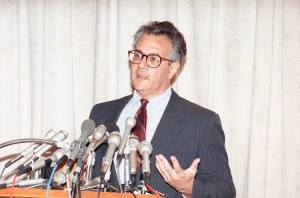
Frank was not immune to scandal himself. In the summer of 1989, Stephen Gobie, a sex worker Frank had patronized and then hired as a personal aide, made lurid allegations about Frank, including that he’d allowed Gobie to run a prostitution business out of his apartment. See this TIME article for a summary of the affair. This clip from WGBH’s Ten O’Clock News on August 25, 1989, includes footage of a press conference in which Frank addressed Gobie’s claims. A lengthy investigation by the House Ethics Committee followed; you can read their entire report here. In the end, all but two minor charges were dismissed, and Frank got off with a reprimand. In this July 20, 1990, segment from WGBH’s Ten O’Clock News, Frank addresses the press about the committee’s findings.
In the episode, Frank mentions reading The Best Little Boy in the World, which was a groundbreaking 1973 memoir by Andrew Tobias about growing up gay. The book was originally published under the pseudonym John Reid. You can read it here.
Frank references two gay rights organizations that were active in Boston in the early 1970s: the Homophile Union of Boston and the Boston chapter of the Daughters of Bilitis. Queer History Boston has resources about the groups here and here, respectively.
Frank says he was motivated to come out by the AIDS-related death of his colleague Stewart McKinney and the speculation about McKinney’s sexual orientation that followed—which this 1987 New York Times article illustrates.
———
Episode Transcript
Eric Marcus Narration: I’m Eric Marcus, and this is Making Gay History.
During the summer of 1984, I had a brief stint in politics. I’d landed a job as assistant press secretary to the president of my home borough of Queens, New York. My real interest had been electoral politics for myself—I’d wanted to one day run for New York City Council. But there was no such thing as an out gay City Council member at the time. I’d even felt compelled to go back in the closet to get this behind-the-scenes job. A bad move. I was miserable pretending to be straight, and I quit after six weeks.
It’s hard to imagine how few openly gay elected politicians there were back then, at any level of government. At the federal level, there was exactly one: Massachusetts Congressman Gerry Studds. And he hadn’t come out of the closet so much as been ejected from it during a sex scandal.
But in 1987 a more inspiring landmark of LGBTQ history was reached. That’s when another Democratic Representative from Massachusetts, Barney Frank, became the first member of the U.S. Congress to voluntarily come out as gay.
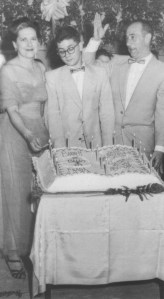
Barney Frank was born in 1940 in Bayonne, New Jersey. He moved to Massachusetts when he landed a spot at Harvard—in 1957, that was no small accomplishment for a Jewish working-class kid. He majored in government and was soon recognized as something of a political prodigy. By the time he came out, he’d worked in politics for two decades and had established himself as a well-respected, sharp-witted champion of the underdog. Not a slick, baby-kissing glad-hander, but a man who wanted to get things done.
So here’s the scene. It’s June 1, 1989. I’ve arranged to interview Congressman Frank at his office in Washington, D.C. I’m excited; Frank’s one of my heroes. And I’m nervous because of his reputation for being impatient and gruff. He also has a reputation for being less than concerned about his appearance—rumpled suits and bad haircuts. But the man who greets me across his tidy, uncluttered desk is tanned and well-dressed. I clip a microphone to his lapel and brace myself to keep up with his trademark rapid-fire speech.
A quick note: You’ll hear Congressman Frank mention Robert Bauman. Bauman was a closeted Republican congressman whose political career went up in smoke after he was caught soliciting sex from a 16-year-old boy. He also mentions Tip O’Neill, who was a long-serving Speaker of the House of Representatives.
———
Eric Marcus: … Harper & Row is publishing the book the fall of ’91. Um, and I’m speaking to people all across the country, uh, from all walks of life, uh…
Barney Frank: Alright, that’s enough. Uh, what subject do you wanna cover with me?
EM: What I’d like to talk about is starting with, uh, some of your early aspirations. So the first question is why, why run for Congress knowing that you were gay?
BF: Which I certainly did.
EM: Which you…
BF: Well, I’ve always been interested in politics. I’m an early TV kid. Uh, I’m, I’m 49 years old—I was born in 1940—and so when they first started televising things—the Kefauver hearings, and then the, uh, Republican and Democratic conventions, and then the Army–McCarthy hearings—when I was anywhere from 11, 12 to 14 years old, I was fascinated with them. And by 1954 I found I had a kind of a rooting interest in the Democrats winning elections.
I didn’t think of having an active political career. The fact that I was gay, which I knew from the time I was 13, was not the primary reason. Um, for me being Jewish also seemed like a pretty big handicap in 19—in the 1950s. And I grew up in Bayonne, New Jersey, part of Hudson County, which back then was boss-ridden, corrupt, … You just didn’t think about a political career in the normal sense. You had to kind of apprentice yourself to an organization that was dominated by, uh, the corrupt, just part of the teamsters and the longshoremen and, and, uh, uh, Jews were not very welcome.
So I thought of this as a kind of a fascinating spectator sport. Then I got away to college—this was Brookline, Massachusetts—and I said, oh, this is great, I can sort of participate. And I was active in Young Democrats, uh… But I just assumed that I would be, uh, as an undergraduate, I decided I would be professionally a professor, and that I would be a professor who was always interested in politics.
And so from that period—really from ’57 till ’67—I had about 10 years in which I worked actively on other people’s campaigns. And, uh, I worked for some people who won, some people who lost. I never really thought about going to work there full-time. I thought I could be an advisor and a participant in that way, and then at some point I might get an appointed position that would be of interest.
And then in 1967, after five years of graduate school, in which I was not really making much progress on the thesis, I got asked by some mutual friends if I would go to work for a guy named Kevin White, who was running for mayor of Boston, primarily because he was running against Louise Day Hicks. And she was a racist and was running in a racist way. And I went to work for White to help defeat her.
And after a month, when he won, he said to me, “Would you come work for me?” And I was shocked. I said, “No, I gotta do this and that.” And, uh, he insisted and I said, “Yeah, maybe I should do that.” So I went to work for him for three years.
And at that point, I, uh, my sexuality was not an issue because I had been so closeted as an academic, and I mean, I, I just, I was very repressed and closeted…
EM: When you say closeted…
BF: Well, closeted—I never told another human being in the whole world that I was gay other than people with whom I was interested in, in, in, uh, having sex. And there were not very, very many of those.
I mean, I—there was a recent scandal, they accused people of having sex with minors. And somebody said, “Are you worried?” I said, “Listen, I, I haven’t had sex with a minor since I was a minor, and I didn’t have that much then.” Um, but, uh, I didn’t have anything to lose by going to work for the mayor at that time, because I couldn’t have been any more closeted and repressed than, than I was as an academic. This is the 1960s. This is pre-Stonewall.
EM: Right. Were you aware even at that time that there was anything going on in the world of gay rights or that, that…?
BF: Not much, ’cause there, there did not seem to be that much, and I, I was very much cut off from it.
EM: Mm-hmm.
BF: I did not know very much at all. Um, and I went to work for Kevin White, and that was a very absorbing job. And after three years, I—I’m a nervous eater—I, I weighed 270 pounds, about, you know, 75 more than I should have. Uh, I was exhausted. I enjoyed it, but I was worn out. And so I quit working for him at the end of three years to go back to school to say, oh, now I’m gonna write a Ph.D. thesis about this, ’cause I still thought of myself at that point as an academic on temporary absence.
I spent a few months trying to be an academic and I realized I didn’t have the discipline. Um, I did try to lose weight, and I, there was some sort of… I began to think about, how do I deal with my sexuality. What do I do about it? And am I gonna live a repressed life? I don’t wanna do that.
EM: Was it, was it a, a personal discussion, something you talked about in your own head?
BF: Right. Nobody else, nobody else. Never talked to anybody about it.
EM: Well, that’s awfully lonely.
BF: Yeah, it was. Terribly lonely. Um, one guy who, uh, I had known when he was an undergraduate and I was a graduate student, he figured out that I was gay and talked to me about it in a very sympathetic way, and a couple other people did. I read at that time, uh, The Best Little Boy in the World, talked about it with a couple of people there. I don’t remember what they said, but just, well, you know, they were just sort of generally encouraging without being specific. Just, you know, “Do what you need and your friends will be there, whatever you want.”
By that time, I, I should say, I’d decided that I was gonna be a politician, not an academic, but I still thought of myself as an appointed politician. So I was, got a phone call from a friend who was a congressman, Michael Harrington—a liberal Democrat who was a congressman of Massachusetts who I admired a lot—and he said, “Come down and be my chief assistant.” I said, “Sure.” So I came down here for a year. And, interestingly—this is ’71 and ’72—I was in better physical condition, I’d lost a lot of weight, I was 31 years old, and I still was a total abstainer down here. I was still too frightened and repressed.
And then I, uh, came back up one day and a friend of mine said, “The state representative from this district, Maurice Frye, who was a Republican, is retiring. Why don’t you run for the job?” Well, I had gotten fairly well known as the aide to the mayor, and I said, “Geez, do you think I could win?” I mean, you know, I, I, I, I didn’t think I was much of a candidate. Once a woman who was interviewing me on some other issue having to do, I think, with handicapped people said, “You seem to have a particular interest in kind of outsiders. Is there any special reason why you’re concerned about outsiders?” And I wanted to say, “Listen, you try growing up as a gay, left-handed Jew, and then, then, then you’ll know something about being an outsider.” Uh, I didn’t say that to her, but I said that to me a lot.
So I just thought, me? I mean, they’re gonna, you know, I mean, I’m, I’m not gonna, nobody’s gonna vote for me. And a friend said, “Well, yeah, run.” So I ran and I won.
Now I won in a district that was very unusual at the time. It was Back Bay–Beacon Hill. It didn’t have a large gay population then, it has a larger one now. But it had a very cosmopolitan population. It was, it was a socially quite liberal and, and, and tolerant place on things like abortion, et cetera. I thought to myself then, okay, look, am I ever gonna have a private life or not? And I really want one and—
EM: You were already in your, your…
BF: I was 32 years old.
EM: That’s a long time to go without a personal life.
BF: Yeah. And it, uh, it lasted till I was 40 and had, had very negative consequences. I said, okay, I’m gonna run for office, and as I run for office, I’m gonna have to be repressed and I can’t do anything about it. I’m gonna have to be closeted. But I’m gonna be supportive of gay rights. I couldn’t live with myself if I didn’t do the right thing publicly. I can—basically, what I said was, I, I have to deny me, but I’m, I don’t have to, I don’t, I don’t think anybody else should be denied.
And at that point, in 1972, when I came up to run, gay rights activity was just beginning in Boston. There was the Daughters of Bilitis—that was a lesbian organization—and the Homophile Union of Boston. And I just, uh, started working with them, and I became this major supporter of the gay rights bill.

I didn’t think at that point I would be able to go beyond being a state legislator, because of the reasons, you know, being gay and Jewish and maybe too liberal, and not considering myself to be a great public figure. Um, I thought, well, if I’m gonna do this, I’d better enjoy it. So I said, I’m not gonna take any positions that I don’t think are right. And it turned out that that was one of the things I was better at than other things.
I mean, I had not been a very good academic, but I was a pretty good politician and particularly a legislator. So I kept that up. And I, uh, as far as being gay was concerned, I began to, I started having more physical expressions, but still not much in the way of emotion.
Um, it wasn’t until the mid- to late ’70s that I began to talk… It was crazy; I was acting with other gay people. I just couldn’t even tell them. I can’t explain to you now—uh, the emotional distance is so great—I can’t tell you why. I just couldn’t do it. Didn’t feel comfortable, didn’t do it. Uh, some of them figured it out, but I, I kept on that way until finally, late in the ’70s, I decided that I was very frustrated with the legislature—I didn’t want to stay there anymore. And by 1979 I was getting pretty depressed. I figured, well, I’ve spent seven years in the legislature, I sacrificed my personal life. I’m 39 years old—my 40th birthday was coming—and where the hell am I? I’m not acting like a normal human being, and I’ve, you know, I was feeling sorry for myself.

So I started to come out to people. First I told a couple gay people. Then I began to come out to some straight people. Uh, my siblings—I have two sisters and a brother—uh, and their, uh, spouses…
EM: Any negative reactions?
BF: None. In general, the straight people to whom I came out thought I should tell them and not too many other people.
EM: Right.
BF: One of the things I found about coming out, most straight people think that they’re not prejudiced, but other straight people are. When I, ultimately, in 1987, when we polled, 20 percent of the people in my district said that it bothered them that I was gay; 45 percent said they assumed it bothered people. It’s kind of like, “Don’t tell mother.”
EM: Right. I remember coming out, I remember how terrifying it was. It must have been both terrifying and a relief.
BF: Yeah. Oh, yeah. It was, I mean, doing it at first was very emotional, and I could, you know, hear the violins playing and, and, uh, I mean, coming out, you know, was one at a time. It would take me, uh, three or four days to get up the emotional energy to do it and, and a week to recover from having done it.
You know, I could’ve lived to be 106, I would’ve come out to a thousand people—I mean, no more. I mean, it just would’ve taken me that long.
EM: Right.
BF: But, um, at any rate, I started coming out and, um, started socializing with other gay people. And then all of a sudden, uh, the pope announced that he did not want Father Drinan to run for Congress again. And I decided I would run for the seat, move and run, and—bang—shut the door again.
EM: Why the decision to go back in the closet?
BF: Well, ’cause I couldn’t win for Congress if I was coming out. I knew that I couldn’t, uh, win as a first-time candidate if people were focusing only on my sexuality.
EM: Which is still true today.
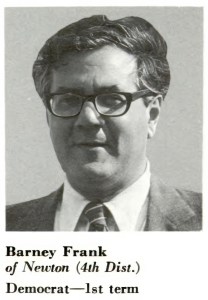
BF: Yeah. Um, so I ran for Congress. I won.
EM: What did you do to shut the closet, though?
BF: Well, I stopped telling people.
EM: Uh-huh.
BF: I had only told really reliable people, so they didn’t tell anybody else. But then I got down to Washington in 1981 and I said, okay, I’m gonna live in Washington as a gay man. And I began to come out to the gay community totally in Washington and I—
EM: How did you do that?
BF: I, I—through friends. I would, began going to parties and meeting other people. And from that time on, I lived as a pretty openly gay person in Washington, but not publicly gay. But down here, as up there, I was as supportive of gay rights as it was possible to be. I mean, from, I, I’ve always, but part of it was, I, I, well, people are gonna think I am. Then I’d say, well, they’d think if we, if I was, I wouldn’t… Then, you know, it became like getting your hair cut with 19,000 mirrors, and the hell with it, I figured it’s gonna cancel out.
Plus, I think my support of gay rights was consistent with my support of minority group rights. And I mean, I’d been to Mississippi in the summer of ’64. And I had a pretty good record on women’s issues and handicapped issues. And so that made sort of sense.

Uh, and I became increasingly then to start—but even, see, in ’81, ’82, I was socializing some, I was still under a lot of pressure because I knew I was running for a tough re-election fight in ’82 in the, with Margaret Heckler.
EM: Did that issue come up over, uh…?
BF: There were rumors about it and some talk about it. One of the, uh—I mean, John Heckler, her ex-husband, I’m told, said at some fundraiser, “Now I’m gonna do something that, uh, Peg’s opponent can’t do: introduce our children.” Um, so there was—
EM: Did you just ignore that?
BF: Yeah. I was frightened by it. I didn’t know how I would handle it if it, if it had, uh, come out and, uh, I don’t know what I would’ve done if I was asked. I might have lied, right? I’m not proud of that, but…
EM: But you were never asked.
BF: I was never asked. Um, so then I came back down having won, and I said, okay, now I gotta have a real life. I mean, at this point I said, now I can resume this life. That’s when I began to diet and come out to more people, and so from ’83 on, even more than before—I mean, I was, I started, you know, worrying about how I looked and changing my hair and getting contact lenses and stuff… And, uh, began to date. In 1984 is when I really first felt good about myself, and I began dating people in 1984.
EM: At the age of 44.
BF: Yeah.
EM: You suddenly became a teenager.
BF: Right, exactly. I said to people, I, I had my teens in my twenties, and I, I think I’m up to about my thirties now. But anyway, I began then to, and I then said, okay, I’m gonna come out at some point. I mean, at some point in ’85, ’86, I decided that I really had an obligation to do it and that it would be helpful and that I could survive it.
The press started asking me about it, and it became clear to me that the press wasn’t gonna write about it until I told them to. Now I don’t know if that would still be the case.
EM: What kinds of things did they ask?
BF: They’d say, “Can we write about the fact that you’re gay?” I’d say, “No.” They’d say, “Okay, why not?” I said, “Well, it’s nobody’s business.” I mean, a lot of ’em wanted to write about it, but they didn’t wanna be accused of being intrusive.
So that evolved to a point where I would sort of joke about it. I mean, I spoke to the Human Rights Campaign Fund in Boston—big, you know, public event. And the guy introduced me saying I was no johnny-come-lately to gay rights, ’cause I’d been doing it since ’73, and I said, “I, I didn’t hear exactly what, what he said. Did he say I was no johnny-come-out-lately?”
I mean, I really would, I would not make a public announcement of being gay, but I would do anything else. I was, well, it was my strategy of sort of leaking myself out.
So I began to tell other members. Uh, I was asked at this meeting at the Kennedy School—I spoke to the first meeting of the gay group, a public meeting—uh, “Congressman, are you aware that many gay people are upset when prominent people who are gay are asked about that and avoid giving a direct answer to the question?” I waited about 30 seconds and I said, “You have to forgive me. I’m trying to think of a way to avoid giving a direct answer to that question.” And that was in the paper. I mean, I don’t know if people knew or didn’t know, or, or, you know…
I mean, I, I was introduced at one point as “a good friend of the community” and I said, well, I thought that somewhat understated the connection.
But I wanted people to sort of figure it out and, because when I did come out, I wanted my colleagues to say, “Hey, look, it doesn’t make any difference to us. It will not make him less effective,” and others to say that. And then in 1986 Robert Bauman wrote his book. And he mentioned me, brought me out—quite, I think, unjustifiably and, and irresponsibly.

EM: The title of the book?
BF: The Gentleman from Maryland. He said, uh, “There are even gay people in Congress…” He mentioned Gerry Studds, who of course was out by then. And, uh, he said his “witty, liberal Massachusetts colleague, Barney Frank, goes to the Gay Pride day in Washington with his usual young companion.” Uh, “Frank’s picture’s in the Washington gay paper wearing a tank top, and nobody comments.” Well, in the first place, I was with a friend who was not—the implication was that it was a sex partner. The other problem was—and that was inaccurate—when Bauman said “young,” I mean the guy was 27 at the time; by Bauman standards, that’s geriatric. I mean, so people go, “Oh, young,” you know, “Was he another one with a 15-year-old?”
But I was really very resentful of that, and, uh, Bauman had no business doing that. So that night I decided I’d better come out to some people.
EM: So you saw the book, or the book you…?
BF: No, I was called because there were—I was called by people who’d seen page proofs. So I decided I’d better tell some other members, and I began to come out to a lot of the members then. They were immensely supportive. Tip O’Neill was troubled by it. I mean Tip, uh, you know, he’s a man of a different generation, and he was personally okay, but he was clearly, uh, bothered by it.
As I said to people, earlier I’d heard Tip had been, was quoted me—I’m sure this is true—saying, “Oh, geez, I guess we’re gonna have another issue to deal with. They tell me Barney Frank’s gonna come out of the room.” I mean, he did have a kind of a malapropist, uh, approach—a very bright man, but he would sometimes garble things a little.
By the way, USA Today and the Boston Globe both asked me at that point, and I said, “I’m not gonna discuss it.” And they didn’t run the stories.
EM: Why? Why at that point had you decided…
BF: … not to discuss it or…?
EM: Yeah.
BF: I wasn’t ready to do it emotionally, and I didn’t want to come out in the context of that book. And I, but I did think, okay, I, I think I want to make it public. And then a couple… It was Stu McKinney’s funeral when I made the decision. Stu McKinney was a terrific guy, congressman, died of AIDS, had a gay side of him. Uh, actually, somebody who once talked about Stu, who was basically straight in Connecticut and gay down here, said, “Oh, that must mean, that must be what they mean by ‘AC/DC.’”
Um, but, uh, he was a wonderful man, and I went to his funeral, and it was a very emotional time for me. I was, was, I was very emotionally moved and crying, um…
EM: Were you friends?
BF: Yeah. We worked together. We hadn’t talked much about being gay. We talked a little bit about it. Um…
EM: But you knew he was gay.
BF: I’d see him in Mr. Henry’s, yeah—
EM: I’m sorry…?
BF: I’d see him at a gay restaurant down here on the Hill. And then the, uh, woman who was the soloist at the funeral first sang “Amazing Grace” and then sang “That’s What Friends Are for.” And, uh, that really tore me up. A couple of my friends who knew, you know, why I was as upset as I was, were, were, were very gracious and supportive afterwards.
And I, then the scuffle ensued in the newspapers about, was he gay, wasn’t he gay? And understandably, but I think mistakenly, some members of his family said, well, they thought he got AIDS from a blood transfusion years ago. That wasn’t true.
EM: This is his family…?
BF: Yeah. It wasn’t a good idea to say that; they made some people nervous. I just decided that, hey, I, I mean, I could walk across the street tomorrow and get hit by a truck. Uh, I’m not gonna have people engage in that bullshit after I’m dead. And I said, I said I gotta do it. So I wrestled with it, wrestled with it, and then I said, then a couple months ensued in which I told a couple of reporters, “I’m ready to come out.”
They said, “Good, make an announcement.” I said, “No. If you ask me, I’ll tell you.” And they would say, “Well, no, you have to tell us.” I said, “Well, I’m not gonna volunteer it. I mean, I, I, I have nothing to volunteer. I do not feel comfortable volunteering it. My position is that I have nothing to announce and nothing to deny. If you ask me a question, I will give you an honest answer.”
I, I answer questions about everything. I tell how much money I make, what, what, what rent I pay, what I eat. I mean, I answer questions about everything except this. And if I only don’t answer about that, people have a right to infer that I’m ashamed of something. Maybe not ashamed, but afraid of adverse consequences, but maybe ashamed. So I said, “If you ask me, I’ll tell you.” So, finally, a reporter from the Boston Globe asked me and I said…
EM: What was the question?
BF: Um, “Are you gay?” I said, “Yes. So what?”
EM: And that broke it.
BF: That broke it. It was in the… You were, you were here on the second anniversary. June 1, 1987, it was in the paper.
EM: Today is the second anniversary.
BF: Yeah. Memorial Day weekend. Friday night I was very scared. I had dinner with some friends at a gay-oriented restaurant. I really wanted to be comforted.
EM: What were you afraid of?
BF: Couple things. I was afraid of losing my seat, losing my influence. I was uncomfortable with the notion that I would be walking around, an absolute stranger would be speculating on the most intimate parts of my life. Um, that people who had befriended me would reject me. All the insecurities I ever had as a kid come flooding back.
EM: Did you realize—um, you had to realize—what a moment in history this was?
BF: I repressed that. I mean, I can’t deal with that.
EM: Okay. It’s too much.
BF: Well, it’s, I gotta live my life as a human being, and, uh… Look, my ego’s begging… I can get, you know, I can get—the best thing I can do is to just… Yeah, sure, I’m conscious of, of, of what kind of an image I present as a gay person, and I think about that. And the, the mail was very gratifying.
EM: What did you, what are some of the things you heard from people?
BF: Oh, uh, the, the nicest thing was the guy who said, you know, “My brother who’d stopped speaking to me when I came out to him, and then he wrote to me, said, ‘Well, Christ, if I can vote for a gay congressman, I can talk to my own brother.’” Um, and then a lot of kids, particularly.
EM: What do kids say?
BF: Mostly it was, “Thank you.” And you, you know, “You made it easier for us.” So, uh, the response was, uh, much better than I had anticipated it would be. And I, I’ll tell you, uh, I think I lost about, my vote total this year was probably about 4 percent less than it would’ve been…
EM: You think it was directly affected…?
BF: Yeah. I mean, I lost something because of it, so, and I think it’s only about four points.
EM: Mm-hmm.
BF: And I, I don’t think it’s had any negative effect on my, on my role here. I mean, I will say, having done it, uh, it is such a relief and I feel so much better that, even though it was only two years ago, I, I cannot remember what it was like not to be out.
———
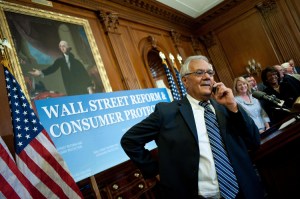
EM Narration: Barney Frank served in the U.S. House of Representatives for 32 years and was widely considered one of its most influential and passionately persuasive members. In 2007, the year the subprime mortgage crisis broke, Frank became chair of the House Financial Services Committee and had a prominent seat at the table as D.C.’s most powerful tried to avert an economic apocalypse. In the aftermath of the crisis, he was the lead co-author of the Dodd-Frank Wall Street Reform and Consumer Protection Act, the largest overhaul of U.S. financial regulations since the 1930s.
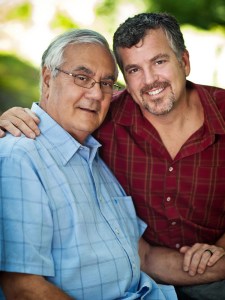
During his final year in office, in 2012, Frank tied the knot with his partner, Jim Ready, becoming the first member of Congress to enter into a same-sex marriage. The wedding ceremony was officiated by then Massachusetts governor Deval Patrick, who asked the grooms whether they would love each other “under the Democrats or the Republicans […] for better or for worse, on MSNBC or on Fox.” They said they would. And they did.
Barney Frank died on May 19, 2026. He was 86 years old.
———
Many thanks to everyone who makes Making Gay History possible, including producer Inge De Taeye, photo editor Michael Green, and our social media producers, Cristiana Peña and Nick Porter. Our studio engineers were Cathleen Conte and Katherine Cook at CDM Sound Studios. Fritz Myers composed our theme music.
Special thanks to our founding editor and producer, Sara Burningham, and our founding production partner, Jenna Weiss-Berman. Thank you, also, to the New York Public Library Manuscripts and Archives division for their ongoing assistance.
Season fifteen of this podcast has been made possible with funding from the Jonathan Logan Family Foundation, Ty Ashford and Nicholas Jitkoff, Broadway Cares/Equity Fights AIDS, Mitchell Draizin, the Calamus Foundation, Christopher Street Financial, the Marcus Family Foundation, the Kipper Family Foundation, Rick Hoffman, Bill Kux, Rick Fishell, Esmond and Jerome Harmsworth, the Embrey Family Foundation, Mary Cadagin and Lee Wilson, Robert Gober and Donald Moffett, Greg Adgate, the Eicholz/Scott Family Trust, Maureen Bennett, Hal Brody and Don Smith, Robert Dodd, and Kathy Danser (Daltin’s mom).
To learn more about the people and stories we feature, head to makinggayhistory.org where you’ll find links to additional information and archival photos, as well as episode transcripts.
I’m Eric Marcus. So long, until next time.
###