Lou Sullivan
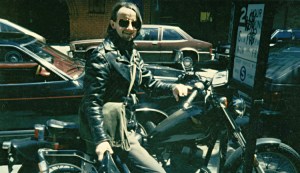
 Lou Sullivan, 1987. Credit: Mariette Pathy Allen.
Episode Notes
When Lou Sullivan sought gender-affirming care in the 1970s, he was turned down. The reason? Lou identified as a gay man at a time when all trans people were assumed to be straight—a conflation of gender identity and sexual orientation that Lou made it his mission to dismantle.
Episode first published July 30, 2026.
———
Audio Sources
Louis Sullivan interviews #1, #2, and #4, GLBT Historical Society Film & Video Collection (GLBT-VIDEO), courtesy of the Gay, Lesbian, Bisexual, Transgender Historical Society. The interviews were conducted by Dr. Ira Pauly on January 12, 1988; January 13, 1988; and January 9, 1990, respectively.
———
Resources
For a brief overview of Lou Sullivan’s life, work, and legacy, read his New York Times obituary (published 32 years after his death as part of the paper’s “Overlooked” series) or Susan Stryker’s biographical essay, “Portrait of a Transfag Drag Hag as a Young Man: The Activist Career of Louis G. Sullivan,” anthologized in Reclaiming Genders: Transsexual Grammars at the Fin de Siècle (Bloomsbury, 2016). Dive deeper with the book-length biography Lou Sullivan: Daring to Be a Man Among Men by Brice D. Smith (Transgress Press, 2017).
Sullivan’s personal writings were published posthumously under the title We Both Laughed in Pleasure: The Selected Diaries of Lou Sullivan, 1961-1991 (Nightboat Books, 2019). You can read an excerpt here and an interview with the book’s editors, Ellis Martin and Zach Ozma, in Them here. Sullivan’s diaries inspired choreographer Sean Dorsey to create a suite of dances, which you can read about here (scroll down to watch excerpts).
Other notable writings by Sullivan include:
- The booklet Information for the Female-to-Male Crossdresser and Transsexual;
- The biography From Female To Male: The Life of Jack Bee Garland, available in its entirety here;
- The articles “A Transvestite Answers a Feminist” (1973) and “Looking Towards Transvestite Liberation” (1974), which appeared in the newsletter of the Gay Peoples Union at the University of Wisconsin-Milwaukee and were among his earliest published writings; read the former here (page 9), the latter here (p. 22).
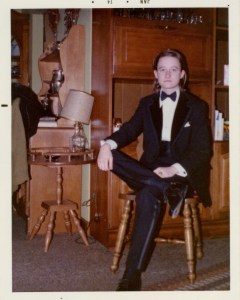
In 1986, Sullivan founded FTM, a Bay Area peer support group for trans men that grew into FTM International, a global support network. Explore the organization’s archived website here and its influential newsletter here (including the April 1991 Sullivan “In Memoriam” issue here).
Sullivan’s papers reside at the GLBT Historical Society, of which Sullivan was a founding member. Many of the items in the collection have been digitized and can be accessed here. Have a look, for instance, at Sullivan’s 1976 application to the Gender Dysphoria Program at Stanford University or the initial correspondence between Sullivan and Dr. Ira Pauly.
All four interviews between Sullivan and Dr. Ira Pauly can be viewed here. Learn more about Dr. Pauly in this biographical overview from A Gender’s Variance Who’s Who and in this oral history, conducted in 2015 by Maija Anderson at Oregon Health & Science University.
In 1989 Dr. Pauly screened his initial interview with Sullivan at the annual conferences of the American Psychiatric Association and the Harry Benjamin International Gender Dysphoria Association. The latter was established in 1979 and named after the pioneering sexologist and endocrinologist Harry Benjamin. Learn about Dr. Benjamin on this NYC LGBTQ Historic Sites Project webpage or in Alison Li’s Wondrous Transformations: A Maverick Physician, the Science of Hormones, and the Birth of the Transgender Revolution (University of North Carolina Press, 2023). Dr. Benjamin’s patients included Reed Erickson and Christine Jorgensen, to whom MGH devoted episodes here and here, respectively.
In 2006 the Harry Benjamin International Gender Dysphoria Association was renamed the World Professional Association for Transgender Health (WPATH). The organization formulates internationally recognized standards of care for the treatment of transgender and gender-nonconforming people. Learn more about WPATH’s mission here.
For a comprehensive look at transgender history, read Susan Stryker’s Transgender History: A Resource for Today’s Struggle—and Tomorrow’s (revised and updated third edition, Seal Press, 2026) and Joanne Meyerowitz’s How Sex Changed: A History of Transsexuality in the United States (Harvard University Press, 2002). The WPATH website has a curated reading list with additional books about trans history as well as resources regarding the transgender experience, trans legal matters, and more.

———
Episode Transcript
Dr. Ira Pauly: So I think, without any further introduction, Louis, I’m gonna simply ask you to review for the viewing audience why it was that you wanted to see me a couple of months ago.
Lou Sullivan: Um, I came to see you, Dr. Pauly, because, uh, I understood that you are the reigning expert on the female-to-male transsexual. And, uh, I also understood that, that you had not met or, or heard of a female-to-male transsexual who identified as a gay man. And that’s exactly what I am.
Um, and I felt that it was important to come to you and, uh, and in addition to make this videotape, because, uh, I’ve recently been diagnosed with AIDS and don’t expect to be around long. Um, and I want my story preserved.

———
Eric Marcus Narration: I’m Eric Marcus, and this is Making Gay History.
What you just heard was the introduction to the first of four interview sessions between trans activist Lou Sullivan and psychiatrist Ira Pauly. The interviews were conducted between 1988 and 1990 at the University of Nevada School of Medicine, where Dr. Pauly served as chairman of the Department of Psychiatry and Behavioral Sciences. As Lou noted, Dr. Pauly was an expert on transgender issues: he was a proponent of gender-affirming surgery long before most of his peers came on board, and he’d been mentored by Dr. Harry Benjamin, the pioneering German-American endocrinologist who established the foundations of modern trans health care in the U.S.
But in spite of Dr. Pauly’s decades-long experience in the field, Lou represented to him a “new syndrome”: Lou was a transgender man who identified as gay at a time when trans people were uniformly believed to be straight in their sexual orientation. Or, to put it differently, the assumption was that trans people transitioned with the goal of leading straight lives.
That assumption was of course wrong—and it also had real implications for the gender-affirming care trans people had access to. When Lou himself had applied to the Gender Dysphoria Program at Stanford University hoping to receive female-to-male medical interventions, he was turned down. The reason? His case was considered an anomaly because he identified as gay.
In his interviews with Dr. Pauly, Lou set out to educate the gender clinic gatekeepers so that other gay trans men would not have to suffer the same kind of discrimination. He did this by putting a human face, and years of lived experience, on the issue. Listening to his uncensored descriptions of his feelings, fantasies, sex life, and medical transition sometimes feels like eavesdropping on a therapy session—but Lou’s openness served a much broader purpose. As he wrote in his diary after he learned he was HIV-positive, “A big fear of mine is that I will die before the gender professionals acknowledge that someone like me exists, and then I really won’t exist to prove them wrong.”
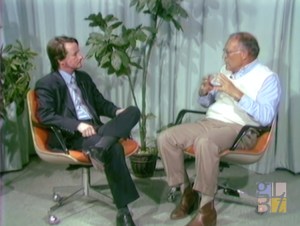
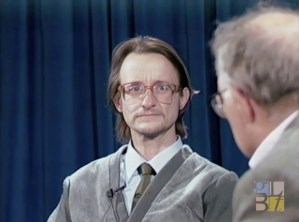
So here’s the scene. It’s January 1988. Lou and Dr. Pauly are in a recording studio at the University of Nevada in Reno. They’re angled toward each other in matching orange swivel chairs. Lou, who’s 36, is dressed conservatively in a dark suit, pale blue shirt, and tie. Dr. Pauly is dressed more casually, in a sweater vest and open-collared shirt. He looks like a shrink out of central casting—late 50s, balding, glasses—except, perhaps, for his cowboy style ankle boots.
Like any psychiatrist worth his salt, he starts with Lou’s childhood, which took place in suburban Milwaukee, Wisconsin, where Lou was born in 1951, the third of six children.
———
IP: Why don’t we go back to as early as you can remember when the gender issue seemed to, uh, become a conflict for you.
LS: Um, I don’t know if it was really a conflict when I was a child. Uh, I spent a lot of time in a game that I and my sisters called “playing boys.” And that just meant that, uh, we’re gonna take a boy’s name and, uh, pretend all day long that you’re a boy. And that’s what we did. Um, I had two younger sisters and I was the older, so they kind of went along with what I wanted to play.
But I really realized early on that I liked playing boys a lot more than they did. That I did it even when they weren’t around—uh, just pretending that I was a boy or, uh, thinking that I was a boy all day long, um, while I played.
And, uh, I don’t, I didn’t think it was a conflict. I just thought it was a game. Um, and I also had a, a variety of male heroes. I can’t remember ever having any female heroes or any female characters that I identified with. It was always, uh, cowboys or some male character on, on the television that seemed to me to be the most interesting and I idolized.
IP: Prior to your engaging in this game-playing and role-taking, was there ever a time in your life when you saw yourself as female?
LS: Well, I always knew I was female. I, I mean, I wasn’t deluded or anything. I knew I was female. Um, I went to Catholic grade school and we wore uniforms and I had to wear a dress to school every day. And I knew that I had to do this and, uh, you know, it wasn’t anything that was awful for me.
IP: If I had seen you in those early years, would your behavior have been sufficiently obvious so that I would’ve been able to tell that there goes a female who is behaving in an obviously masculine fashion.
LS: No, no. I think that, that you would’ve observed me as being a shy person—a really shy and reserved and kind of afraid person. So I was more of, of a quiet kind of book-reading library kind of a kid.
And I knew there was some reason that I didn’t feel like my classmates, you know, that I kind of was odd among them. And, uh, and I wasn’t, you know, I was never one of the in-crowd and I was always kind of one of the weird kids, you know, and I didn’t know why.
IP: Mm-hmm. And when did you develop any consciousness about your genital anatomy?
LS: Well, I guess that would be puberty, about 12 years old, you know, when I got the whole rap about menstruation was coming and, you know, all this stuff was gonna happen, you know, and you’re gonna start getting breasts and all this kind of stuff. And I guess that’s when I first started thinking about bodies.
IP: Mm-hmm. Was that rap a bum rap?
LS: Um, no, actually I kind of was looking forward to it. ’Cause I thought, well, great, you know, this is gonna happen and, and everything’s gonna turn out okay, and I’m gonna be, uh, you know, a happy, well-adjusted, beautiful woman.
IP: What about the business of once, uh, menses began and you had your first menstrual period, uh, what was that like?
LS: Uh, well I was very excited. My younger sister got hers first, so I felt really inadequate. And she was very well endowed and got breasts and stuff, and I was still very skinny and, and kind of a, you know, skinny, lanky kid. And so I was really happy when it happened. It was like, oh, great, you know, I’m catching up and, and I’m gonna be, you know, voluptuous, too.
IP: Mm-hmm.
LS: So it was exciting.
IP: Mm-hmm.
LS: But as I got, as I was growing through my teenage years, all of a sudden I was realizing that, uh, you know, having my period and getting breasts was not making me a happy female. I was, that’s when I was feel—started to feel the conflicts of, of what I was supposed to be doing as far as society dictates and what I felt like doing. You know, I wanted to dress as a boy and I wanted to keep playing boys. And my mother was, you know, trying to urge me to, um, get into more female kind of things, but I didn’t want to.
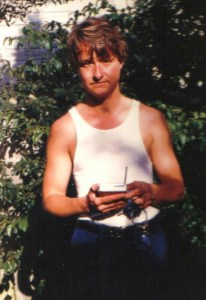
You know, I was about four—13, 13, I wanted to buy cowboy boots, and my mother said, “No way, you’re gonna get female shoes.” And we had a big fight and, uh, uh, it was really bad, and finally my mother broke down and let me get them. So there was those kind of things that were going on.
Also at 12 and 13 is when I started developing my sexual fantasies and, uh, was really very upset to, to realize that my sexual fantasies involved, uh, men, men being together, gay men being together. I didn’t know, you know, even such a thing. But all I, all I remember is that thinking, just thinking about men kissing each other or hugging each other or, or touching each other, or liking each other was really a, a big sexual turn-on for me, and I would masturbate to thinking about that—um, and, and knew that this was a big sin. I mean, I was very Catholic and I knew that this was a bad thing, and if anybody ever found out, I would be in big trouble. And, uh, so I just kept it to myself.
IP: Had you had any experience in reality, uh, seeing two men touching or anything that would come close to indicate a gay relationship?
LS: I really—no, I really can’t think of anything back then. Uh, you know, I didn’t have anything, any kind of fantasies about the men being sexual with each other, like having their clothes off or anything. Um, that, you know, I, that wasn’t coming into it. But, uh, uh, like I say, just touching or kissing or hugging. Or, uh, I was very, uh, interested in prisons, you know—you know, men in prisons and they have to sleep in the same room and, and, uh, I read up a lot on that.
And it was nothing—I didn’t, you know, I didn’t know anything about what men could do sexually with, with each other.
IP: Mm-hmm. Well then, getting back to your fantasies about two men being together in a loving situation or a touching situation, were you in that fantasy? In other words, did you see yourself as being one of those two men?
LS: No. No. And I, I wasn’t even, I wasn’t even someone hiding behind the curtain looking—I wasn’t in the picture at all. I thought, I, I felt there was no way I could ever be involved. Of course, you know—I was a female.
IP: Well, then, going from these fantasies, uh, what came after that in terms of real-life sex?
LS: Um, well, I got my first boyfriend at 13 and, and we hung around with each other for three months and eventually, uh, split up because he wanted to pet and, uh, do these things that I was way too afraid to do. You know, any kind of physical touching was a sin and I couldn’t participate in that.
And, uh, after we split up, I, I started my cross dressing and trying to pass as a boy—you know, just, uh, dress up in my cowboy clothes and, uh, take the bus downtown and walk around, and hope somebody would think that I was a boy.
IP: Mm-hmm.
LS: And, uh, I did that, you know, all through my teenage years. And then one time when I was doing this, I met another boyfriend and we hung around with each other for about a month, and then he moved out of state.
So I, you know, we kind of carried on a relationship through the mail, and so that kind of kept me involved, uh, you know, emotionally with a love relationship, but I didn’t have to have any kind of physical contact with this guy.
IP: Did you ever share with this second boyfriend your masculine preference or your—did you dress…
LS: No.
IP: … in front of him?
LS: Oh, yeah. Yeah, he knew—you know, he met me when I was in my cowboy drag, you know. So this was, this was kind of getting to be around in the hippie years, so, um, I guess he just kind of figured I was a hippie or something. Um, but I never told him that I felt like a boy or anything like that.
IP: Mm-hmm. Alright, we have you now into your middle teen years. Uh, what, what happened after that?
LS: Well, when I was 17 and then senior in high school, um, I, uh, finally got into a group of, of friends, and met, uh, my third boyfriend and carried on a 10-year relationship with him. And he was, uh, kind of a, an effeminate kind of guy. And in fact, my father warned me not to get too serious about this guy because my father told me that he thought that Jim was homosexual. And of course that really turned me on, I liked Jim even more, you know, because of that.
So, uh, we started going out together and he was the first one that I had sex with. And, uh, as soon as I was graduated from high school, I moved into my own apartment, and then Jim and I more or less began living together.
Um, and as I got involved in a sexual relationship with him, thinking about myself as a female was a very big turnoff for me. And when he and I would be together sexually, I pretended I was a boy. And of course never told him. I thought, my god, what if, you know, what if he knew what I was thinking and while we were together and I would just pretend that I was a boy having sex with him. And that was very exciting then.
IP: Mm-hmm. The physical act, though, of having intercourse and having his penis inside of you, was that, uh, was there any problem with that?
LS: No, because I just pretended we were having anal intercourse. So it was all in my fantasies, and, and he—when I look back now, it’s kind of funny because he was not really interested in my breasts either, and I almost always kept my T-shirt on.
IP: How about your interest in his body? Did you have any, you know, interest? Uh, were you excited about his penis?
LS: Oh, yes. Oh, yeah, I thought he was very sexy, very exciting.
IP: Uh-huh. Did you have any interest in having oral sex with him?
LS: Oh, sure, yeah. I wished that I was him. I would, I would often pretend that I was him. You know, pretend that I looked like him or had his body, or just emulated him.
IP: Uh, you mentioned, uh, anal sex. Now, were you, uh, was that something that became part of the sexual, uh, behavior that went on between the two of you?
LS: Um, after, after—yes. After we were together quite a while, yeah.
IP: By the way, I should ask—I realize we’re getting down to the nitty-gritty and talking about some very intimate things of your life—are you comfortable with this?
LS: Oh, sure. That’s why I came, that’s why I came here.
IP: Okay. Uh, so this relationship went on for a significant period of your life.
LS: Right, right.
IP: And, uh, although outwardly it would appear to be a male-female relationship, within your own mind’s eye, uh, you were engaging in what you perceived to be a gay homosexual relationship.
LS: Mm-hmm.
IP: Well, what do you suppose caused you to no longer be satisfied to continue living that way in your mind?
LS: ’Cause it wasn’t going away. You know, I guess I always thought that it was gonna go away—that, uh, you know, I, I would be in this relationship and, and, uh, I would become a female and everything would work out.
But all of a sudden I’m 21 years old and I think, this is not going away. I, I realized I had to do something about it, because I couldn’t, you know, just pretend forever. I couldn’t play boys forever.
IP: Did there ever come a point in time when you shared your dilemma with Jim?
LS: Oh, yeah. Yeah. When I was, when I was 22, I finally started talking about it with him, and, uh, uh, and I started, um—well, it was almost a coincidence that, uh, I went to a college class and was in the class with a, uh, male-to-female transsexual. I didn’t know—um, I mean, he was a he then and just started kind of hanging around with me and being my friend.
And I, and one day, uh, came to visit me wearing women’s clothes and, you know, really shocked me. And, uh, started talking about how he felt that he was a female and, and, uh, all this kind of stuff, which got me to thinking, and, uh, you know, I told this person that I felt like I, I was a gay man and that I didn’t know what that meant. And I was doing all the reading that I could in the university library, about trying to read up on this: What does this mean? Is there, you know, have I, is there, has there anybody ever been like this before? Or what, what is this?
And, uh, I told this person that I wanted to go to a Gay Liberation meeting, but that I wasn’t a lesbian. And, you know, I, I’m not a gay man ’cause I’m a female, so what am I? And, uh, so that’s when I first started talking about it and trying to make some sense out of it.
IP: Mm-hmm. And then what happened, uh, subsequently?
LS: Uh, well I did go to the Gay Liberation meeting and, uh, little by little talked to the people there and told them that I wasn’t a lesbian, that I wanted to be one of the guys. And, uh, you know, of course they thought this was bizarre and far out. But, uh, there were others, you know, like I say, my friend who was, was a male-to-female, so they knew about such things.
So little by little they accepted me as one of the guys. And I went to the, started going to the gay men’s bars and Jim would go with me, and, uh, started acting out some of my fantasies in that way.
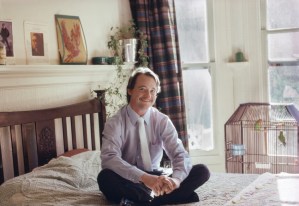
IP: I gather by then you were dressing consistently…
LS: Right. I started dressing full-time then. I got rid of anything that I thought was female and got only, had only male clothes.
And then Jim and I moved out to San Francisco. Um, I just wanted to get out of Milwaukee. I mean, I think I, I, I realized how limited my resources were there. And, um, we moved out to San Francisco together, and I got a job as a female, but dressing as a male. And, uh, we just continued to go to the men’s bars together. He introduced me, uh, as his boyfriend to his coworkers.
So he kind of would, he would go along with it. He liked to play and he would go along with it, but he told me he drew the line in—if I ever started taking hormones or wanted to do any surgery, he was, he would break up with me.
IP: Did he ever, um, have a sexual relationship with other men?
LS: Yeah, he did. And I was real happy about that ’cause that just, you know, fired my fantasies. Uh, yeah, he did get involved with a couple of boyfriends. Jim and I had, you know, definitely an open relationship and, uh, you know, I would spend a lot of time in the bars hoping someone would think that I was a boy.
Uh, you know, trying not to talk because open my mouth and a female voice would come out. So I was, you know, trying to be this, you know, silent, kind of mysterious kind of guy and, uh, and trying to, you know, get guys to come on to me as a male without them ever finding out that I was a female.
IP: That sounds like a, a, a challenging trick.
LS: Well, not really. It wasn’t really too hard. It wa—I was afraid because I was afraid that they would find out, but, uh, my modus operandi would be just to say to them, “Look, I, I’ll do you. I don’t want you to touch me.” And if they would agree to that, then fine, you know?
IP: And so how long were you content for this situation to…?
LS: Well, um, well, this was, like, 1976, I guess, and I was 25 then, that, uh, that I was getting frustrated, that I was feeling really trapped being a female trying to be a male. And I started pursuing the gender clinics at that time. And, uh, you know, Jim was very upset. He didn’t want me to do this. He was gonna leave me. And, uh, I pursued it anyway. And, and, went to a counselor for the first time.
And, uh, finally decided that I couldn’t deal with losing Jim, that I had to try to be a female one more time. So I went back and bought some female clothes and female shoes, and, and started trying to be a female part of the time and, and being a male other part of the time. And so I did that for three years.
IP: And after three years of trying to go back to the female role, what then?
LS: Jim left me anyway. So it was like, uh, he left me for a female and, uh, he left anyway, and it was like, wow. Then all of a sudden I was stuck with myself. And I went through a summer trying to, you know, continue on being a female and try to find another boyfriend or something.
And, uh, after about three or four months of that, I thought, what am I doing? I don’t wanna do this. This is not what I wanna do. And, um, that is when I seriously started pursuing hormones and, and the change.
IP: How did you, how were you finally successful in getting, uh, male hormones?
LS: Uh, well, it wasn’t easy. I again applied to the gender clinic at Stanford and, uh, was rejected on application alone, uh, without even ever having an interview, because, uh, I was very honest about, about everything that had happened to me and where I was coming from. And they rejected me saying that they had never heard of a female-to-male that wanted to be a gay man. And this was, they, this was impossible and they would not accept me.
Correspondence between Lou Sullivan and Judy Van Maasdam, coordinator of the Gender Dysphoria Program at Stanford University, 1984-1985. Sullivan’s handwritten note at right indicates his application to receive gender-affirming surgery was denied “because they do not understand my sexual orientation.” Credit: Digital Transgender Archive.
Um, so I had by then, uh, I had become involved in the transvestite, uh, uh, community in, in San Francisco, so I knew, uh, some of the psychiatrists and some of the gender, uh, uh, helping profession through that group, and, uh, went to them, uh, and asked for some help in making this transition and did finally get some letters of recommendation and, uh, heard of an endocrinologist who was sympathetic and took my recommendations to him. And, uh, in that way began hormones.
IP: Mm-hmm. So you started hormone therapy, uh, at approximately what age?
LS: Uh, I, I was 28. Um, that was November of ’79.
IP: Uh-huh. And what kind of response, uh, did you have to the, uh, testosterone?
LS: Uh, well, I noticed right away that my voice started lowering, that was within a couple of weeks. And, uh, and almost right away I started getting a little bit of facial hair along the mustache line.
And my face started changing before my very eyes, which was a wonderful thing over the year—uh, of, of beginning to see my face in the mirror really for the first time. I, I never felt that I, I saw myself when I looked in the mirror. It was just kind of this doughy figure, and I never felt like I had any facial features or, uh, any expression on my face.
But as the hormones took effect and my face kind of started squaring out and my skin started getting a little, uh, rougher, uh, I was seeing a face develop and, and, uh, hearing a voice come out that, that was a male voice—it was really liberating for me.
I noticed almost right away when I started the hormones, uh, the increase in, in, uh, uh, sexual drive. You know, I was turned on all the time, masturbated a lot. Um, I, I still do notice that, and the, and the, uh, kind of the, uh, warm rush that I kind of compare to a caffeine high of, uh, um, just, you know, having that increased energy from, from the testosterone.
IP: I gather, uh, that your menstrual periods, uh, stopped.
LS: Yes, right away, with the first shot.
IP: Uh-huh.
LS: And my clitoris increased in size.
IP: Uh-huh.
LS: And, uh, about seven months after I started hormones, I went in for the mastectomy and had my mastectomy.
IP: How strongly did you feel about the mastectomy?
LS: It was really nice. It was so good because I had been wearing a binder, you know, since I was 22. So, uh, you know, finally I could take my shirt off, I could, you know, I could breathe. I didn’t have this binder around me all the time. And, uh, I never even took an aspirin for that surgery. It just didn’t hurt. It felt so good just to have that off.
IP: Well then, what, what’s, what’s happened in terms of your relationship with partners, uh, since then?
LS: Uh, a month after I, uh, had my mastectomy, I left my job and found a job as a, a male, where they didn’t know anything about my past. And my previous job gave me a reference as a male, said that I’d worked there five years as a male secretary. And, uh, so I had this new job, and about six or seven months later, I moved out of the neighborhood where I had made the transition, moved into a new neighborhood where no one knew about me, and collected some new friends that only knew me as a gay man, and, uh, met, uh, a man through mutual friends that I was very attracted to.
And, um, we were buddies for about three months when I thought, hey, if, you know, I’m gonna have to tell this guy if I’m ever gonna, you know, get anything going with him. And I was encouraged because he was quite a bit younger than me—he was 10 years younger than me, so he is, was just 21 years old and I was like 31. And, uh, he asked me if I would go into the porno bookstore for him and get some of these “she-male” magazines for him ’cause he was too embarrassed to go in.
And, and these were the, you know, the transvestite kind of magazines that he found sexually exciting. So that encouraged me to think, well, you know, if he’s turned on by this, maybe he won’t be too freaked out to find out that, you know, I’m a man with a vagina. And he wasn’t, he was not upset about it. And in fact, uh, you know, about a month after I told him about it, he moved in with me and we began living together. And, uh, we had a relationship for about five years, lived together.
And he never told, uh, our mutual friends that I was, that I had been a female. And, and to me, I was really excited about that because for the first time I felt like I was really in a male-male relationship.
IP: Mm-hmm. And what kind of sexual activity did the two of you engage in?
LS: Um, all of the above. Um, you know, anal, vaginal, oral, all activities. Um, I think probably the only one that we, we were not involved in was, uh, uh, him performing oral sex on me—that he never even tried to do, and I had never liked that anyway. So, uh, that was fine with me.
IP: Can I ask you if, did you have any preference for, say, vaginal intercourse versus anal intercourse?
LS: Oh, oh, I definitely liked the anal much better because that, you know, played into the fantasy even more. That was what I wanted to do.
IP: Mm-hmm. And of course you had your partner as a gay man. Was there anything, so to speak, bisexual about him since, uh, he, he was engaging in what people would call heterosexual intercourse?
LS: I think, I think that both of my, my, uh, primary lovers during my transition describe themselves as bisexual, as, you know, Jim did and Tom also did.
IP: Well, did that, was that a conflict for you since you seemed to, uh, need a, uh, a, um—
LS: Yeah, I didn’t like it, but, uh, what control did I have? I mean, uh, he would have to be, if he was gonna—if I was gonna take off my pants and be a female from the waist down, he would have to be bisexual.
But, um, in a way it—with, with Tom, it was a, a change because he had to become a gay male in order to have a relationship with me. He had to, uh, identify to his friends and his family, uh, as a gay man because he was living with me as a gay man for all this time. And this was very exciting to me. I felt like this was a real change in, uh, in what was going on between me and my partners.

IP: Mm-hmm. Maybe it would be important for us to understand, uh, knowing as we do that you did contract AIDS, what your, uh, sexual pattern was like at this time.
LS: Well, after I had my mastectomy, I didn’t have to worry about anyone, you know, touching me from the waist up. But I still had female anatomy from the waist down, so I, uh, I frequented places where I, uh, could be assured that we would have anonymous sex and that, uh—oh, places called the glory hole, where, uh, you could go in the back room and I could perform oral sex on someone without their being obligated to touch me or anything.
And I would just keep moving real fast to not give anybody any feels to, to, uh, give myself away or let them know that I was a female from the waist down. Um, or I would, uh, make a deal with, uh, someone in the bar and say, uh, you know, “I’ll do you, but I don’t want you to touch me.”
And, uh, and sometimes I would meet up with someone, uh, in the gender, uh, in also a gender, uh, uh, identity problem, uh—say a male-to-female transvestite or drag queen—and, uh, feel that I would, I, feel comfortable enough to tell them about my physical status. And, uh, then I would undress and we would have intercourse.
IP: So if they could, uh, if they could be an apparent, uh, female with a penis, then you could be an apparent male with a vagina.
LS: So that’s what I figured, it was no different.
IP: Yeah. I guess some of us, uh, heterosexual folks, uh, assume that gay men lead a very active, somewhat promiscuous, uh, sexual life. Uh, help us to understand if, if this is indeed the case with you.
LS: Well, uh, not as far as practice goes. Uh, I have not had a lot of sexual partners in my life, but, uh, it doesn’t take a lot to contract AIDS, and it’s just one shot does it.
IP: Mm-hmm. Yes, I think you had, uh, said that uh, uh, since you’ve been living exclusively as a gay man, that perhaps you had only what, six partners?
LS: Yeah. I’d say that, uh, because it’s been about, about eight years now and, uh, I was in a, a primary relationship with someone and so it didn’t feel I had to really go outside. But I think, you know, maybe once a year, uh, I would go out and try to find someone for some fun.
IP: Well, it certainly doesn’t sound like, by anybody’s definition, that kind of, uh, uh, frequency could be called promiscuous.
LS: No, I would’ve loved to be promiscuous. I, I, I admire and I think it must be wonderful to feel that, uh, good about your body and that free, uh, to be running around and, uh, uh, having sex all the time. I’ve never felt that good about my body, ever.
IP: Mm-hmm. But I presume you began to feel better about your body as you went through this transition from the biological female gender of origin to, to your male role?
LS: Oh, definitely, yes. Over the years.
IP: Uh, but apparently getting rid of the breasts wasn’t quite sufficient to make the transition complete. How did you feel about yourself, part male and part female, so to speak?
LS: Well, I think I just enjoyed myself from the waist up, and, uh, just pretty much continued with the same, uh, in the same psyche that I had been my whole life, in, in my fantasy that I was a, a male. And, uh, of course the, you know, my chest being flat and, and the effects of the hormones, uh, enhanced that fantasy and helped me in that way, uh, so that it was easier for me to relax. And, uh, I just pretended the rest, uh, was there. Just fantasized as I always had been.
But it was very limiting for me, uh, just trying to connect with people and feeling like an honest person with people that, you know, that I was portraying myself in an honest way. And it made me feel sad to, to connect with, say, a gay man and then thinking that I, because I had a female anatomy or was female from the waist down, that in, in some way, I was forcing him to be heterosexual in having sex with me. And that made me feel sad and it made me feel turned off and, uh, unhappy in, in my sexual activities. Uh, I, I wanted to be a gay man and I wanted him to be a gay man with me.
IP: Mm-hmm. I see. All right, well, maybe we should complete the, uh, the story as far as the sex reassignment surgery.
LS: Well, uh, once again, I, uh, applied to the gender clinics saying, “Hey, I’ve, uh, been living full-time as a male now for six years, and, uh, it’s all been working out. Everything’s been fine. I can do it. I’m being a gay man and, uh, I need to have this bottom surgery. I finally have the money for it.”
And, uh, once again, was told that, uh, uh, my, uh, case was too unusual, that they had never heard of a female-to-male who wanted to be a gay man, that they did not wanna be the first to operate and deal with such a, a person.
Uh, so I was left to try to find someone outside of the, uh, uh, gender clinics and the gender professionals to get the bottom surgery done. Um, and through the grapevine, through my contacts in the transvestite transsexual community, um, I, I found a doctor who had performed one previous, uh, genitoplasty is what he called it. And he agreed that if I could get my letters of reference together, that he would also perform the surgery on me. And, uh, and I did undergo that surgery in April of ’86.
IP: And can you describe what that surgery was?
LS: Yeah. Um, what he did, uh, is he said it was very much like a, a circumcision where he removed the hood of skin that was covering and holding down the enlarged clitoris so that it stuck up more, was, uh, was more visible. And, uh, and he inserted, uh, regular-sized male testicle implants, uh, into the labia majora. And, uh, and that’s all he did.
IP: After this then last surgical procedure, which goes back to last April, did you feel more complete then in the male role?
LS: Yes. Uh, and it was a, it was kind of a long recovery period for me. I had problems with, uh, with one of the testicular implants, and it had to be reinserted a total of three times. And while I was recovering from one rejection of the implant is when I discovered that I had AIDS, I was diagnosed with AIDS.
And that was—probably my first thought was, oh, great, now I’m gonna die and I’ve got one ball and this, there’s no way the surgeon is going to operate on me again, having AIDS, and reinsert this implant, and I’m gonna die with the surgery never even done. And that was, I think, the worst part of finding out that I had AIDS.
IP: Mm-hmm.
LS: But, uh, he did agree to do it. About three months after I, uh, uh, got out of the hospital after having pneumocystis, he did insert the implant and it stayed, so, uh, that was…
IP: So you, you feel complete at this point, finally.
LS: Yes. Finally. Finally, I can present myself as a male.
IP: Mm-hmm. Well, and now that’s complicated by having, uh, AIDS.
LS: Yeah. Now that I can finally feel good about my body, now I have another thing to feel, you know, like a walking germ. But I’ve lived a year now with AIDS, uh, I have, uh, become comfortable with my body and realize that my sex life isn’t over—that I can still, uh, function and, and get together as a gay man, uh, with gay men, uh, and have safe sex. And, uh, so I’m, I’m just enjoying that time and trying to, uh, uh, you know, live my life as long as I can.
I feel, I, kind of privileged to know that, uh, uh, you know, that my time is limited and that I have a, a certain amount of time to get my affairs in order and, uh, to make sure that, uh, you know, I’ve, I’ve contributed to my story and, and what I can to society before I die.
And, uh, and in a way, I, I, I don’t even feel bad about having AIDS. In a way, uh, I, I feel it’s almost a poetic justice that I’ve spent my whole life trying to, to be a gay man and, and running into a lot of opposition and, and being told that I couldn’t do it, it was impossible. And, uh, I feel like, uh, in a way that this AIDS diagnosis—because AIDS is still seen at this point as a gay man’s disease—that it kind of proves that I did do it and I was successful.
And, uh, and I kind of took a perverse pleasure in, uh, contacting the gender clinics that rejected me and said, uh, uh, you know, that, uh, they’ve told me so many years that it was impossible for me to live as a gay man, but it looks like I’m gonna die like one.
———
EM Narration: Lou’s advocacy paid off. When his interview with Dr. Pauly was screened at the national conference of the influential Harry Benjamin International Gender Dysphoria Association, its members acknowledged that access to gender-affirming care should not be denied based on a person’s sexual orientation.
But Lou’s legacy extended well beyond that. As a leading organizer of the female-to-male community, he wrote a guidebook for trans men and founded FTM, a Bay Area peer support group that grew into a global support network. Under the name FTM International, it became the longest-running and largest organization to offer education and community resources for transmasculine people.
Lou was also a self-taught scholar of trans history, and in 1990 he published a biography of Jack Bee Garland, a gay trans man born in San Francisco in the 1800s. Lou’s selected diaries, which spanned 30 years of his life, were published posthumously.
After their first recorded interview, Lou and Dr. Pauly established something of an annual tradition, meeting every January for a followup conversation. In early 1991, Lou’s deteriorating health forced him to cancel their next session.
Lou Sullivan died of AIDS-related complications on March 2, 1991. He was 39 years old.
———
Many thanks to everyone who makes Making Gay History possible, including producer Inge De Taeye, photo editor Michael Green, and our social media producers, Cristiana Peña and Nick Porter. Our studio engineer was Cathleen Conte at CDM Sound Studios. Fritz Myers composed our theme music.
Special thanks to our founding editor and producer, Sara Burningham, and our founding production partner, Jenna Weiss-Berman. Thank you, also, to the New York Public Library Manuscripts and Archives division for their ongoing assistance.
The audio excerpts included in this episode are from interviews one, two, and four between Lou Sullivan and Dr. Ira Pauly. The interviews are part of the GLBT Historical Society Film & Video Collection and are provided courtesy of the GLBT Historical Society. Special thanks to the society’s managing reference archivist, Devin McGeehan Muchmore.
Season fifteen of this podcast has been made possible with funding from the Jonathan Logan Family Foundation, Ty Ashford and Nicholas Jitkoff, Broadway Cares/Equity Fights AIDS, Mitchell Draizin, the Calamus Foundation, Christopher Street Financial, the Marcus Family Foundation, the Kipper Family Foundation, Rick Hoffman, Bill Kux, Rick Fishell, Esmond and Jerome Harmsworth, the Embrey Family Foundation, Mary Cadagin and Lee Wilson, Robert Gober and Donald Moffett, Greg Adgate, the Eicholz/Scott Family Trust, Maureen Bennett, Hal Brody and Don Smith, Robert Dodd, and Kathy Danser.
To learn more about the people and stories we feature, head to makinggayhistory.org where you’ll find links to additional information and archival photos, as well as episode transcripts.
I’m Eric Marcus. So long, until next time.
———
IP: I, um, I wonder if this is not an appropriate time to say our goodbyes to the invisible audience and, uh, whether we have another, um, a session or not is somewhat problematic or uncertain.
LS: Yeah, who knows if, uh—I didn’t think I’d be here for this one either, you know? So if I can come back next year, that’ll be even more fun.
IP: Well, whether you come back or don’t, I want you to know that, uh, for me this has been an important experience and you’ve been more than just another subject for me to write a paper about. And, uh, I, I personally appreciate, uh, the effort—and I know it’s an increasing effort even to get on the bus and come here from San Francisco. So I’d like to say thank you.
LS: Okay. Thank you, doctor.
IP: Okay, Louis.
###