Christine Jorgensen
 Christine Jorgensen, 1954. Credit: Maurice Seymour/Wikimedia Commons.
Episode Notes
When news broke in 1952 that Christine Jorgensen, an ex-GI from the Bronx, had undergone gender-affirming surgery, she became a global sensation. In this 1957 interview, meet the thoughtful woman behind the frenzied headlines as she took on the burden of educating the public about trans people.
Episode first published June 18, 2026.
———
Audio Source
Christine Jorgensen Reveals, an LP recording of a 1957 interview between Christine Jorgensen and Nipsey Russell (credited as R. Russell), released in 1958 by J Records, New York, NY.
———
Resources
Learn more about Christine Jorgensen in this American Experience segment or in her 1967 autobiography, Christine Jorgensen: A Personal Autobiography, which you can read here. Watch Jorgensen reflect on her life in this 1980s clip from the Hour Magazine TV show.
Listen to Jorgensen and Nipsey Russell’s entire 1957 interview from the Christine Jorgensen Reveals LP record here. Russell later became a comedian and television personality. He also co-starred as the Tin Man alongside Diana Ross and Michael Jackson in the 1978 movie The Wiz; watch a clip here.
“Ex-GI Becomes Blonde Beauty,” the New York Daily News article that on December 1, 1952, broke the news about Jorgensen’s gender-affirming surgery, can be accessed here. The article set off a media feeding frenzy; when Jorgensen traveled home from Copenhagen, Denmark, to New York City a few months later, she was met by hundreds of reporters at Idlewild (now JFK) Airport. This brief newsreel shows her arrival and press conference.

Explore the Queer Music Heritage website to get a sense of the media coverage Jorgensen received. Jorgensen also inspired the 1954 calypso song “Is She Is, or Is She Ain’t” by The Charmer—the stage name of Louis Eugene Walcott, who later became known as the controversial Nation of Islam leader Louis Farrakhan.
On her return to the U.S., Jorgensen became a patient of Dr. Harry Benjamin, the pioneering sexologist and endocrinologist (he also wrote the foreword to her autobiography). Learn more about Dr. Benjamin on this NYC LGBTQ Historic Sites Project webpage and have a look at his seminal 1966 work, The Transsexual Phenomenon, here.
Dr. Benjamin’s work was funded in part by Reed Erickson, a transgender philanthropist who also financed ONE Inc. and founded the first trans rights organization. Learn more about Erickson (and hear Dr. Benjamin’s voice) in this MGH episode and the accompanying episode notes.
Jorgensen had a long career in show business. To get a sense of her nightclub act, watch her in this clip from the 1962 Filipino film Kaming Mga Talyada (We Who Are Sexy). At the start of this 1982 TV appearance, she channels Marlene Dietrich with a rendition of “Falling in Love Again.” The interview with Tom Snyder that follows is worth a watch, too.
In 1959, Jorgensen and her fiancé were denied a marriage license because Jorgensen’s birth certificate identified her as male, as this brief New York Times article reported.
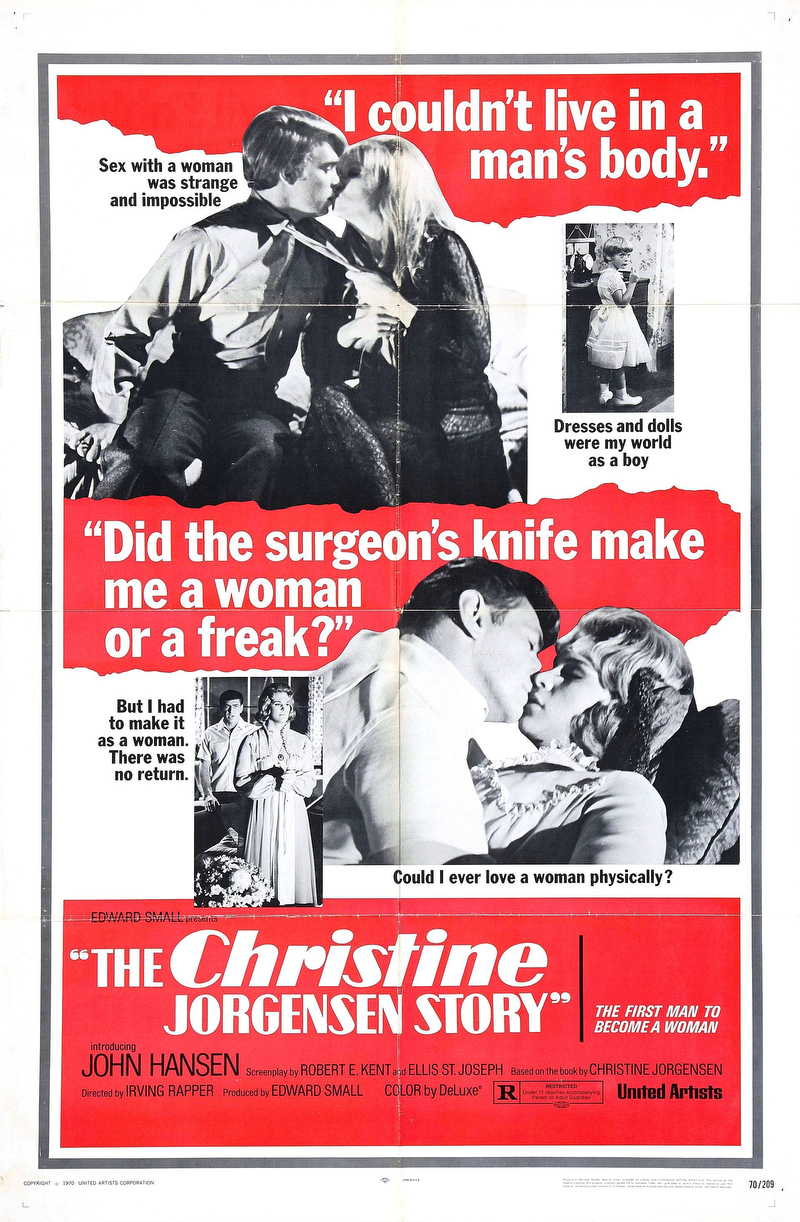
Jorgensen’s story was adapted into the 1970 film, The Christine Jorgensen Story. This New York Times review called it “a quiet, even dignified little picture”—although the trailer certainly leads one to expect otherwise…
For a brief historical overview of trans medical care, have a look at this timeline from Trans Healthcare Action. As the episode intro states, the first known person to receive complete male-to-female gender-affirming surgery was Dora Richter, who was treated at Dr. Magnus Hirschfeld’s Institute for Sexual Science. Read about Richter in this Philadelphia Gay News article and about Hirschfeld’s institute in this Scientific American article. To learn more about Dr. Hirschfeld, listen to this MGH episode and explore the accompanying episode notes.
For a comprehensive look at transgender history, read Susan Stryker’s Transgender History: A Resource for Today’s Struggle—and Tomorrow’s (revised and updated third edition, Seal Press, 2026) and Joanne Meyerowitz’s How Sex Changed: A History of Transsexuality in the United States (Harvard University Press, 2002).

———
Episode Transcript
Eric Marcus Narration: I’m Eric Marcus, and this is Making Gay History.
On December 1, 1952, the front page of the New York Daily News blared, “Ex-GI Becomes Blonde Beauty.” The article reported that Christine Jorgensen, a one-time U.S. Army draftee, had undergone the world’s first “sex change” in Denmark.
That wasn’t the case. Two decades earlier, at Dr. Magnus Hirschfeld’s Institute for Sexual Research in Berlin, a trans woman named Dora Richter became the first known person to receive complete male-to-female gender-affirming surgery. But it was Christine who made the headlines, and at the age of 26 she made history as the first transgender person to enter public consciousness on a global scale.
Christine Jorgensen was born in 1926 and was assigned male at birth. She grew up in a close-knit Danish-American family in the Bronx. As a five-year-old, she remembered feeling upset and confused that the things her older sister got to enjoy—like long hair, dresses, and dolls—were off limits. Her teenage attractions to men added to her sense of being a misfit. As she confided to some friends, if she noticed men, it was “not as a man, but as a woman might.”
When Christine was in her early 20s, she learned that experimental hormonal and surgical interventions were being performed in Scandinavia. In 1950, she traveled to Copenhagen and embarked on a two-year process to, as she put it, “make the body fit the soul.”
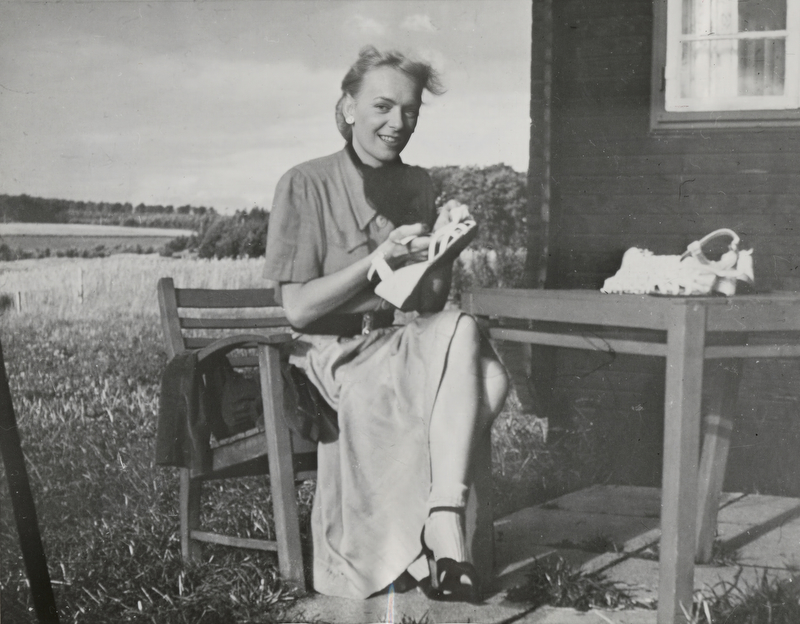
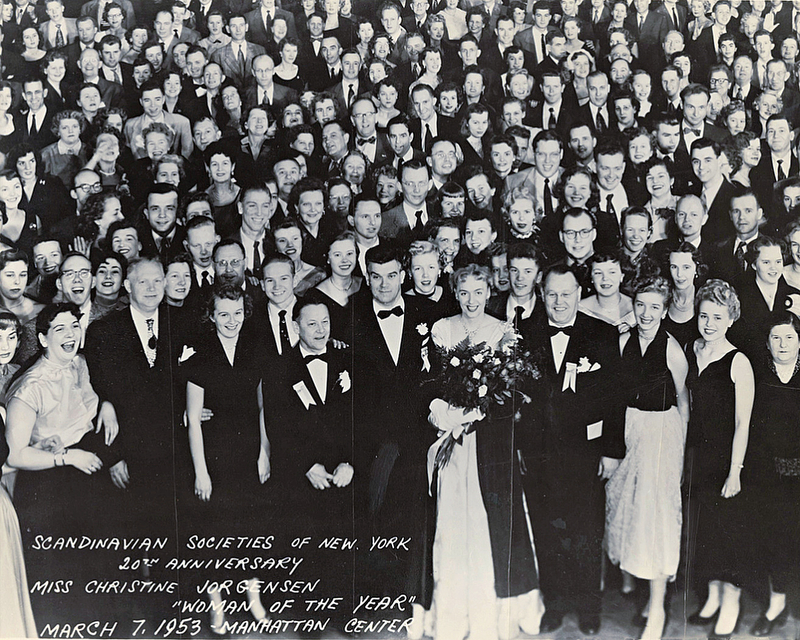
Public reaction to the news of Christine’s transition ran the gamut. She was an inspiration. She was an abomination. She was a thrilling symbol of science’s boundless potential and an alarming example of its overreach. And in an age of rigid gender norms, she upended the carved-in-stone belief that gender is an absolute.
The media scrutinized and speculated about Christine nonstop. She wasn’t just the most written about trans person in the world, she was the most written about person, period. Christine had hoped to become a professional photographer, but when her overnight celebrity consigned her to a life in the limelight, she ran with it. She developed a successful nightclub act and took on the burden of educating the public and giving hope to others like her.
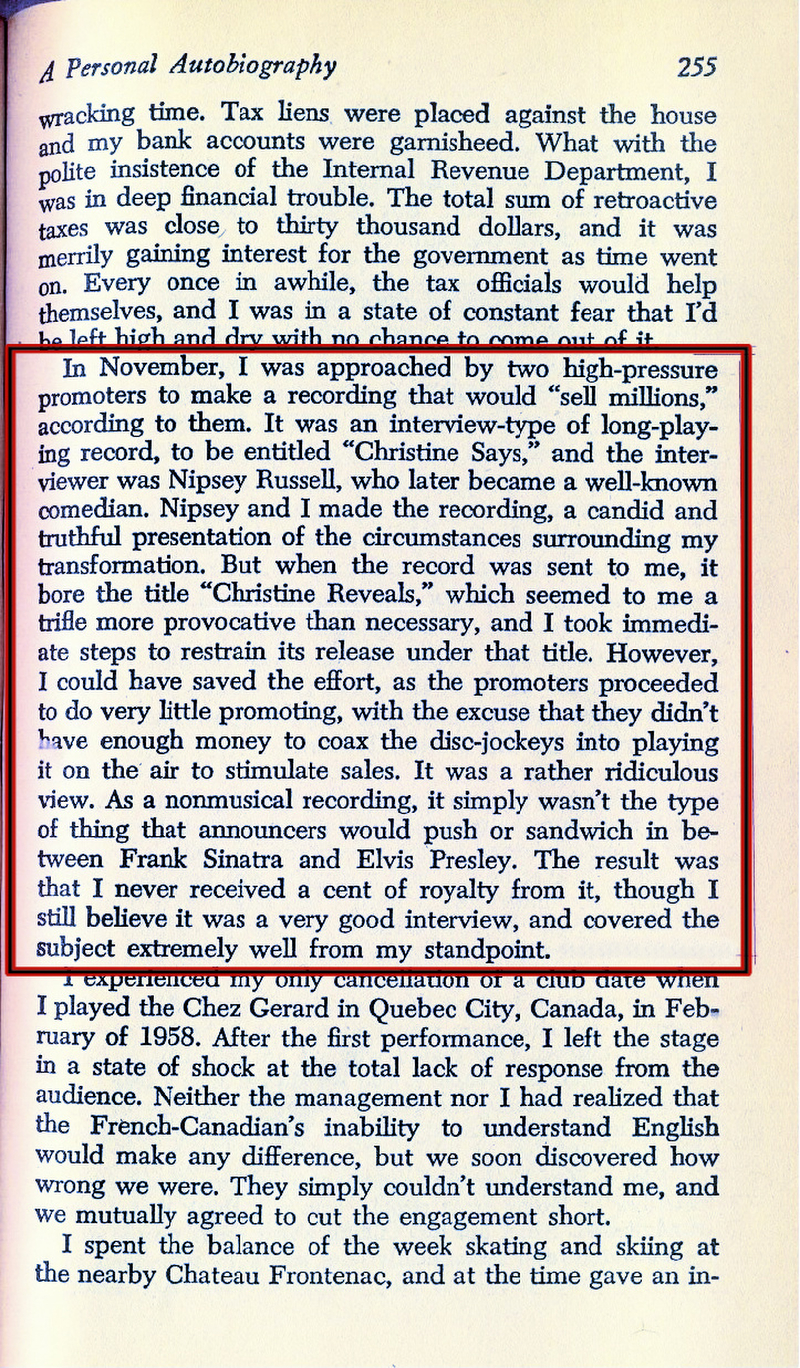
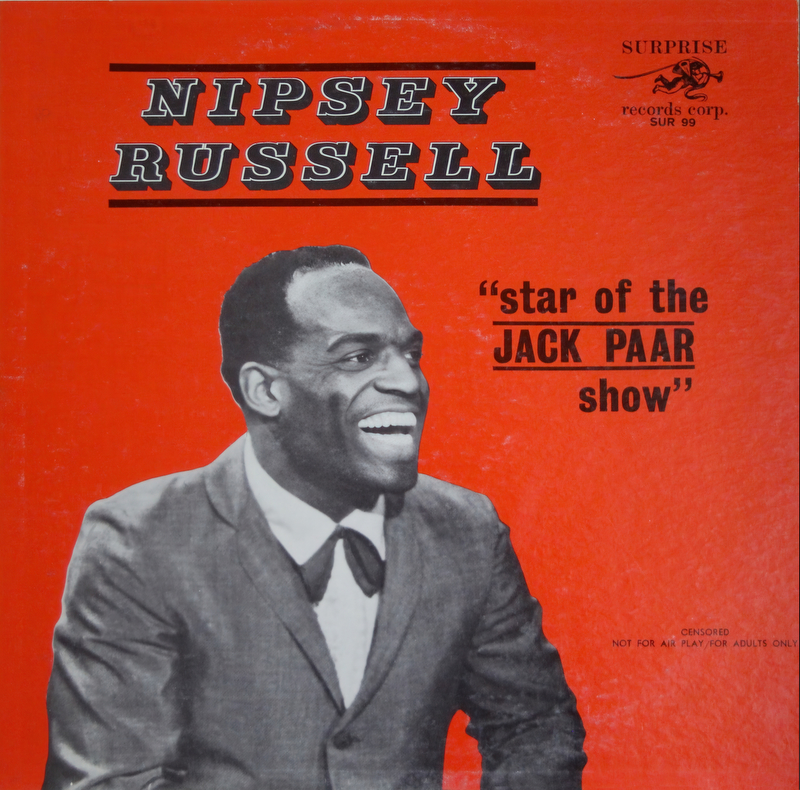
That’s where the interview you’re about to hear comes in. In 1957 Christine agreed to share her story in a recorded conversation with Nipsey Russell, an entertainer who later became a game show fixture on American TV. The interview was released on LP by J Records, a small New York label. Against Christine’s wishes, they gave it the suggestive title Christine Jorgensen Reveals. But for all of Nipsey Russell’s prying into what was under her clothes, what Christine revealed above all was that she was a woman of sophistication, charm, and dignity.
———
Nipsey Russell: Hello, and here and now is the first and only recorded interview with Christine Jorgensen. Ms. Jorgensen—or may I call you Christine?
Christine Jorgensen: Please do, Mr. Russell.
NR: Are you a woman?
CJ: That’s a very good question. We seem to assume that every person is either a man or a woman. But we don’t take into account this true scientific value that each person is actually both in varying degrees. Now, uh, this sounds a little evasive, and I don’t mean it to be, when in all actuality, my only answer to that is that I am more of a woman than I am a man.
NR: Is, uh, is your transformation or operation then now complete, or is there a prognosis as yet undetermined?
CJ: No. There’s—the prognosis is determined, uh, physically. My, uh, operations and treatments are all complete, but of course, uh, I can never have any children. But, uh, this of course does not connotate [sic] that I cannot have natural sexual intercourse. I am very much in the position right now of a woman who has a hysterectomy.
NR: Then shall we dance?
How long did you contemplate this problem to summon the courage—and that’s what most people consider it—courage to go through with it? I can imagine there were many chances to turn back or many times when you were somewhat doubtful—shall I or shall I not? The trip over there entailed some time, and the waiting and the medical preparation for the transformation. Did you ever think about it up until you got to the point of no return as it were?
CJ: My point of no return, I believe, began from the first waking moment that I realized I was different. There’s a very, very big problem in the world with any child who has to live with the thought of being different, because we all sort of want to be a part of the group. This is a great, great fight.
I think of each individual’s fight for survival is to be wanted, to be needed, to be part of the mass. And when an individual is segregated out of that—by themselves, many times, by their own emotional conflicts—it sort of leaves ’em standing alone. So consequently, when my whole thought went on to the betterment of my life and—there was no turning back, there was no, uh, point at which I wanted to turn back. Although of course physically there were many points… I would not have died had I not had this treatment.
NR: I see
CJ: I’d have gone on existing. But I would hardly have gone on living.
NR: Well, the type of person you are, you would probably have adjusted. It would—a matter of adaptation to…
CJ: I believe that I would’ve receded completely into myself.
NR: Speaking from a medical and a physiological standpoint, do you have female organs?
CJ: In my particular case, let me explain it this way, that, uh, under the various tests and examinations that I have encountered, it is believed by my doctors that somewhere within my body, these organs exist or part of them exist.
NR: The ovarian tissue, you mean?
CJ: Yes. Due to chemical results that they have gotten. There is nothing definite in there, and of course at several times there have been people who said, “Well, why not undergo an exploratory operation?” But as one of my doctors said, it’s utterly preposterous to think that one should undergo such an operation of this kind simply to satisfy a newspaper. And he is perfectly right. No ethical medical man would perform this, uh, as a proof. It means nothing.
NR: Just for that reason, you mean—I see.
When you go into a women’s restroom, do women feel that there is a man among them, or do they feel—how do they feel about your presence? Do they accept you as merely another woman?
CJ: Oh, very—quite definitely so. In fact, they usually try to get me into conversation, you know, just to…
NR: Oh, yeah?
CJ:. … sit and have a few minutes’ chat. But of course, uh, to me, there is very, very little sex in toilets.
NR: Uh, there has been much written and said about the development, synthetically or mechanically, of hormones. Do you take hormones?
CJ: Yes, I take hormones, but I do not take them too regularly. It’s always a good idea to take rest periods, but of course hormones should only be taken under the guidance of a qualified physician.
NR: Have you observed or experienced that hormones do develop certain portions of the body in a feminine way?
CJ: Oh, definitely. Well, you see, the male hormone and the female hormone work, of course, in their own directions, the male hormone on males and female on females. And of course your body contours are determined a great deal or, I could almost say, exclusively by your hormones. But I’m very small-built in all manners.
NR: Then I assume that, uh, before your operation, your, uh, genital organs were as the normal male genitals would be?
CJ: Well, not as the normal male genitals will, would be because it was an immaturity, of course, in my case, as my whole body was immature. Uh, it, well, I was not developed either properly physically, sexually, and probably not emotionally either.
NR: Could you tell us anything about what happened during the operation? Were you asleep? Were you, uh, …
CJ: Oh, yes. I was asleep. But a very strong constitution. I wake up screaming for food.
NR: Yes. When you, um, when the operation was complete, do you know what disposition was made of, uh, the parts that were removed?
CJ: Have no idea. I think any, any hospital would be able to give you a better idea of what happens to a leg that has been removed or any other…
NR: Uh-huh. Just, this was such a famous thing, I, I, I thought it might have been preserved, preserved rather, for…
CJ: Oh, no, I would hardly think so. It’s possible, but I don’t know.
NR: Now many people think what you did was a marvelous scientific thing, an inspirational thing. Many think it was disgusting, sickening, done for a cheap, uh, exposé in the, in the same sense that many sexual perverts are exhibitionists. What do you think of that? What’s your reaction to this?
CJ: Well, the first, uh, part of your question there is, I am deeply gratified with people thinking that this was a, a wonderful thing. Uh, it was a part of my life—I can neither see it as a wonderful nor as a very tragic thing. It is simply something I had to live through for my own happiness and my own adjustment. Consequently, I see very little courage there.
And as for the second part, I believe it’s an immaturity concerning any idea or any connotation of sex, because, uh, one can hardly make lurid tales out of about two years of constant everyday examination, hormonal examination, and three operations. It’s hardly sexy.
NR: I can understand that. I’m looking at a headline in the New York Daily News which says, “GI Becomes Beautiful Blonde.” You are without a doubt the world’s most publicized person now. Has the fame, the notoriety, the sensationalism, or however you prefer to term it, upset you, or how have you reacted?
CJ: Well, my first reaction in December, which was December 1, 1952, was of course great, great shock and surprise that actually anyone was very much interested in what had happened in my life. Time went on, I realized that, uh, this was sort of an important step…
NR: Yeah.
CJ: … in the eyes of the world.
When Christine Jorgensen returned to New York City on February 13, 1953, after undergoing gender-affirming surgery in Denmark, some 300 reporters and photographers met her at Idlewild (now JFK) Airport. Credit: Getty Images/Bettmann.
———
NR: Uh, it’s on record that you received the greatest amount of mail in the history of civilization. Were some of your letters insulting?
CJ: Uh, it’s not true. I have not received the greatest amount of mail. I believe that the average Hollywood star receives a great deal more mail.
NR: Well, to the other part of my question, were any of the letters insulting, or were they humorous? Did they poke fun or—what were they like?
CJ: Actually, very few were insulting, much less than I had anticipated. I received thousands and thousands of letters from problems…
NR & CJ: From people with problems…
CJ: … uh, with the very, very flattering attitude that in some way I could help them. And I only wish that I were capable of helping all these people who did look to me for some sort of answer or guidance.
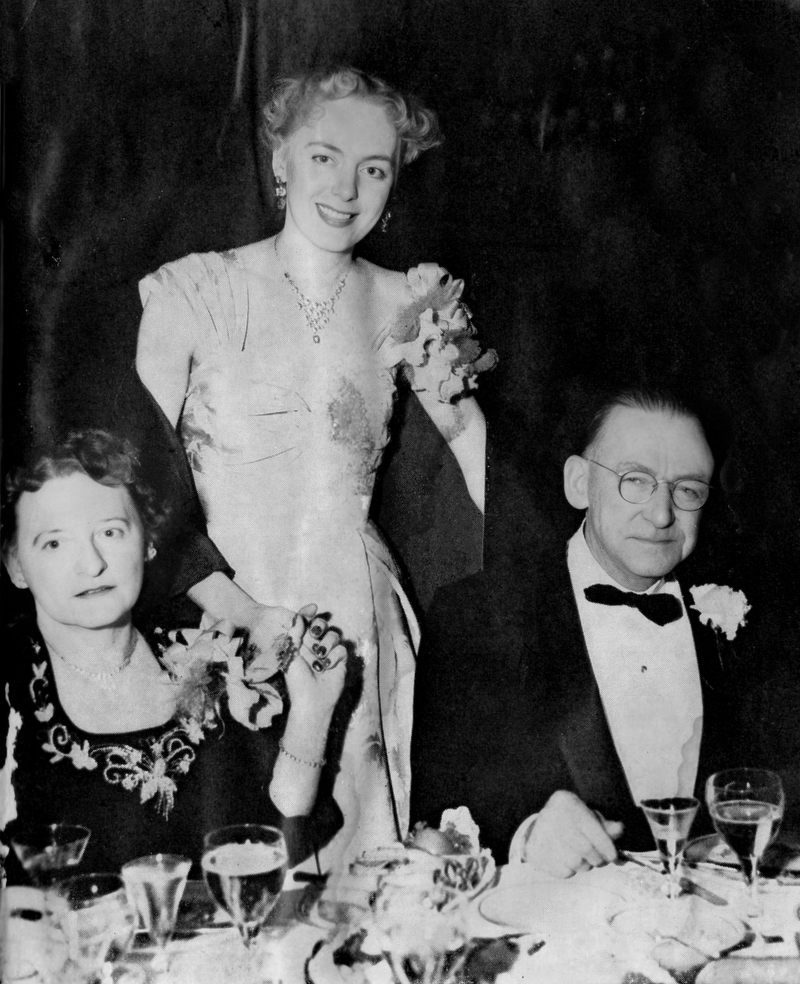
Then there was an equal number of just congratulatory notes, and one of the most beautiful parts of it was that a lot of these notes were sent not to me, but to my parents.
NR: Oh.
CJ: Very charming letters, and, uh, just very, very sweet. And my mother was quite overcome by the fact that so many people thought of her and my father.
And then of course there was what you call the derogatory notes. I would say that I received about, oh, maybe 40 or 30 of them.
NR: I’m told…
CJ: And that’s a very small percentage when you think in terms of 20 or 30,000 letters.
NR: Since you mentioned your mother and father, are they proud of you or are they ashamed of you or are they unaffected?
CJ: Uh, I would be inclined to think that they are proud of me. I, I couldn’t say offhand, I’m quite sure they are. We have a very close family relationship and—but also a relationship where we don’t very much discuss, uh, whether they are or not, they seem to show it in action rather than in word.
First page of a letter Christine Jorgensen wrote to her parents on June 8, 1952, explaining her stay in Denmark. She went on to write, “Nature made a mistake, which I have had corrected, and I am now your daughter.” Credit: Getty Images/Bettmann.
———
NR: Do you have any younger brothers or sisters?
CJ: I have an older sister and, and two little nieces.
NR: Two little ones? What ages are they?
CJ: Seven and five.
NR: Now, let’s think ahead to the years when they will be probably 17 and 15. How will you feel and what will you say if they should come to you and say, “Aunt Chris, we heard at school today that you were once a man.”
CJ: Well, uh, this can hardly happen at the age of 17 because it happened at the age of seven.
NR: Oh my goodness.
CJ: It, uh, my oldest niece came home one day and she said very sweetly, she said, “Mommy,” uh, she said, uh, “can a little boy be a little girl?” And so of course my sister immediately realized what had happened.
NR: Yes.
CJ: And she said, “Yes, in some cases, uh, this can happen. That is when a little mistake has been made.” And so my little niece said, “Well, do we know anybody like that?” And my sister said, “Yes,” she said, “Auntie Chris was like that.” And so my little niece said, “Fine,” and she went away, and now it’s—she knows it.
NR: Yes.
CJ: And the little one will probably get it from her.
NR: Oh, but definitely.
CJ: You see.
NR: You used the word mistake. Apparently, many people in, uh, our civilization think that nature made mistakes. People are constantly having their noses changed, their faces lifted. So could, uh, your transformation be considered an improvement on nature?
CJ: Well, you see, it, it’s our form of society which first and foremost creates the idea of it being a mistake, because society has decreed that there are men and there are women, and it’s very, very difficult, as I said before, for them to accept the scientific value that people, both men and women, are both sexes. The most any man or woman can be is 80 percent masculine or feminine.
NR: Have you ever been, uh, I suppose about the most charitable way I can put it is “propositioned,” as most women in show business are at some time or other?
CJ: Most women in the world have been at some time, rather, and I have, too.
NR: How do, how do the fellas approach you? I mean, how do they, what do they say? Can you recall any instance when a guy has really tried to make a date with you?
CJ: Well, actually, uh, I’ve been approached in, in a very nice way most times. In fact, I can’t remember of a time when it wasn’t very charming when some gentleman very seriously comes up and said, “Would you sit down and have a drink with me? I should like very much to meet with you and talk with you.” And many times, of course, there’s a problem involved, that they’re sort of searching for answers. But other times it’s nothing, it’s just simply they would like me to sit with them, and sometimes I do.
NR: Have you had any sincere entreaties for a romantic interlude?
CJ: Well, it’s difficult to determine what’s sincere. I have, uh, a case full of letters of proposal…
NR: Proposals?
CJ: … from men I, I’ve never met, and of course I have had many proposals for men I do know. And I’m highly flattered by it. I think the average woman gets this many in their lifetime. But I don’t know, somehow or other, I don’t take any of it too seriously just now. I guess Mr. Right hasn’t come along yet.
NR: Is there any love interest in your life now as of this moment?
CJ: No. There is no love interest, but there is great friendship. I have, uh, several men I’m very, very fond of. Perhaps one day I’ll marry, I don’t know. I don’t think I’m ready for marriage…
NR: No?
CJ: … to be perfectly honest with you.
NR: Well, um, many people believed that it was a love interest that motivated your intense wish to be a woman, and they’re therefore somewhat surprised and a bit nonplussed that no romance or no marriage has developed. What have you to say to this?
CJ: Well, love to me is many different things. Uh, I believe in my lifetime I’ve been very lucky. I have loved very sincerely twice, uh, neither of which have ever culminated in marriage, and, uh, I think I’ve been more than lucky with my share of it. But a love interest did have some, uh, effect on my desire to go to Europe and clear up this whole situation, simply because, uh, I love life much too much to have lived a half-life.
NR: I see. When you say you have loved twice in life, was either time as a man or were both times as a woman, or…
CJ: Well, perhaps we’ll say “dressed as a man” rather than “as a man,” because I was very far from ever being a somewhat complete male.
NR: How do you feel in women’s clothes?
CJ: Well, very comfortable. But I must say that clothes are simply, uh, a side issue. One isn’t born to wear clothes, actually. Uh, clothes is a habit that one accumulates.
NR: Oh, back to nature, huh?
CJ: Back to nature, definitely. You can’t say the average woman’s foot is made for high heels because it isn’t.
NR: If you should see a girl, an exceedingly curvaceous, beautiful, seductively appearing woman, say of the Marilyn Monroe variety, do you ever wish that you could go back and be a man? What I mean is, are you ever sexually drawn to a woman? Have you ever seen a woman that you would like for your woman, for your love mate?
CJ: No. Not at all. Never in my life.
NR: Even when you were a man?
CJ: No.
NR: How about that…
CJ: Never. Mm-mm.
NR: Do you attract basically a homosexual audience?
CJ: No, not at all. Although, uh, one sometimes doesn’t know the people in the audience or how many of each varying type of person are there. But I’d say in general I attract mainly a middle-aged, uh, husband-and-wife type of people, which seems striking to many people.

NR: In the trade, in the—by “the trade” I mean in the entertainment profession—are many of your friends homosexuals?
CJ: Yes. I would say there in the entertainment field, there is a great, uh, predominance, I believe, of homosexuality, which of course is probably the reason why some of these performers are such good performers and so sensitive, because of their own personal, uh, shall we call them “problems” or, or “ways of thinking.”
NR: I was just about to use the term “problem” and ask you, how do you feel about the problem of homosexuality?
CJ: Well, I don’t personally believe that homosexuality is a problem to society in any way or form because, uh, it is too often misconstrued that all sorts of sex perverts—and by this I mean child molesting and this type of thing—are homosexual, which is utterly ridiculous. Any good psychiatrist will throw that idea out of the window. Of course, a pervert can be homosexual, but it is not a, a necessary, uh, thing that he should be.
But as far as I’m concerned, and I believe that the world of homosexuality in no way affects society or harms society. And the only way it could would be if everyone became homosexual and there was no more, uh, birth rate.
NR: Well, sometime ago in Washington, D.C., there was what, uh, I would like to now refer as a “purge” of known homosexuals from strategic jobs in uh, Washington.
CJ: Yes, I read about that.
NR: The reason being they thought that anyone with homosexual inclinations was vulnerable from a standpoint of blackmail and could therefore be very easily induced to reveal government classified matters. So with that thought in mind, would you like to continue this belief that, uh, homosexuality is not a problem?
CJ: Well, it is—I don’t believe it is a problem. It is a social—society’s way of thinking toward homosexuality which is the problem. It’s not homosexuality per se. Again, uh, these men—or these women, I don’t know, there’s homosexuality in both…
NR: True.
CJ: … uh, they are in a vulnerable position if they are handling secret documents and so forth because of the constant fear of social ostracism.
NR: Christine, do you think that time will ever come when your complete past or at least this episode in your life will disappear, when people will think of you as Christine Jorgensen, photographer, or Christine Jorgensen, actress, or whatever your pursuits might be at that time, and not as Christine Jorgensen, woman, formerly man?
CJ: No, Mr. Russell, I don’t think the time will ever really come when the past, as I, as you say, Christine Jorgensen, formally a man, would ever be forgotten. Should any event come up in my life, such as my marriage or even my death, the newspapers would have a Roman holiday and rehash the whole past. But the strange part of it is, is that the people who know me, know me a very short time, and they forget about the past. Recently I was talking to a friend who’s also in the theatrical world, and we were talking about childhood, and she was referring to hers and I was referring to mine, and then all of a sudden she looked at me. She said, “You know, Chris, I forgot.”
NR: That you were a boy when you were a child.
CJ: Or recognized as such. And, uh, so I said, “Well, you know, Kay, I haven’t forgotten it because it’s part of my past and it’s, it’s what makes me the person I am today.”
NR: Well, this has been a very interesting interview. It’s the first and only recorded interview with you, Christine Jorgensen. You have any plans for further recording your experiences in this regard?
CJ: Well, I should like to. Um, basically, I’m very much interested in finding out what people are anxious to know because I believe that perhaps in some way… A mother with a child that she feels may have a problem may not know just what to do about it, and not that I would know what to do, but I try as often as I can to direct people to the doctors whom I know and trust and, and believe in, who can perhaps give them an answer so that they’re not walking in the dark with, with problems.
NR: Thank you, Christine Jorgensen, and might I say this has been, in the very least, illuminating.
CJ: Thank you very much, Mr. Russell, and I do appreciate the chance to speak to you.
———
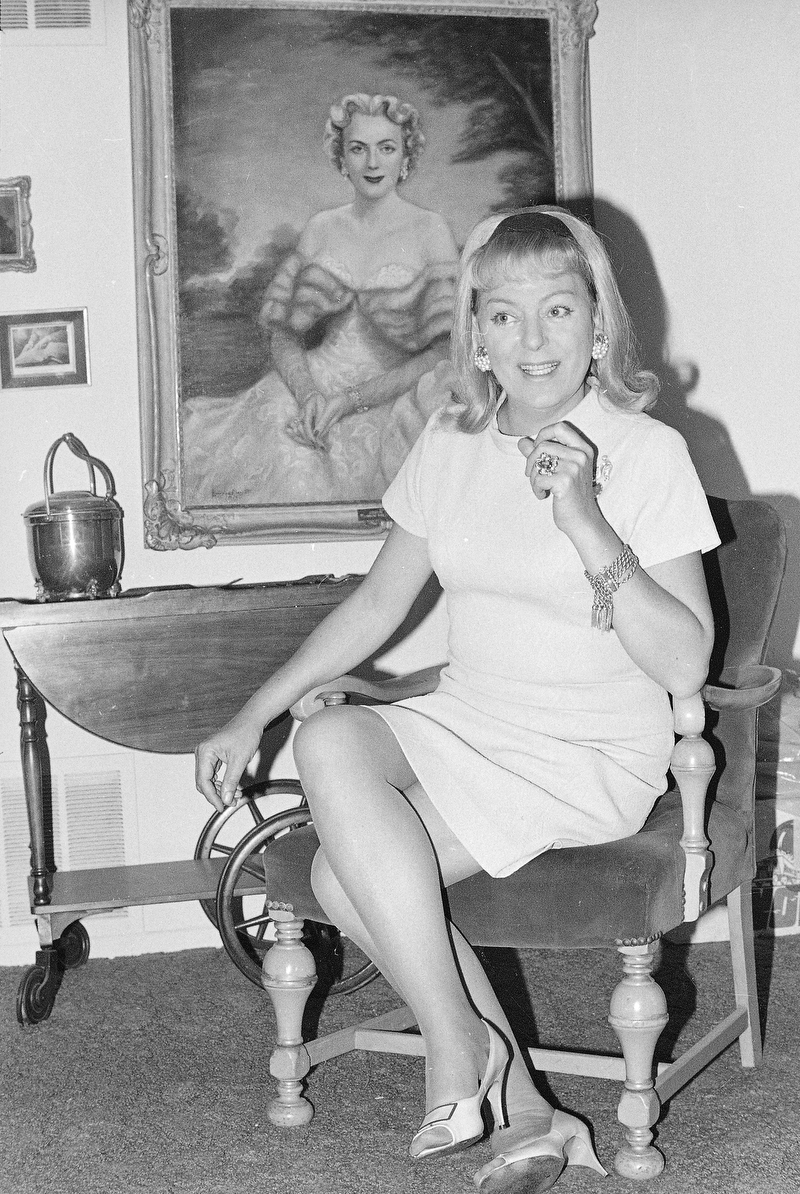
EM Narration: Christine continued to share her story throughout her life. In 1967, she published her autobiography, which sold nearly 450,000 copies. By then, her nightclub act was no longer the hot ticket it used to be, but she kept performing into the 1980s—impersonating Hollywood stars like Marlene Dietrich and Tallulah Bankhead, and often setting time aside to take audience questions about her transition. Her insight and candor also made her a sought-after speaker on the lecture circuit, and especially on university campuses she drew consistently large crowds.
Christine was engaged twice, but never married. One of her engagements ended after she and her fiance were denied a marriage license because her birth certificate stated she was male.
Christine Jorgensen died of cancer on May 3, 1989. She was 62.

——
Many thanks to everyone who makes Making Gay History possible, including producer Inge De Taeye, photo editor Michael Green, and our social media producers, Cristiana Peña and Nick Porter. Our studio engineer was Katherine Cook at CDM Sound Studios. Fritz Myers composed our theme music.
Special thanks to our founding editor and producer, Sara Burningham, and our founding production partner, Jenna Weiss-Berman. Thank you, also, to the New York Public Library Manuscripts and Archives division for their ongoing assistance.
Season fifteen of this podcast has been made possible with funding from the Jonathan Logan Family Foundation, Ty Ashford and Nicholas Jitkoff, Broadway Cares/Equity Fights AIDS, Mitchell Draizin, the Calamus Foundation, Christopher Street Financial, the Marcus Family Foundation, the Kipper Family Foundation, Rick Hoffman, Bill Kux, Rick Fishell, Esmond and Jerome Harmsworth, the Embrey Family Foundation, Mary Cadagin and Lee Wilson, Robert Gober and Donald Moffett, Greg Adgate, the Eicholz/Scott Family Trust, Maureen Bennett, Hal Brody and Don Smith, Robert Dodd, and Kathy Danser (Daltin’s mom).
To learn more about the people and stories we feature, head to makinggayhistory.org where you’ll find links to additional information and archival photos, as well as episode transcripts. On our Christine Jorgensen webpage, you’ll also find a link to her complete 50-minute interview with Nipsey Russell.
I’m Eric Marcus. So long, until next time.
###