The Queens of Welfare Island — Episode One: Island of Misfits
 1933 photo of the southern end of Welfare Island, New York City, with Welfare Island Penitentiary in the foreground and, behind it, City Hospital. Credit: © Milstein Division, The New York Public Library.
Episode Notes
It was called the Fag Ward: a separate wing of the men’s penitentiary on NYC’s Welfare Island where gay inmates were kept in the 1920s and ’30s. Eric digs into the history of the infamous prison on what is now Roosevelt Island and shares archival glimpses into the lives of the queens it once held.
Episode first published October 19, 2026.
———
Learn more about some of the topics and people discussed in the episode by exploring the links below. George Chauncey’s Gay New York: Gender, Urban Culture, and the Making of the Gay Male World, 1890-1940 (Basic Books, 1994) is an invaluable resource for the “Queens of Welfare Island” series as a whole.
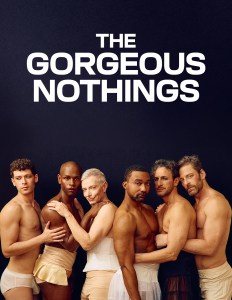
The Gorgeous Nothings musical:
- General information on the Life Jacket Theatre Company website; includes the official trailer and a residency video with rehearsal footage and an interview with Travis Lee Russ, Life Jacket’s founding artistic director and the writer of The Gorgeous Nothings.
- Russ’s profile page on the Life Jacket website; includes a brief video in which he describes the company’s mission.
Welfare Island (formerly Blackwell’s Island, now Roosevelt Island):
- Roosevelt Island, an illustrated history of the island by Judith Berdy and the Roosevelt Island Historical Society (Arcadia Publishing, 2003).
- “The Dark Story of Blackwell’s Island,” a video about the history of the island and its institutions (Solitary Redemption/YouTube).
- “Islands of the Undesirables: Roosevelt Island” by Bess Lovejoy (Atlas Obscura, 2015), a concise overview of the island’s early history.
- The island on film: 1903 panoramic footage (Library of Congress); “Welfare Island: Blight of a City,” a short 1966 documentary excerpted in the episode (villagepeop/YouTube).
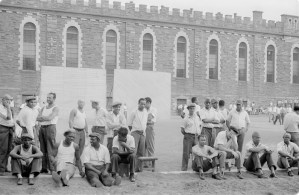
The men’s penitentiary on Welfare Island:
- “New Corrective Colony Projected by the City,” a 1925 New York Times article about the history and deplorable state of the Welfare Island penitentiary.
- Contemporary coverage of the 1934 raid of the penitentiary in TIME (includes a description of the homosexual prisoners) and the New Yorker (profile of Corrections Commissioner Austin H. MacCormick).
- Trailer for Blackwell’s Island, the 1939 film starring John Garfield that was inspired by the 1934 raid (cinemaetcie/YouTube).
Article about the raid on Welfare Island Penitentiary in the January 25, 1934, edition of the Daily News. The section outlined in pink on page 3 of the PDF describes the “effeminate males” incarcerated at the prison.
———
Episode Transcript
Travis Russ: There were just so many amazing details about this chapter of history. Our ancestors were incarcerated—like, real people were incarcerated there. And then they did a Christmas show called the “Fag Follies.” It was impossible to resist.
———
Eric Marcus Narration: Travis Lee Russ is a writer and theater director who makes shows about history and real life. Back in 2018 he was casting around for ideas. Sitting in a cafe in the Castro District of San Francisco, sipping an iced tea, he was deep into a history book he’d picked up.
———
TR: I was about halfway through this book. And it is a giant book. I mean, it’s hundreds of pages.
———
EM Narration: It’s true: Gay New York: Gender, Urban Culture, and the Making of the Gay Male World, 1890–1940 is a weighty volume.
———
TR: And then I stumbled upon George Chauncey’s description of the Fag Ward.
———
EM Narration: A scant six paragraphs in Chauncey’s definitive history book leapt out at Travis.
———
TR: And I’m gonna read it to you now.
“Fags” were confined to the prison’s South Annex, the most isolated and secure section of the prison; they ate separately, saw movies separately, and worked in separate work gangs, which were assigned “women’s work” in the prison laundry and in the warden’s home. Within the South Annex (which many prisoners called the Fag Annex), men were informally allowed to wear long hair, wigs, makeshift dresses, and homemade rouge and lipstick. Guards and other prisoners alike usually referred to them by their camp names—“Greta Garbo,” “Lillian Russell,” “Broadway Rose”—and at Christmas the South Annex inmates staged a bawdy show called the “Fag Follies” for a select audience of guards and well-connected prisoners.
And I paused on that page and a half, and I was like, that’s really fascinating. I wonder, I just wonder if there’s more research than this page and a half. And it kept, it kept sticking in my head, the idea of a show about characters in the Fag Ward, and could I actually find files about real individuals who were incarcerated on Welfare Island in the ’20s and ’30s and tell their stories? And I just couldn’t get outta my brain.

———
EM Narration: Travis gathered a team of researchers and they set to work. Over the next seven years, they would collect thousands of documents: arrest records, draft cards, police testimony, census data, maps, books, floor plans, photographs, and more. Out of piles of dusty archival records and webs of historical clues, the outlines of real lives and true, untold stories emerged.
Those stories and lives inspired a new musical called The Gorgeous Nothings.
Travis wrote into existence a cast of characters based in history, but who are creative composites born of hundreds of hours of research.
———
Bellevue Doctor 1, The Gorgeous Nothings (Ken Barnett): Step one.
Bellevue Doctor 2, GN (Noah Wolfe): We line up the 75 homosexuals against the wall.
———
EM Narration: There’s Gene, an uptown drag queen.
———
Bellevue Doctor 3, GN (Allan K. Washington): Eugene, 23, Negro, feminine, likes wearing women’s clothing.
———
EM Narration: Abraham, a family man.
———
Bellevue Doctor 4, GN (John Cariani): Abraham, 55, Jewish, married, five children. Denies being a homosexual.
———
EM Narration: Perry, a Broadway chorus boy.
———
Bellevue Doctor 2, GN (Noah Wolfe): Perry, 27, Broadway actor, neurotic, hides from the real world.
———
EM Narration: Granville, a Harvard graduate and civil rights organizer.
———
Bellevue Doctor 5, GN (J. Harrison Ghee): Granville, 44, Negro. The only college graduate in the ward. Shows slight psychotic tendencies.
———
EM Narration: Hutch, a handsome con man.
———
Bellevue Doctor 1, GN (Ken Barnett): Six-one-one-four, Hutch, 41, grifter from the Bronx, arrested nine days ago.
———
EM Narration: And Walter, the mother hen of the ward.
———
Bellevue Doctor 6, GN (Arnie Burton): Walter, 74, a lifelong homosexual who suffers from an acute case of delusions of grandeur.
———
TR: And I didn’t want it to be a musical, by the way.
Eric Marcus: How did this come to be a musical?
TR: Because it said it had to be a musical. I mean, come on—you can’t do a show where every Christmas they do a “Fag Follies” and not make it a musical.
———
Emcee, GN (Arnie Burton): Tonight there is only one follies being performed in the godforsaken men’s penitentiary on beautiful Welfare Island in glorious New York City. And that, my darling savages, is the “Fag Follies.”
GN Cast:
Jingle jangle thrummin’
All the girls are stunnin’
Santy Claus is comin’ for the best.
Emcee, GN (Arnie Burton): Ziegfeld, eat your fuckin’ heart out.
———
EM Narration: I’m Eric Marcus, and this is Making Gay History: The Queens of Welfare Island.
The playwright Travis Lee Russ and I are friends, and when he told me about The Gorgeous Nothings and the Welfare Island Fag Ward, I was hooked, too. I couldn’t wait to dig into Travis’s research and find out more. And I can’t wait to share what we found with you. But this isn’t a making-of documentary about a musical. Instead, we’re using Travis’s research as a portal to the past.
In this season of Making Gay History, you’re gonna meet the queens of Welfare Island: the real fairies, pansies, and queers who were incarcerated in the Fag Ward. And we’ll break out of the prison to explore the gay world of New York City in the early 20th century—the places, songs, and streetlife that shaped these queens.
As we immerse ourselves in this chapter of history—a time when fascism was on the rise and queerness was criminal—we’ll try to understand what a Christmas show in prison in the 1930s can tell us about living as ourselves today.
Before we meet each of the queens of Welfare Island and explore their lives, we visit the castle that held them. This is episode one: “Island of Misfits.”
———
Audio from “Welfare Island: Blight of a City” (1966): One hundred sixty-seven acres of ruin. One hundred sixty-seven acres of shame. This once housed the infirm, insane, and corrupt—the island the city calls “Welfare.”
———
EM Narration: For most of the 20th century, Welfare Island was known as the place New York put its undesirables.
———
“Welfare Island” Audio: Garbage is found all over the ground. The residue of years, the flowing of tears.
———
EM Narration: It’s just a little slip of land in New York City’s East River, between Manhattan and Queens. Its isolated location made it a perfect spot for places like the men’s penitentiary and the Fag Ward. And yet, like so many of New York’s darker, rundown corners, much of the island’s grime, and that bad reputation, has been swept away, polished away, and forgotten over time.
The island’s had many names and personas. It was called Minnehanonck by the Lenape people. The Dutch called it Hogs Island. The English called it Blackwell’s Island. New York City bought it in the 19th century as a convenient home for many of its least-loved institutions and was formally renamed Welfare Island in 1921.
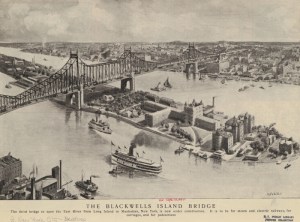
After World War II, except for a couple of hospitals, the other institutions were closed, and the island fell into steep decline. Scattered with abandoned buildings, it became a hollowed-out shell of itself.
And yet, after another name change in 1973, this time to Roosevelt Island, that one-time shell has been reimagined, gentrified, and beautified. It’s a place of constantly shifting character and identity. A place full of dark history, that’s also a very nice place for a picnic. All of which is to say: The island itself is kind of queer.
As we embarked on this project, I wanted to learn more about the Fag Ward’s island home—this place with such a strange, paved-over past. So, I took a field trip.
———
Emma Dorfman: Hi, I’m Emma.
EM: Hi, Emma. Nice to meet you.
ED: Nice to meet you.
EM: Thank you for doing this.
ED: Yeah, of course. Well, it’s…
———
EM Narration: Emma Dorfman was one of the researchers Travis hired to work on The Gorgeous Nothings. She joined the project early on, in January of 2020. She followed Travis down the rabbit hole to Welfare Island.
It’s cold and raining the day we meet at the foot of the 59th Street Bridge in Manhattan. Emma’s going to take us across the river—and back in time to see where the prison once stood.
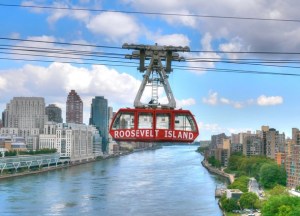
You can reach the island by subway these days, but we choose the aerial tram. We take an elevator up, and walk through turnstiles before boarding what looks like an oversized ski gondola—bright red, with white trim. We hop on with a couple dozen other tourists.
———
EM: So we are on the, uh, tram to Roosevelt Island. But it’s also a rather drab day.
Tram PA System: Please note that priority seating is reserved for elderly passengers…
———
EM Narration: The tram takes off, and we slowly descend onto the island. On a clear day, this is one of the best views in all of New York City, but today, a steady rain drizzles down the windows, obscuring all but wet slivers of grey buildings and greyer river.
———
EM: There’s a skylight in here, and I see water dripping. Let’s hope it’s well-maintained enough that we make it to Roosevelt Island.
———
EM Narration: As we descend, a rain-blurred vision comes into focus: Trees line the island’s perimeter, with open fields and paths; some low-rise commercial buildings and larger residential buildings, too. But even those are dwarfed by the massive Queensboro Bridge, which looms over everything. It makes the whole island look a bit like a toy playset as we approach from above.
———
Tram PA System: Please stand clear of the doors until they are fully open and watch your step as you exit.
EM: We’re all getting off the tram onto Roosevelt Island. And it is a river of people stepping out onto the platform.
ED: So we are in the middle of the island pretty much.
———
EM Narration: We pull out our umbrellas and walk south.
———
ED: So it was called Welfare Island because it was an island of misfits. It was basically where you put anyone who didn’t belong. So they famously have a smallpox hospital here. They also had one of New York’s first lunatic asylums on the island. They’ve had several hospitals. All of these institutions—the hospitals, sanitorium, prison—were all clumped at the south end of this island, which is where we’re heading towards.
———
EM Narration: We get a little respite from the rain as we pass under the Queenboro Bridge. Back in the Welfare Island days, there was a giant, car-sized elevator on the bridge that could bring a police van down in order to ferry prisoners between New York City’s jails.
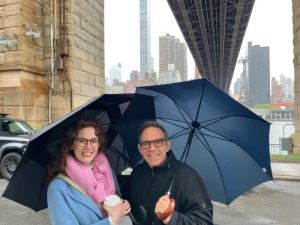
The center of the island mostly feels like a quaint residential neighborhood, but as we walk south, we exit Main Street, U.S.A., and enter something that looks more like Silicon Valley.
———
ED: Right now we are on the very, very modern Cornell Tech campus. It is very futurist, I would say.
EM: And it’s super modern, with angles and glass and, um, stainless steel, and a bit of the bridge in the background. And I don’t know where I am. Actually very nice, but it’s, it’s so not New York.
———
EM Narration: This gleaming set of buildings is roughly where the northern side of the men’s penitentiary would have been.
The prison broke ground in 1828, the same year Andrew Jackson was elected president. From drawings and photographs we know the prison was fashioned after a medieval castle. It stood four stories tall, with turret-topped walls and a tower at its center. It was described as “feudal” and “imposing.” It was also infested with vermin, had little electricity, and no working plumbing. Instead of bathrooms, they had buckets.
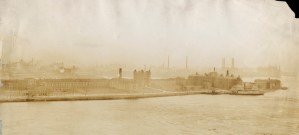
The prison contributed to Welfare Island’s well-earned reputation for misery, which persisted through much of the 19th and well into the 20th century. But starting in the 1970s, the city has given the island a makeover—a series of makeovers, really—with high-rise apartment buildings, pleasant parks, and the futuristic campus we’re standing on, which opened in 2017.
———
ED: It’s no longer an island of misfits, it’s an island of tourists.
EM: The guys who were sentenced to the men’s penitentiary would not recognize the island.
ED: No. There would definitely be quite a shock.
———
EM Narration: We continue walking south, past the campus, into what would have been the center of the prison complex. It’s just a series of grassy mounds with a path running through them. Other than the wind, rain, and some birds, it’s surprisingly quiet for being in the middle of New York City.
———
ED: Right. So we are walking through the park on the southern tip of the island. On one side you can see Queens, and then on the other side is Manhattan, and we’re getting this glorious view of Midtown Manhattan right here. All the skyscrapers.
———
EM Narration: Manhattan looks back at us as we search for some trace of the dark towering castle that once stood here.
———
EM: Emma, if you can walk us to where the, the Fag Ward would have been, so we can look out and see what they might have seen.
ED: Yes. That mound is pretty much exactly where the south ward would have been.
———
EM Narration: Here, at the southern end of the former prison site, is the part of the facility which held the Fag Ward. I tried to imagine what it would have been like to be here back then, surrounded by dank stone walls, with the dirt and rats and general filth.
Most of what we know about the Fag Ward was written by prison officials and doctors who rarely commented on the fetid conditions of the prison itself. We know from those sources that the Fag Ward was in operation by the late 1910s. It was one of the first documented examples of homosexual segregation at a prison in the U.S.
Individuals were segregated from the rest of the prison population because they were deemed effeminate—we might say gender nonconforming today. Inmates were sent to the Fag Ward for crimes like solicitation or dressing in drag, but also for crimes like theft or drug use. Inmates were often sent there for who they were rather than for what they’d done.
In one of the few pieces of correspondence we have between inmates, one recently freed prisoner wrote to another apparently still incarcerated friend…
———
Ruth St. Denis (Voiced by Jeffrey Masters): My dear loving Princess: … Ruth St. Denis is once again a woman of liberty, brilliant, brazing and dashing as ever … after spending five long months on the Island of Sorrow. … Remember me to Miss Derkins, Flora and Miss Williams … Your friend, Ruth.
———
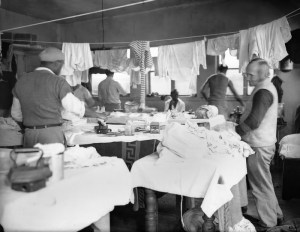
EM Narration: Most of the inmates of the Fag Ward worked in the prison laundry. Ruth also asked…
———
Ruth St. Denis VO: When you write, tell me what the fags in the laundry said as I passed. They all came to the windows.
———
EM Narration: Apparently, the laundry room had a view of the prisoners being released back into the world. The only photograph we have of prisoners from the ward is from that laundry room. You can see linens and clotheslines hung from wall to wall with three windows to the outside world.
In the photo you can see both Black and white inmates working side by side. In an era of institutional racial segregation, the Fag Ward was one of the few fully integrated places in the city.
———
ED: And you get a sense of just how actually small it is, ’cause I believe it could have fit approximately 75 inmates in the ward. So it actually looks quite small when we’re actually physically here.
EM: I’ve heard it described as the equivalent of maybe three New York City subway cars.
ED: Yes. That’s a line in the play, isn’t it?
EM: Maybe that’s where I got it from.
———
Multiple GN Characters: The Fag Ward is small, only 50 feet by 30 feet, approximately the size of three city subway cars. Seventy-five rusty metal cots jammed together, only one low-hanging light.
———
EM Narration: Something extraordinary about the queens who were crammed into that tiny space is that despite their persecution, despite their incarceration in a miserable place, they found creative, even ingenious ways to simply be themselves.
One prison doctor noted that inmates on the Fag Ward would make rouge by soaking the labels of tomato cans in water to extract the pigment. They made face powder by grinding up chalk stolen from the prison schoolhouse. And he notes that even after mass confiscations of these items, “A few days elapse, and again rouged cheeks and lips begin to make their appearance.”
For a minute, Emma and I stand on that nondescript grassy mound, looking out at the view the inmates of the Fag Ward might have glimpsed from their bleak, cramped confinement.
———
EM: So this is, this is the spot.
ED: This is the spot, yes. At one point I actually mapped the entire New York City skyline as they would have seen it back in the day. You know, no Billionaires’ Row, you still had the Empire State Building and the Chrysler Building.
EM: But it was, you know, recognizably Manhattan and glittery and—
ED: Exactly.
EM: And still the promised land.
ED: The fact that they could see Manhattan and it just, just in reach—I mean, it feels like you can reach out and touch it. It feels really eerie because I know so much about what went on here through years of research. And also there is no one here. It’s almost like a memorial without being a memorial. It gives me the shivers.
EM: It’s so surreal to think about what was here before that it’s very hard for me to imagine what was here, what people experienced, what they felt—or what I feel standing here, other than very lucky that I grew up in a time when prison was very unlikely for someone who was gay. I mean, I’m conscious of being very privileged having grown up in a different time.
ED: It honestly feels like I’m in the presence of many ghosts. There’s layers and layers of history here.
EM: Ghosts, lot of ghosts.
Embed from Getty Images
1932 photo of the southern end of Welfare Island, with the penitentiary in the foreground and, behind it, the Manhattan skyline. Credit: Getty Images/Bettmann.
———
EM Narration: So then, what happened to it? Where did the enormous, fortress-like prison and the Fag Ward go? There’s nothing here. Not even a ruin. It too feels like a ghost.
It turns out, around 90 years ago, the prison’s own misery caught up with it. As the island’s reputation as a hellhole spilled out across the East River to Manhattan, public servants, prison reformers, and elected officials took notice.
One corrections commissioner called the prison “vile and inhuman … wet, slimy, dark,” and “foul.” By the 1930s, stories of overcrowding, drug use, and favoritism towards the well-connected prisoners made the prison a ripe target for a newly elected mayor’s reform agenda. Fiorello La Guardia had the island in his sights.
———
Audio from 1934 Newsreel: Here is the New York County Penitentiary on Welfare Island in the shadow of Manhattan skyscrapers, scene of a sensational exposé.
———
EM Narration: That’s from a 1934 newsreel featuring shots of the prison taken from the Queensboro Bridge in midwinter. There’s steam billowing from the jail’s smokestacks. Even in grainy black and white, it looks absolutely freezing and miserable.
———
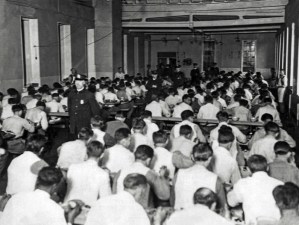
1934 Newsreel: For years, the penitentiary has been dominated by two or more mobs of gangsters with connections both inside and outside the institution.
———
EM Narration: In January of 1934, Mayor La Guardia ordered his corrections commissioner, Austin H. MacCormick, to raid the prison, to root out corruption, specifically the mob, who reportedly ran it like a fiefdom.
———
1934 Newsreel: Members of these mobs were living in the hospital wards, eating special food, and enforcing their orders by violence, even by murder.
———
EM Narration: This was a sensational story—so sensational that Warner Bros. Studios adapted it for the screen a few years later. In Blackwell’s Island, John Garfield plays a journalist who helps expose the crime bosses inside the prison.
———
Audio from Blackwell’s Island (1939): You’re dealing with a rotten mess of corruption, years of political grafting. The warden is helpless. He’s surrounded by spies. I have the witnesses you need, but the only way to make ’em talk is to crack down on them when they least expect it.
———
EM Narration: Near the end of the film, the corrections commissioner storms into the warden’s office with a large group of journalists in tow, who pepper him with questions.
———
Blackwell’s Island Audio: [Overlapping voices.] Take it easy, boys. First of all, this is a raid, you can see that. We’re gonna clean up this pest hole once and for all. You’ll get your information from what you see going on.
———
EM Narration: The film is a fictionalized version of what happened, but the part with the journalists is true. A group of journalists were allowed to cover the raid, and they splashed stories all over the pages of the city’s newspapers. It was a coup for the mayor, and by 1936 the prison was shut down and destroyed, with all the prisoners relocated to a new model prison on nearby Rikers Island.
The raid that spelled the beginning of the end of Welfare Island’s Fag Ward provided an incredible starting point for historians. You see, those journalists writing splashy stories about the raid? They met and actually spoke to the inmates of the Fag Ward. The reporters’ lurid descriptions of the homosexuals they happened to encounter start to paint a picture of some of the ghosts we’re hunting.
Here’s Gorgeous Nothings playwright Travis Lee Russ reading one of the accounts of the raid from the Daily News, published on January 25, 1934.
———
Daily News Excerpt (Read by TR):
Long-haired men, their faces covered with rouge and their eyelids dripping mascara, came swishing out of the cells, garbed in filmy, feminine underthings. They identified themselves under such pseudonyms as “Jean Harlow, Lupe Velez, Greta Garbo, Madame Butterfly, Wanda Hawley, Kitty Darling and Marilyn Miller.”
The latter was the acknowledged queen of the tier. Except for the flapping trousers beneath the pink chemise and the muscular bare arms, he would have easily have been taken for the woman he claimed to be. He kept up a running fire of repartee with raiders, shrilling falsetto screams of dismay as the combs that held the long, flowing, oiled locks were taken away.
“Don’t take my stockings, Honey,” this amazing prisoner begged a burly cop and then proudly announced his devotion to the oldest profession in the world and described unprintable episodes of prison life. “I’m a rich woman. Throw it away,” came to cry, as Kitty’s contraband sugar was taken from the next boudoir cell. “I’ll get you some more.”
High-heeled shoes, compacts, perfume, powder puffs, step-ins and even a silky woman’s wig came fluttering down into the corridors as the posse worked its way along. Here, as elsewhere, the prisoners made haste to throw their contraband out of the cells before the raiders could reach them.
———
EM: What do you think when you read that about what was done? They’re already imprisoned and now they’re being tortured.
TR: I’m so proud of our ancestors—whether correctly or incorrectly, whether it’s an exaggeration, whether it’s a romanticized version of these individuals—but how fierce do these people seem? How incredibly daring and brave are those individuals who pushed back, who resisted?
To their credit, they didn’t go quietly, and they held on to those items that they cared about and valued because that was part of them. That was part of being queer. That was their way of saying, I’m going to be me, and you can’t take this piece of me. That’s what I’m most proud of when I read those articles. Whether they really had all those items, it’s irrelevant. Whether those individuals really said those things is irrelevant. They were seen and they were heard, and the reporters took note.
So to think that this happened in 1934, almost 40 years before Stonewall—and these articles tell us our ancestors are starting to fight back. That fearlessness and that fierceness is already starting to show through.
EM: This is a scrap, a newspaper article. One of the big questions that hovers over so much of, of Making Gay History’s work is, how do you make a show that represents the past and speaks to the present out of a time about which we have fairly limited knowledge?
TR: I think it’s thrilling to be someone who’s investigating queer history. And it’s also incredibly frustrating because the stories have been whitewashed, the stories have been tarnished.
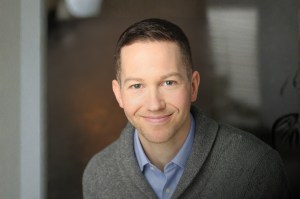
But there’s just something that I find incredibly, endlessly fascinating about chasing after people—particularly people who live on the margins, especially if they’re sort of buried at the bottom of some drawer somewhere—pulling them out, dusting them off. Because you never know when you’re gonna uncover a diamond, when you’re gonna find that gem that helps you reach back over a hundred years and find some personal emotional connection.
———
EM Narration: Visiting the site of the Fag Ward, it reminds me of the story of Brigadoon, the village that appears every hundred years only to vanish again. A hundred years ago, the inmates of the Fag Ward had fully realized dreams and desires, with lives no less rich and realized than our own.
But then those lives were buried by time and a system designed to keep them at the margins of history, only accessible to us in the smallest glimpses— in newspaper clippings and prison records. A hundred years on, my hope for this series is to shine a light on some of those lives as best we can, before they vanish for another century, buried under that island of misfits.
Next time on “The Queens of Welfare Island,” we’re heading to Times Square to investigate the first of those lives: a dazzling drag queen named Gene, who gets an unlikely casting call, in court.
———
Allan K. Washington (Gene, GN): What? Oh, my goodness. So the magistrate is sort of the casting director for the “Fag Follies.”
———
George Chauncey: And the prison officers actually went to see this performance. And everyone knew that the prisoners had dresses and wigs…
———
EM Narration: This Making Gay History episode was written, produced, mixed, and sound designed by Benjamin Frisch and executive produced by our founding editor, Sara Burningham. With production help from Will Coley, Bart Warshaw, Max Miller, and Tarcisio Longobardi.
Our studio engineers were Michael Bognar, Cathleen Conte, Katherine Cook, and Charles de Montebello at CDM Sound Studios. Making Gay History’s theme music was composed by Fritz Myers.
Thanks to our listening circle, including Jenna Weiss-Berman, Jeffrey Masters, Chris Berube, and Sarah Montague. And thank you to Jeffrey Masters for voicing Ruth St. Denis’s correspondence.
Thank you to our photo editor, Michael Green, and fact-checker, Matt Koff. With editorial support from Making Gay History’s deputy director, Inge De Taeye. Thank you, also, to the New York Public Library Manuscripts and Archives Division for their ongoing assistance.
Special thanks to Emma Dorfman for taking us on a history tour of Roosevelt Island, in the rain.
To learn more about the people and stories featured in our episodes, please visit makinggayhistory.org, where you’ll find links to additional information, archival photos, as well as full transcripts.
“The Queens of Welfare Island” is a production of Making Gay History. It was made possible with generous support from the Life Jacket Theatre Company, the Jonathan Logan Family Foundation, Ty Ashford and Nicholas Jitkoff, Broadway Cares/Equity Fights AIDS, Christopher Street Financial, the Marcus Family Foundation, Rick Hoffman, Bill Kux, Robert Dodd, Maureen Bennett, Maria Lefkarites, Emily and David Tobin, Richard and Mynette Marcus, the Calamus Foundation, and Christine, Bryan, and Alex White, in addition to the many hundreds of other donors who make it possible to bring you this work.
I’m Eric Marcus. Until next time.
###