Margot Heuman
 Margot Heuman, ca. 1947. Credit: Courtesy of Dan Mendelson.
Episode Notes
German Jewish survivor Margot Heuman attributed her survival of the Nazi concentration camps to her friendship with another teenage girl. It wasn’t until the end of her life that she confided in lesbian historian Anna Hájková about the intimate nature of the friendship.
Episode first published March 20, 2025.
———
Archival Audio Source
The interview with Margot Heuman is from the archive of the USC Shoah Foundation – The Institute for Visual History and Education, © 1994 USC Shoah Foundation. For more information about the USC Shoah Foundation, go here.
———
Resources
For general background information about events, people, places, and more related to the Nazi regime, WWII, and the Holocaust, consult the online Holocaust Encyclopedia of the U.S. Holocaust Memorial Museum (USHMM).
- For an overview of Margot Heuman’s life, read her 2022 New York Times obituary.
- The entire testimony from which this episode is drawn can be viewed on the USC Shoah Foundation YouTube channel here.
- A more concise audio-only testimony by Heuman is available on the USHMM website.
- Learn more about Dr. Anna Hájková’s academic research and publications on her University of Warwick profile page; read her views on the importance of—and difficulties inherent in—studying queer desire and the Holocaust in “Why We Need a Queer History of the Holocaust” (History Workshop, February 19, 2020).
- Hájková is also the co-author of a documentary theater play based on her interviews with Heuman; learn more in “LGBT+ history: The Amazing Life of Margot Heuman – How Theatre Gave Voice to a Queer Holocaust Survivor” (The Conversation, February 18, 2022).
———
Correction: The episode says Heuman first heard the word “lesbian” when women were gossiping about a kapo’s relationship with another prisoner in a concentration camp. Instead of a kapo, it was in fact a guard.
———
Episode Transcript
Anna Hájková: Margot was beautiful. She had brilliant eyes, she had a beautiful shape of face. She had very fashionable short haircut. Um, and you can see it on her pictures that she was, um, a very charismatic and very beautiful young girl, young woman, uh, middle-aged woman, but she was most beautiful in her 80s. She looked very stunning in blues and she knew it, so she wore lots of blues. And the first time I met her at the Tucson airport, um, she was still fit enough to drive, so she came to pick me up and there she was.

———
Eric Marcus Narration: Dr. Anna Hájková first met German Jewish Holocaust survivor Margot Heuman in 2018. Dr. Hájková studies queer desire and the Holocaust. She’d gone to Arizona to interview Margot about her experiences as a teenage girl in the Theresienstadt ghetto and the Nazi concentration camps.
———
AH: Never did she understand herself as queer. She was a great-grandmother. She had her dog. She hated Trump. She voted. She loved the Volvo car. Um, she was no-nonsense. She really needed to have the encouragement that her full testimony is important, is welcome.
When you already talk about so much trauma and you don’t have a framework that would tell you that your queerness is valuable and important and needs to be cherished, it’s really hard to go there and insist on it. It takes a lot of guts to share something that doesn’t want to be told.
———
EM Narration: I’m Eric Marcus and this is Making Gay History: The Nazi Era.
Many of the survivors whose testimonies we feature in this series are open and matter-of-fact about their sexuality. But the recorded testimonies that Margot Heuman provided in the 1990s were entirely closeted. In these accounts she spoke about her friendship with a Viennese girl named Dita, and how that friendship sustained her through the war.
But she didn’t publicly open up about the romantic nature of that relationship until much later in her life, when she was interviewed by Dr. Hájková—and became one of the only lesbians to speak about her same-sex experiences in the concentration camps.
We’ll hear more from Dr. Hájková about Margot and Dita’s relationship at the end of this episode. It’s thanks to her scholarship and the trusting relationship she built with Margot, that we can listen to Margot’s Shoah Foundation testimony with an ear for all that went unsaid.
———
Unidentified Speaker 1: December 2, 1994. Survivor Margot Heuman. The interviewer is Carolyn Richmond. City is New York. Language is English.
Unidentified Speaker 2: Thank you.
Carolyn Richmond: Good morning. Um, could you tell, tell us your name and spell it for us?
Margot Heuman: My name is Margot…
———
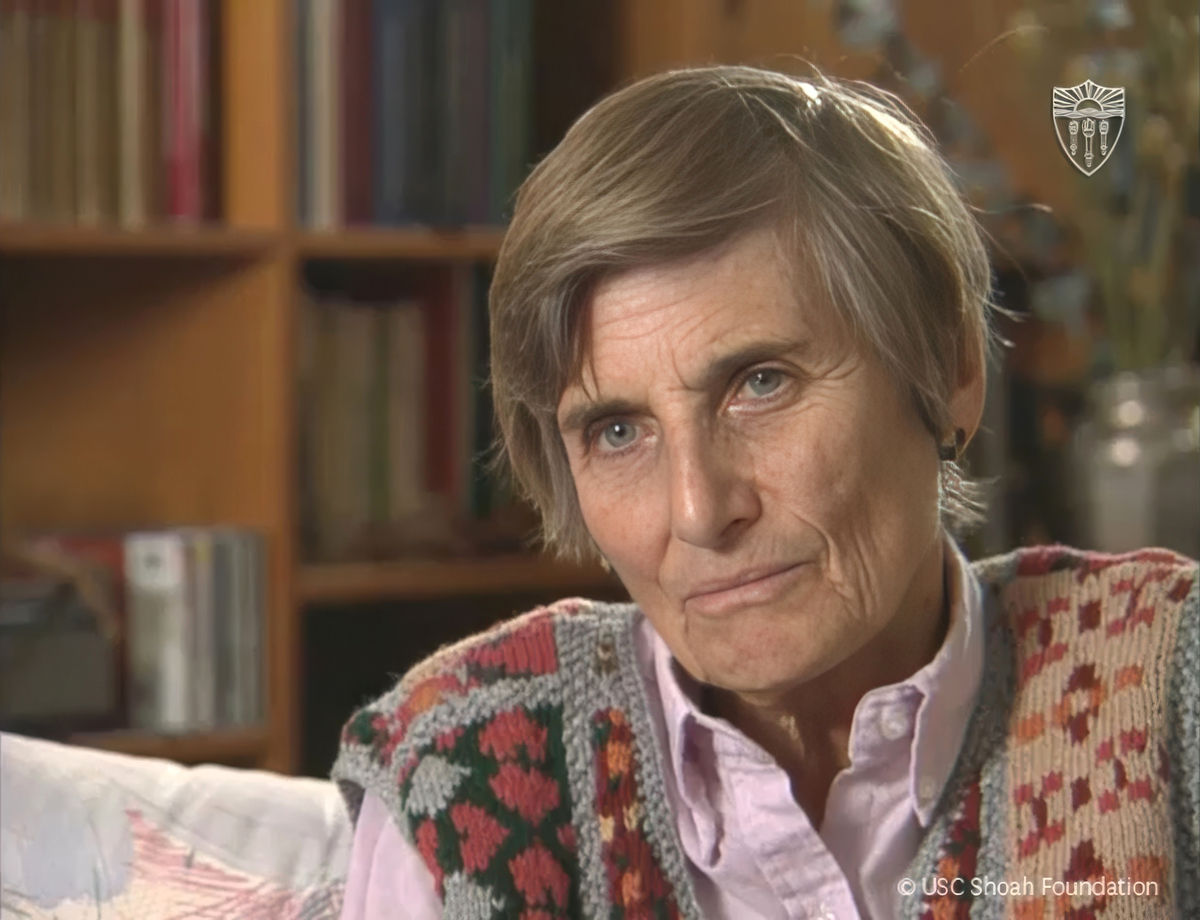
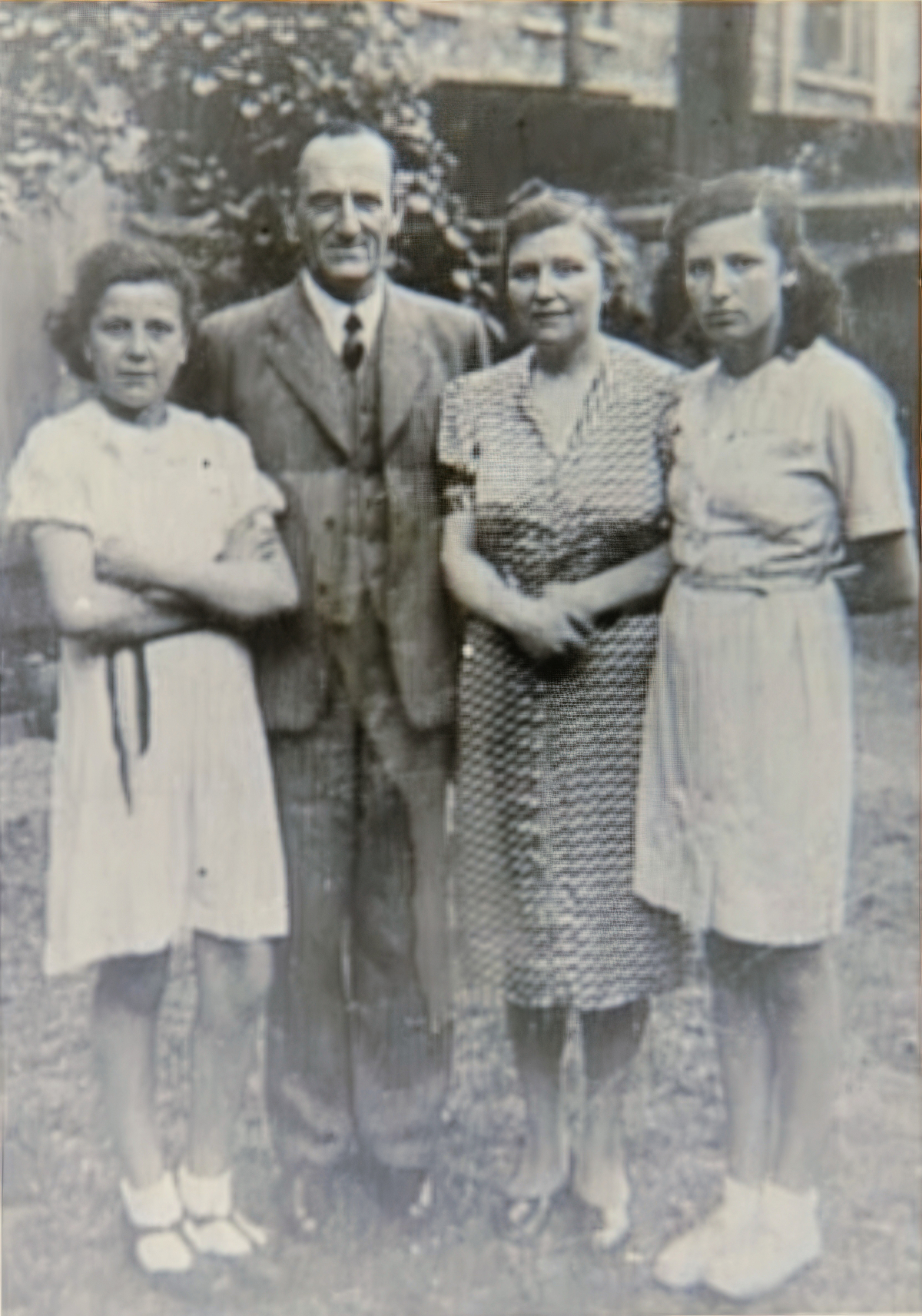
EM Narration: Margot Heuman is in her mid-60s. Her short brown hair is streaked with silver. She wears a knit vest over a lavender collared shirt. Margot was born in 1928 in Hellenthal, Germany, a mountain town not far from the Belgian border. She and her younger sister grew up in a loving and financially comfortable home. When anti-Jewish laws made it increasingly difficult for Margot’s father to earn a living, he moved his family to the city of Bielefeld to work in a store owned by one of Margot’s uncles.
———
CR: So how did things start to change with Hitler?
MH: I just noticed that my father kept on losing his job, and we—couldn’t, couldn’t find another job. We couldn’t afford to live where we had been living because there was no money coming in. So my, my lifestyle changed somewhat. But that’s the only thing I noticed. I did not, I was not aware of any antisemitism. Not until ’38, I would say.
CR: What did you first notice?
MH: Well, things really began to change with Kristallnacht. That’s when things first started to change. And then I was aware of that it wasn’t so nifty to be a Jew in Germany.
CR: So, so what do you remember of Kristallnacht?
MH: I remember my mother crying hysterically. I didn’t, I didn’t know about it until the next day.
CR: What, what did you learn the next day?
MH: My mother told me what happened—that, uh, they had, uh, broken, that the store was completely, all the windows were smashed in in my uncle’s store. That, uh, the temple was demolished. And that the Germans didn’t like Jews anymore. And I, I mean, I kept saying, “Well, why? I mean, what have we done?” I mean, how can…? At the time I was, uh, nine years old so how can you explain that?
CR: What happened after that? What happened to the store?
MH: Oh, they had signs on it, “Don’t buy from Jews.” Uh, they made it so that it was no longer profitable to keep the store. So my uncle was forced to sell it at a pri—price that the Germans stipulated that he sell it for.
CR: What happened next?
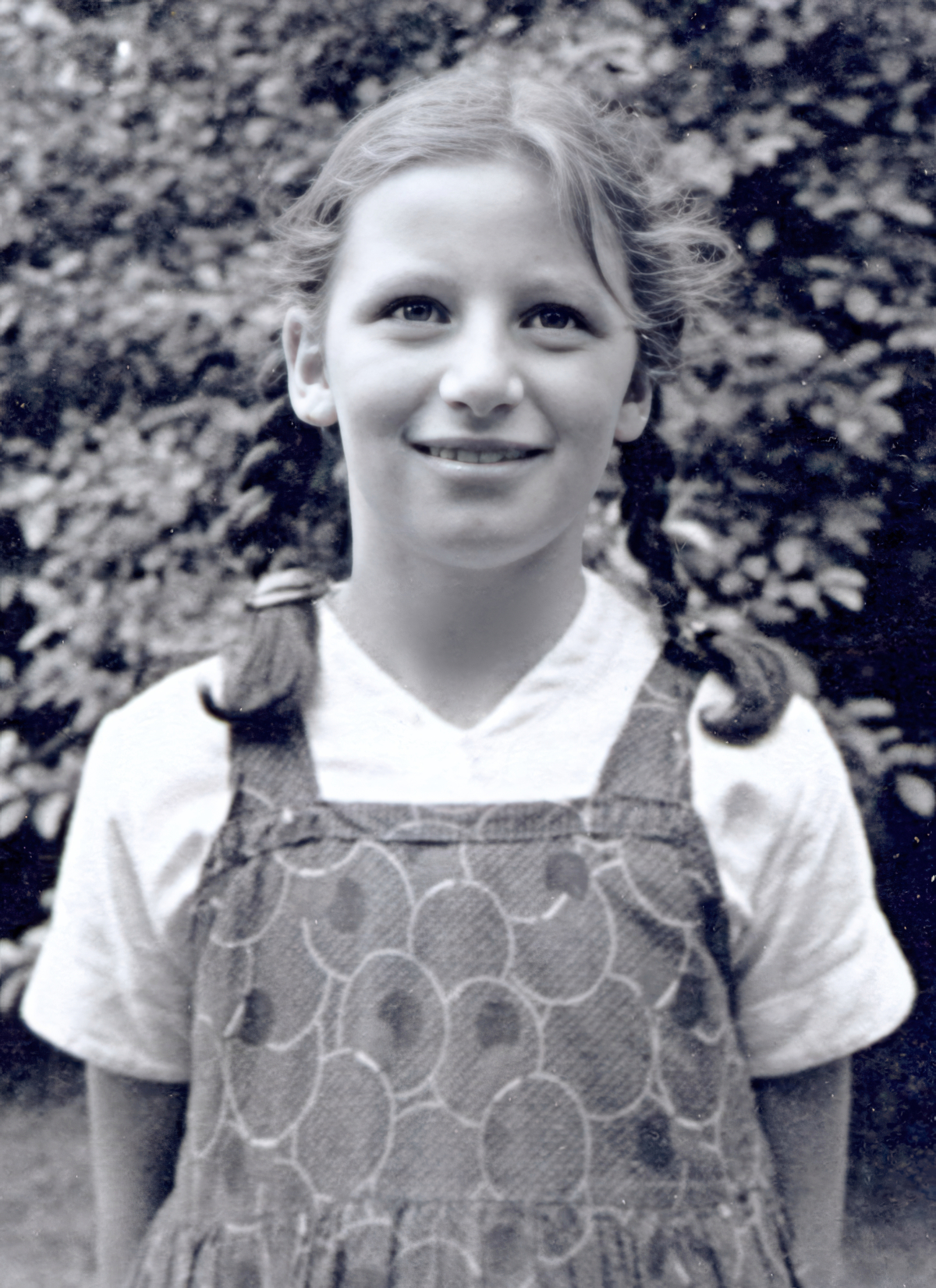
MH: Well, first, first in ’38 we were kicked out of school. And there were… The three of us—my cousin, my sister, and I—were standing outside crying because we didn’t know what was happening. And then we decided to walk home together.
Uh, but then we had to wear the Jewish star, and we weren’t allowed to go swimming. I weren’t allowed to, wasn’t allowed to do anything. I wasn’t allowed to go anywheres. Uh, my mother was afraid to let us go out. So what I did, I just took the star off. I had it on my outer coat, I just didn’t wear the coat. And I just didn’t—and went swimming and did the things that I liked to do anyhow. And my, nobody, my parents didn’t know about this.
But then the children, my friends, began to change. They didn’t want to be my friends any longer. The only friends I’ve left, I had left were Jewish friends.
More and more people were deported to the various concentration camps. And, uh, the reason we stayed in Germany as long as we did is because my father was working for this Jewish organization, and he was involved in getting help for people and also, uh, trying to get people out of Germany. And he also had won the Iron Cross fighting for Germany in World War I. And, uh, they, I don’t know why, but they gave him some privileges for that.
The main privilege was going to Theresienstadt rather than another, than a concentration camp. And also we stayed in Germany till the end of ’42.
CR: So what was that, that transport like in 1942?
MH: We traveled in a regular railroad. We were allowed to take what we could carry and somehow—I, I really didn’t mind going because I was sick and tired of staying where I had no one to play with. I had no one there. I was, I couldn’t do anything anymore. And it just, I thought, gee, maybe I’ll be together with other Jews. I, I mean, I was a child. I didn’t know what, we did not know what a concentration camp was.
And we arrived, arrived in Theresienstadt, and I remember being in this big, huge hall. Now Theresienstadt is a ghetto, and it was Jewish self-rule, but there were rules and regulations that had to be followed, given by the Germans.
They took us to a barrack. I had fleas and lice, and we started scratching, and I got impetigo, and I was, my whole body was a run—oozing sore.
In the meantime, my father tried to get us into a youth home, and finally, both my sister and I were able to get into this youth home. And I went into a room with 17 girls my own age, and my sister was in another room.
Uh, the worst thing in Theresienstadt was hunger. I remember having friends again. There were teachers. We had some classes. Being with all these young people, somehow, life, it was tolerable. My closest friend was Dita. Her name is Edith, but I called her Dita. And she came from Vienna, and we are more or less the same age.
I visited my parents when I could, but basically, my life was in that home with all these young people.
CR: Was there any, uh, romance ever in the house between people?
MH: Well, we were too young. Well, there were some, maybe. Not—very innocent romances. I mean, in the kids that I was with.
I mean, uh, how old was I then? Fif—sixteen? Fifteen? So it was, it was different then than now. People were not, we were not developed. And we didn’t, I think we were more involved with everyday living—just, you know, to get, to get enough to eat.
And then this deportation started and that’s when, you know, everything started in Theresienstadt to change as far as the tranquility was—I mean, you had, you started worrying about other things besides being hungry because your friends were being deported to Auschwitz.
At that time, my father had gotten a job working for the post office. And, uh, in the end of ’43, he was caught stealing food out of a package that had fallen out. So he then was told that because of that, he would have to be deported. My mother said, “If he goes, we all go.” So we all four of us went.
CR: When you got deported, what happened?
MH: Well, first of all, I had to leave and at that time, all my friends stayed. I was the first one to go. It’s the first experience I had going into a cattle car. And we squeezed like 50 to 75 people in this one car, with a bucket in the middle as a toilet. And we traveled like that for like two and a half days.
CR: Were you with your family?
MH: I was with my family, but I, I just cried the whole time. I was just crying. I just didn’t, I didn’t want to leave. I didn’t want to leave my friends. I didn’t want to go. And it just was utterly miserable.
We got to Auschwitz. And the SS was walking up and down on the railway station, yelling commands. And there were dogs. And they opened up the doors, and they were yelling, “Get out, get out,” and “Line up, line up.”
They marched us all into Birkenau, which was the family camp. First, we got, we got tattooed. And then after the tattoo, we marched into the camp. And then we went into this… We were separated. My father went into one barrack, and my mother and my sister and I went into another.
And, uh, we went into this barrack, and my, uh, triple bunk beds, and my, with a straw mattress. And my mother was downstairs, my sister was in the second tier, and I was in the third tier. And, uh, we now got food once a day. We got a bowl of soup and a piece of bread, and that was it.
Then we were told about the smoke and this odor, and we found out about the gas chambers, which we didn’t know until we arrived in Birkenau. The SS was constantly present, walking around, strutting up and down, like, saying, “We are the masters, you are the slaves.” Patrolling the area, uh, kicking you in the behind if you weren’t fast enough. I mean, you didn’t have a moment’s peace.
And then Dita came to Birkenau, and I, I, somehow my life changed again, because, because she was, she was the closest friend… And then my parents got, my mother got us—we went into a youth home again. Even in, uh, Auschwitz, they had a special home for children.
CR: You were with Dita the whole time.
MH: Mm-hm. We used to pretend that we were in different places. We used to play games of mental tele—telepathy. What would, what we’ll do when we get out, uh, fantasize about things, and share things, and care for each other.

We left Auschwitz together, too. There was a transfer, and we were selected to leave. Uh, they, they chose people that they thought would be able to work for them, and—we didn’t know where, somewheres in Germany.
Uh, at the time, uh, Dita told me, “Don’t try to get out of it.” Someone, someone had told her this, this was a way to get out. We would not be gassed. So I tried to get my mother and my sister to come along. And it was all women, so my father couldn’t have come.
CR: So he stayed at Auschwitz?
MH: But, no, they wouldn’t take my sister, she was too young. So my mother decided to stay with my sister because she felt that Lore needed her more because she was younger, and she also felt that I had Dita and I would have someone to be with. So she stayed. I don’t really know what happened to them afterwards. I never saw them again.
I marched out of Auschwitz with these, this group of, we were about 500 young women, and my father was standing in front of his barrack, and I was, well, I went over to him, and he blessed me. And that’s the first time I ever saw my father cry. And the last thing he said, that we should stick together, Dita and I. That’s the last I ever—I never saw him again.
When we marched out of Birkenau, we went into this other camp in Auschwitz. Then we had to take all our clothes off. And then we were examined by a physician. It was a complete physical, including an internals examination, because people had hidden jewelries and stuff. So I, I, I don’t know, I was scared to death.
And then we went outside and we stayed around naked for the rest of the day. And then they took us one by one, and we were outfitted to clothes, for clothes. So I was the first—Dita stayed behind, I went before her. So I was given this, uh, gray-and-blue striped prisoner’s dress, and a kerchief, and some, uh, clogs, like, and a pair of socks, but no underwear.
So when I got out, she was standing in another area while I was in the new one. I lift up my dress, I showed her, look, I have a dress but no underwear. In the meantime, they were still all nude. After a while, you can, you, you’re completely oblivious to it. Who cares? You know, the SS guys go by, you don’t, you don’t even think about it. They… So, um, and then she finally got her clothes.
And then we were put into another cattle car. And we were off to Hamburg to work. And we stayed, in the beginning, uh, in the, in the mountains, in barracks. And we worked in quarries, like. In the winter when there was ice and snow, we had no shoes proper. My feet were frozen. My hands were frozen at one point.
Uh, and then they moved us to a place called Freihafen, which is in Hamburg, the city of Hamburg itself. And there we worked, uh, digging traps for tanks. They expected an invasion from England.
Uh, occasionally bombings were started. Uh, we had—at least a hundred people were killed in bombings. We were in bombings in an open field, where we had to lie down flat on our stomachs. And Dita and I were lying next to each other and just holding each other down. And the people that jumped up, up were just blown to bits, all over us. I mean, the pieces are just flying. Things like that, you can’t, uh… But then we were happy because we thought, gee, the war’s gonna be over.
We never had enough to eat. But there were prisoners, Italian prisoners of war, in the barrack next to us. And Dita made a friend of a young man called Aldo. I never forgot this. And they got packages from the Red Cross. And we devised a method where you swing a rope back and forth, and he shared food with us.
And, uh, there was a, uh, we, we, since we were near the harbor, there were some houseboats that German families who lived there. And there was a German family who left a bowl of porridge outside their houseboat for me every single morning. And then I shared it with Dita, and we left the empty bowl there. And the next day they gave us one.
CR: Were you ever able to celebrate any of the holidays during [unintelligible] in the labor camp?
MH: Birthdays.
CR: How, how did you celebrate birthdays?
MH: Well, Dita remembers that the birth—the greatest birthday present she ever got was a half-rotten potato with a face in it that I gave her. I don’t even remember it, but she talks about that now.
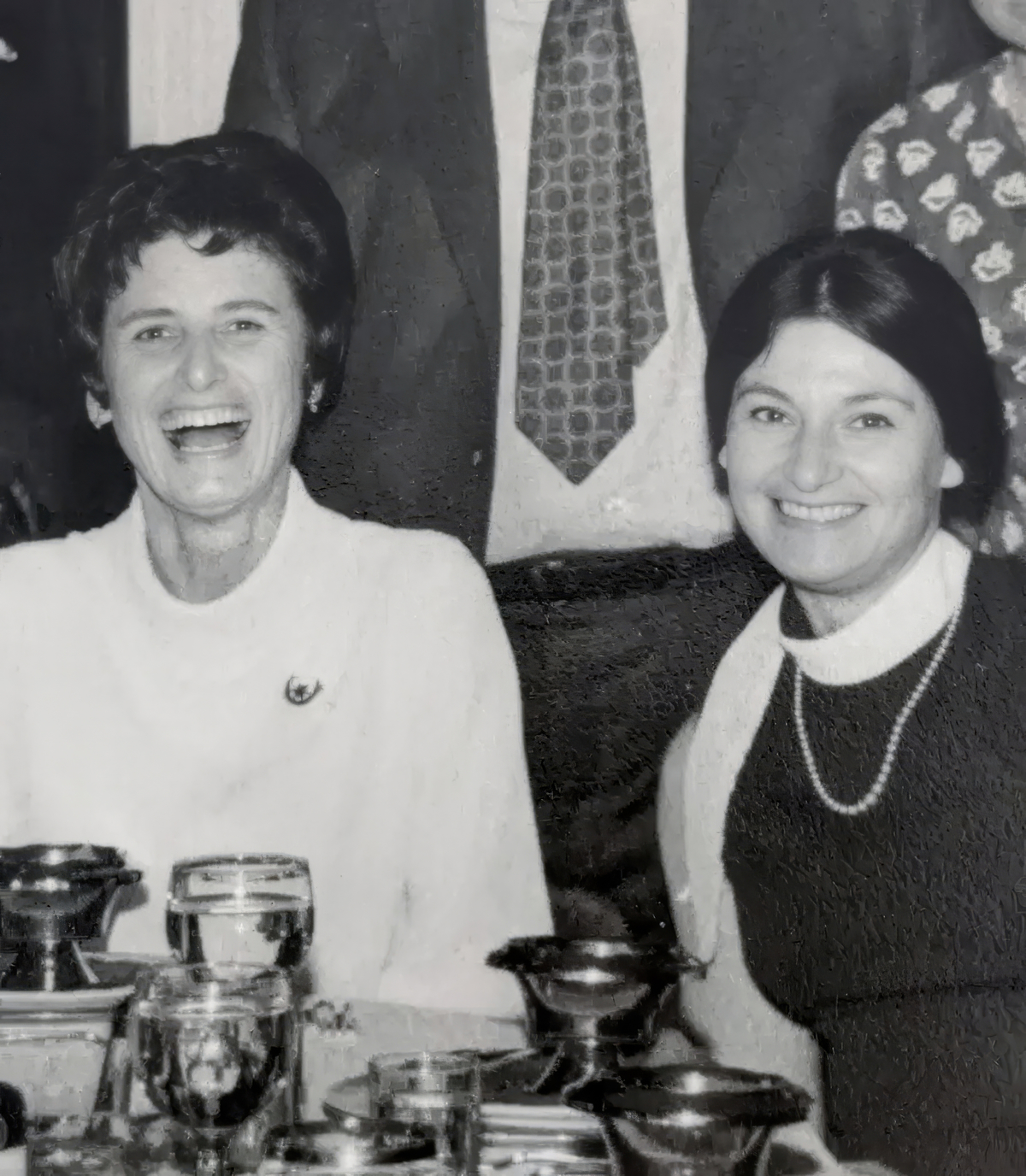
We didn’t have many friends under those circumstances. Most people, it was dog eat dog. I only was friends with Dita. And I, I, actually, in all those years, I have never ate anything without sharing it. Or neither did she. And we used to pretend—we used to talk about what it’s going to be like when we get out of here.
We never, ever gave up hope. And we always… Well, we always felt that we made it this far, and we have to make it and get out.
The bombings increased to the point where they, I mean, they were constantly exp—exploding, day and night. And the more they were bombing, the happier we got. And, uh, we knew that if this continued, it couldn’t be too much longer, and all it was was just hold on, you know, hold out—except, the thing that really happened is that, uh, we then were, one day they told us, “Pack up, you’re leaving.” And we were, went partially by train and partially by, by foot towards Bergen-Belsen.
And this was in, uh, probably late March of ’45. And, uh, there was still snow on the ground and by that point, we were skin and bones. We had no food. We had no clothing. We didn’t have nothing anymore.
CR: How far did you have to walk?
MH: It took days. I don’t know how much actually is in kilometers or miles.
CR: You were still with Dita?
MH: Oh yeah, we were together till the end. And then walking into Bergen-Belsen, the first thing I remember about Bergen-Belsen is corpses lined up on both sides of the road. One on top of the other, as high as trees.
Then we were put into barracks, and this is where Dita and I were separated. I don’t know what happened anymore because then I got sick and I was—and we were sleeping about eight to ten people on a bunk. And every morning we got up and we took, saw who was dead and took the dead out and dumped them on top of the pile and then somebody new came in. And this went on for a month, every single day.
And then we had no food for the last two weeks at all, and no water.
CR: How long were you there?
MH: Probably five weeks. And then we had no water and I drank water from a puddle, rain water, and I, and that’s when I got sick. I had dysentery so badly that I couldn’t, I couldn’t move anymore. I couldn’t walk anymore. I was completely dehydrated. I still crawled out of bed, though, every day, because I didn’t want to be among the dead, the dead to be dumped out on the, on those piles.
Then we heard the shooting more and more and more, and we, we knew that the end was in sight because the SS people were trying to put down their guns.
And, um, all of a sudden we heard this announcement that the Allied forces have entered, entered the concentration camp. “Food will be coming. You should hold on.” And, uh, at that point I was so sick, I didn’t care anymore. Food came, and that made me sicker because I ate the food that I wasn’t used to.
And then the, uh, medic people came in to take, to treat all the sick. And then they decided, since I was a German Jew, they wouldn’t take care of me because I was German.
CR: You were liberated by the British?
MH: Mm-hm. And then I decided, well, they don’t want to treat me as a German, then I’ll become a Czech, because I was with all these Czech people anyhow. So I said, well, I’ll be Czech. So I went back and I said, “I’m Czech.” And they treated me.
CR: Where was Dita during this?
MH: She found me in the, in the infirmary eventually. I was in there altogether for six weeks before I could even walk.
CR: Did you know that the war was over?
MH: They told us then that that was it.
———
EM Narration: No one from Margot’s immediate family survived the war. After spending two years in Sweden, Margot immigrated to the United States on her own. She settled in New York City, where she enjoyed the lesbian scene in Greenwich Village and had a longterm girlfriend. But it was important to Margot that her family line wouldn’t just disappear, so she married a man and had two children. Dita moved to Canada, where she also married and had children.
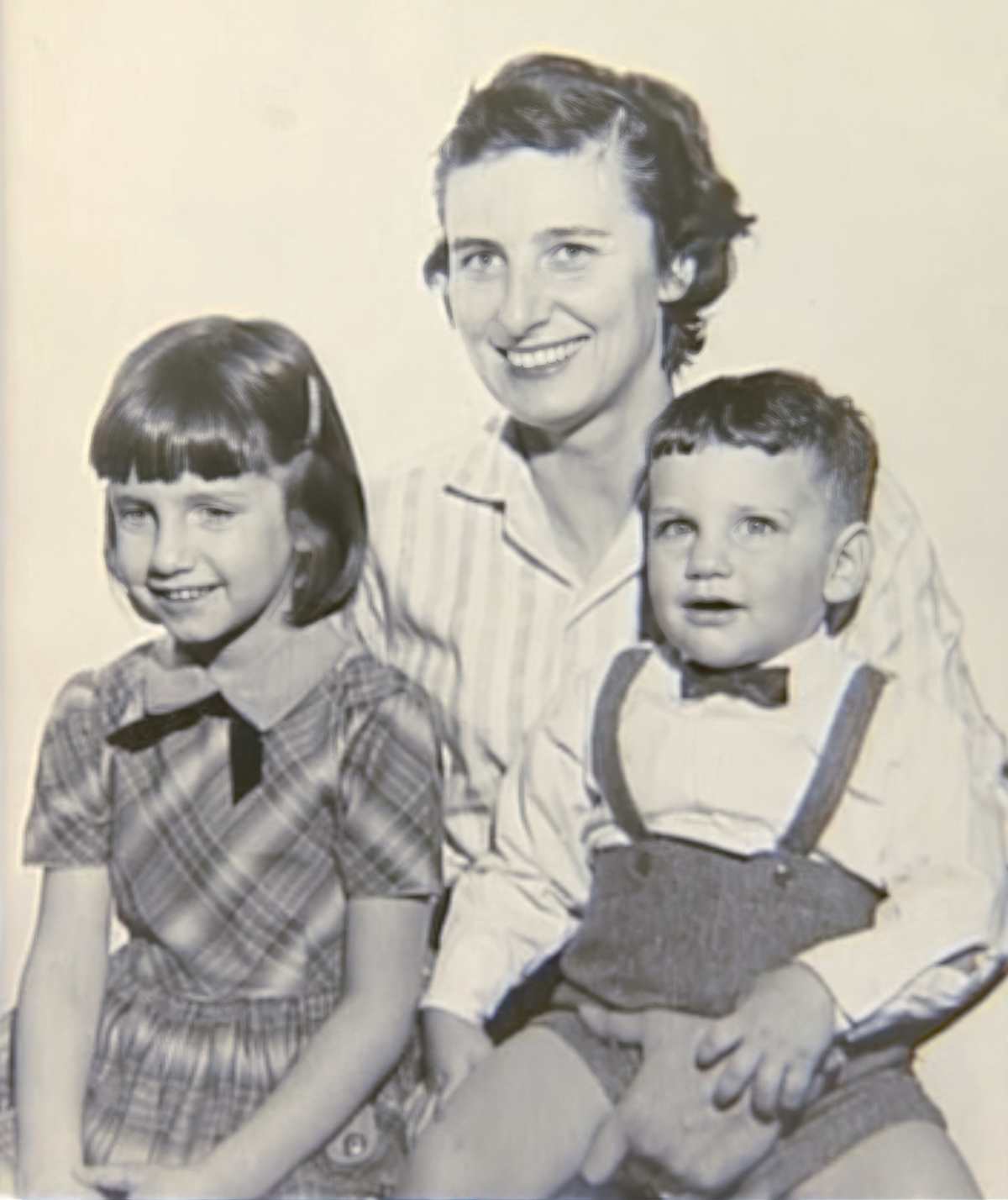
Margot eventually divorced, shared with her family that she was a lesbian, and moved to Arizona. That’s where Dr. Anna Hájková met her. I spoke with Dr. Hájková to learn about the parts of Margot’s story that were left out of her recorded testimony. She told me Margot first heard the word “lesbian” when women were gossiping about a kapo’s relationship with another prisoner in a concentration camp in Hamburg.
———
AH: So that’s for the first time that Margot understood that her attraction to women, which is something that she knew about herself ever since she was a preteen, um, that there is this word for it and it’s something that people gossip about.
EM: Listening to Margot’s Shoah testimony, um, do you think I’m imagining the smile I hear in her voice when she talks about Dita?
AH: Yeah, yeah, yeah, yeah. She really loved Dita.
EM: So it’s not my imagination.
AH: No, no. But what is so interesting about the Shoah testimony is that she never says explicitly, why does Dita make her smile and what was it that connected the two girls. And it’s in a way a key that you need to have to unlock it. I knew, uh, from Margot herself that this was a romantic relationship.
EM: Did you ever find out how their relationship evolved into a physical relationship, cause they were teenagers.
AH: So the two girls would climb at night into, from the two separate bunk beds, uh, into one. I should explain it’s when she’s in Theresienstadt, which is when she is 16 years of age, that she meets Dita and they lived in a youth home. And they would climb at night, when others did not watch, into the same bunk bed and, uh, start engaging in intimate activities.
EM: Margot and Dita kept in touch after the war. Did they discuss their wartime experience in the decades of friendship that followed?
AH: They definitely discuss their wartime, uh, experience. Um, but they never spoke about the romantic or sexual component of the friendship. It is only when Dita lied in dying that, uh, she waited for Margot to come before she passed away. And Margot told her that she loved her all her life, and Dita acknowledged that, welcomed that. And only then she passed away. So Dita waited to die until Margot came.

———
EM Narration: Margot had other relationships with women over the course of her life. But as she told the USC Shoah Foundation in 1994, her relationship with Dita was special.
———
CR: Why do you think you survived?
MH: My will to live. I never gave up, ever, at any time.
CR: Where did you get that from?
MH: I don’t know. I don’t know. It’s something, being together with Dita and we did together. Now we realize now, we talk about it—because I see her and we meet at least once a year. Either I go to Toronto or else she comes here. And she’s married there, she has three children. She also has a bunch of grandchildren. Her husband is a pathologist.
Uh, neither one of us would have survived without the other, and we both realize that, because, uh, we gave each other hope and support and love and friendship, and I think that’s what makes life worth living. And this is why my experiences are probably not very similar to other people’s, because even though it was absolute hell, what I remember most is my friendship and love for Dita.

———
EM Narration: Margot Heuman died on May 11, 2022. She was 94 years old.
———
In our next episode, Polish Jewish survivor Kenneth Roman shares painful memories of sexual abuse in the Flossenbürg concentration camp.
———
This episode was produced by Nahanni Rous, Inge De Taeye, and me, Eric Marcus. Our audio mixer was Anne Pope. Our studio engineer was Doug Berns at CDM Sound Studios. Our theme music was composed by Fritz Myers.
Thank you to our photo editor Michael Green, our founding editor and producer, Sara Burningham, and our founding production partner, Jenna Weiss-Berman at Pineapple Street Studios.
The interview featured in this episode is from the archive of the USC Shoah Foundation–The Institute for Visual History and Education.
Many thanks to Dr. Anna Hájková for sharing her time and expertise and for providing us with the insight into Margot Heuman’s life that allowed us to understand the depth and richness of her relationship with Dita.
To learn more about the people and stories featured in our episodes, please visit makinggayhistory.org, where you’ll find links to additional information and archival photos, as well as full transcripts.
This special series on the experiences of LGBTQ people during the rise of the Nazi regime, World War II, and the Holocaust is a production of Making Gay History, in partnership with the Fortunoff Video Archive for Holocaust Testimonies at Yale University.
I’m Eric Marcus. Until next time.
###